If you ignore AI—an acronym Apple is trying to force the world to believe refers to “Apple Intelligence”—few features of the latest Apple OS updates change much about Macs. There’s a reason: Apple built macOS 27 for gadgets that don’t exist yet.
Now that WWDC 2026 is over, developer betas for every OS update are live for all to download. These are still early versions, and they’ll be refined as we inch closer to the inevitable fall launch (and iPhone 18 debut). On Tuesday, I tested out some of the features now available on the macOS 27 Golden Gate and visionOS 27 betas on an M5 Max MacBook Pro 14 and an M5 Vision Pro, respectively. These updates won’t radically change the ecosystem like iOS 26 did, nor will they come close to what iPadOS 26 did in 2025. They’re just refinements.
For example, the big addition to Golden Gate is a Liquid Glass slider in Settings under the Appearance tab. This can change the opacity of translucent windows. The highest setting creates more of a frosted glass effect than a solid color, but both extremes look fine.
The new operating system looks better than before, but it may not change your opinion of the glassy windows if you still long for the pre-macOS 26 days. At the very least, corner radii no longer have the extreme curvature that you’ll find on iPad apps. Widgets still maintain the more obnoxious corner radii, something I hope Apple changes before the full release.
Preparing for the OLED MacBook and foldable iPhone
The macOS window corners are still rounded, which will make them handy for the long-rumored OLED touchscreen MacBook that may arrive later this year. One user on X pointed out that macOS 27 Golden Gate now supports touch controls via Sidecar, which turns an iPad into a secondary Mac display.
ICYMI: You can now use touch controls on your Mac display with Sidecar on iPad! 👀 pic.twitter.com/KOErLtoZCA
— BLCNYY (@BLCNYY) June 9, 2026
Beyond that under-the-hood revision, the standout feature of macOS 27 is iPhone mirroring, which has been around since macOS Sequoia. Now, you can widen the iPhone screen to an entirely different aspect ratio rather than just resizing it on your display.
As soon as we saw this feature during the WWDC 2026 keynote, everybody on the Gizmodo Consumer Tech team thought, “This is for the foldable iPhone, isn’t it?” The max aspect ratio you can get on the mirrored iPhone aligns with rumors that the “iPhone Ultra” will be a “this vehicle makes wide turns” kind of foldable—or, at least, wider than the Samsung Galaxy Z Fold 7.
What’s obvious after tinkering with macOS 27 is that I’m not seeing the full feature set because I’m using a candy bar-style phone. Most iOS apps still don’t support the wider aspect ratio; the only ones I’ve found that do are Apple’s—Music, Safari, Weather. We’re also missing the ability to tile apps and dual-screen options. We likely won’t see any of this until September at the earliest.
Gearing up for smart glasses
While Apple hasn’t let out an official peep about the reported foldable iPhone, we all know it’s coming. The same goes for the company’s purported smart glasses, said to be on the horizon for late 2027. These won’t have screens like Meta’s Ray-Ban Display spectacles do. Bloomberg suggests Apple’s first facial wearable after the Vision Pro will instead include built-in cameras, a mic, and speakers, which will be handy for talking with AI Siri.
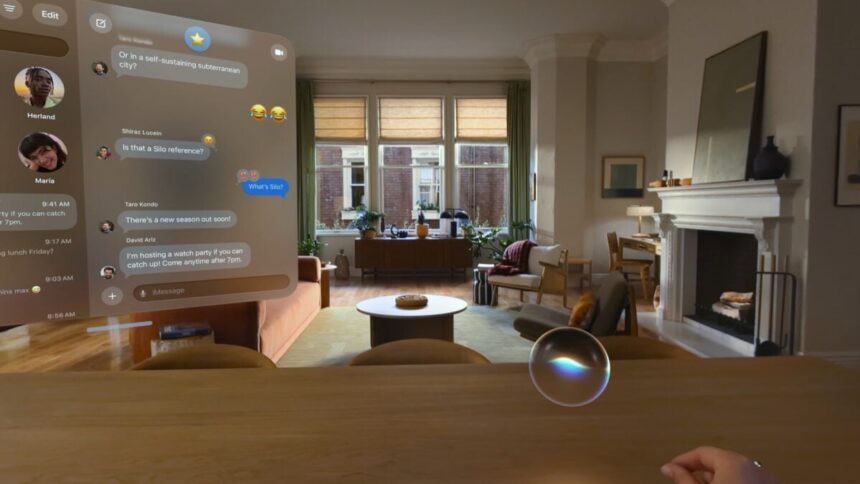
At WWDC, Apple showed off Siri working as a separate app on iPhone and Mac, but on Vision Pro, Siri appears as a floating orb, casting virtual light that interacts with IRL surfaces. While Siri on Mac can chat about what’s on your screen, Siri on AVP can wax about all the objects in your view.
The new Siri AI Orb gives off its own environmental lighting pic.twitter.com/cstqyF93F6
— Brad Lynch (@SadlyItsBradley) June 8, 2026
Those Siri queries are similar to what’s offered on the Samsung Galaxy XR. Users of Google’s Android XR OS can highlight objects using Circle to Search and then ask Gemini AI inane questions. It’s proven largely pointless outside of tourism. You’re not going to walk around with a bulky, camera-laden headset to ask it questions about local architecture (at least, not without someone pelting you with tomatoes).
In addition, we still don’t know whether Siri, which is based on Gemini AI models built in collaboration with Google, will provide accurate descriptions of what it sees. Having used Gemini on the Galaxy XR, I doubt it will be 100% correct. After the first time it lies to your face—literally, in the case of glasses—will you ever trust it again? For me, that’s a “no way.”
-
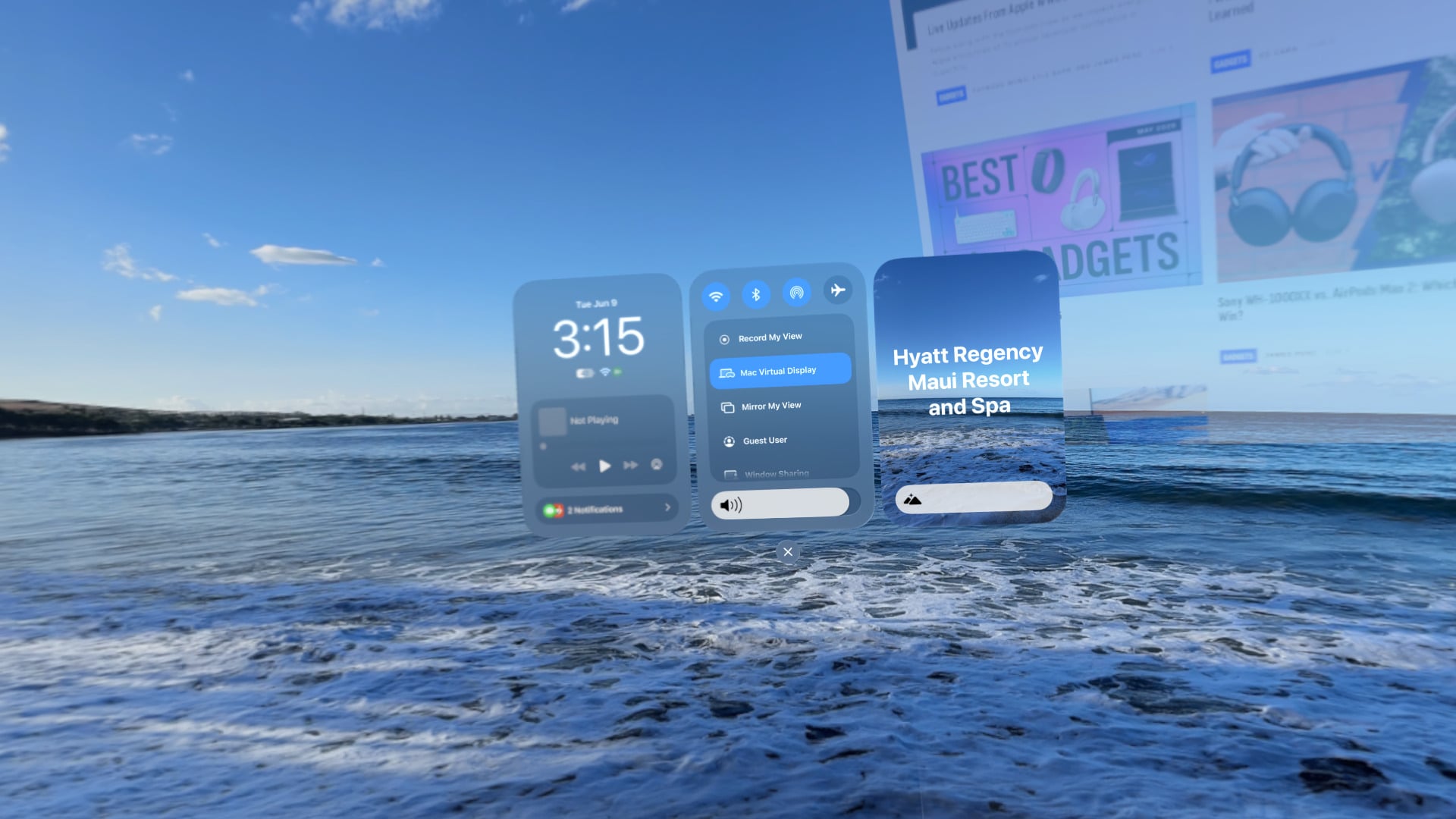
You can now add spatial environments to the Vision Pro using panoramas from your gallery. © Apple; screenshot by Gizmodo
It’s enough to make me want to return to the Vision Pro and, inevitably, set it down again after I remember how painful it is to shack up with a heavy headset. A pair of glasses simply makes more sense as an AI wearable, and Apple likely knows this.
Overall, it’s clear with this OS launch that more gadgets are on the horizon. The day they’re finally revealed will be when we see the true extent of Apple’s changes to its ever-widening ecosystem.
Read the full article here