By using this site, you agree to the Privacy Policy and Terms of Use.
Accept
Tech Consumer JournalTech Consumer JournalTech Consumer Journal
  • News
  • Phones
  • Tablets
  • Wearable
  • Home Tech
  • Streaming
  • More Articles
Reading: Archaeologists Thought These Early Cannibals Mostly Ate Children. They Were Wrong
Share
Sign In
Notification Show More
Font ResizerAa
Tech Consumer JournalTech Consumer Journal
Font ResizerAa
  • News
  • Phones
  • Tablets
  • Wearable
  • Home Tech
  • Streaming
  • More Articles
Search
  • News
  • Phones
  • Tablets
  • Wearable
  • Home Tech
  • Streaming
  • More Articles
Have an existing account? Sign In
Follow US
  • Contact
  • Blog
  • Complaint
  • Advertise
© 2022 Foxiz News Network. Ruby Design Company. All Rights Reserved.
Tech Consumer Journal > News > Archaeologists Thought These Early Cannibals Mostly Ate Children. They Were Wrong
News

Archaeologists Thought These Early Cannibals Mostly Ate Children. They Were Wrong

News Room
Last updated: July 28, 2026 4:25 pm
News Room
Share
SHARE

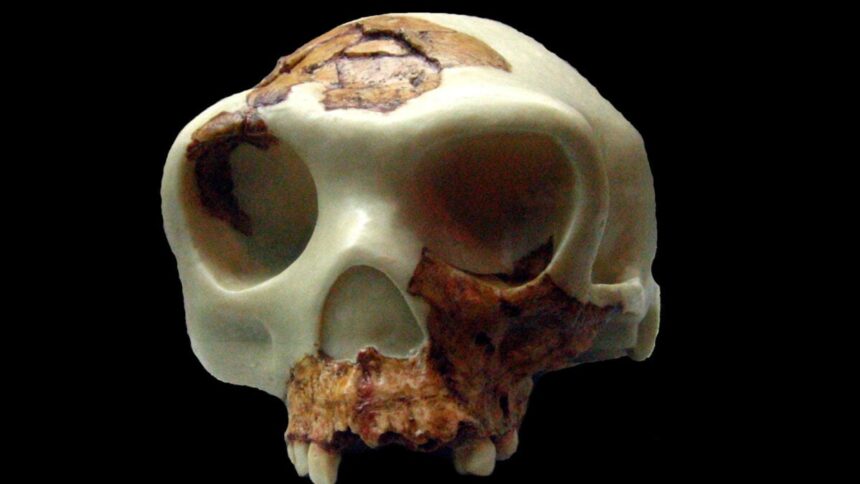
Homo antecessor is among the oldest known human relatives in Europe. Their fossils have long shown grim signs of cannibalism, mostly involving children. But a new finding suggests cannibalism was a more widespread practice among these prehistoric humans.

Archaeologists with the Catalan Institute of Human Paleoecology and Social Evolution (IPHES) announced the discovery of 24 new H. antecessor fossils at the Gran Dolina site in Spain. In a translated statement (via Google Translate), the IPHES explained that the fossils included six adult individuals whose bones retained cut marks associated with cannibalism practices. This suggests that it wasn’t necessarily younger humans who were cannibalized, as previous discoveries have indicated.

An ulna (lower arm bone) from an adult H. antecessor. Credit: Maria D. Guillén/IPHES-CERCA

“The relationship between stone tools, faunal remains, and Homo antecessor bones allows us to reconstruct an occupation area from 850,000 years ago with an extraordinary level of detail,” Andreu Ollé, the project’s co-director, said in the statement.

In 2010, archaeologists, including project co-director Palmira Saladié, proposed that H. antecessor cannibalized their young. Also at Gran Dolina, the team found bones belonging to childlike individuals with butchering marks that resembled ones left on animal remains at the site.

According to an explainer by the Australian Museum, it’s debatable whether this truly points to cannibalism, but archaeologists haven’t found evidence for alternative scenarios, such as H. antecessor funerary rites. In 2012, Saladié and colleagues published a study suggesting that H. antecessors cannibalized their young for reasons similar to some chimpanzees, who sometimes hunt the young to defend their territories.

Then last year, the team behind the latest discovery found precise cuts and human bite marks on the bones of an H. antecessor toddler, likely between 2 and 5 years old. To Live Science, project co-director Saladié said this was the “most reliable evidence that the bodies found at the site were indeed consumed.”

The new discoveries indicate that it wasn’t necessarily the youngest, most vulnerable individuals who were subjected to cannibalism. In the statement, Saladié said that the findings are a “turning point” for the Gran Dolina site, as previous discoveries had been “conditioned” by the overwhelming number of infant and juvenile skeletons.
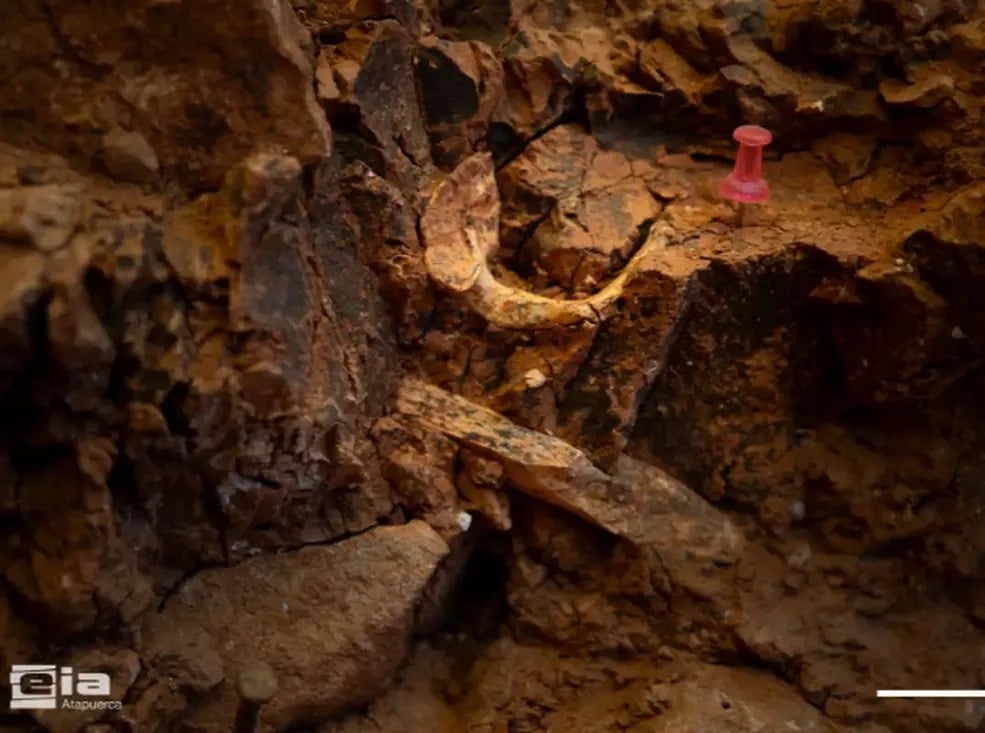
Homo Antecessor Atla
Atlas (spinal bone) of an adult H. antecessor. Credit: Maria D. Guillén/IPHES-CERCA

In addition to the adult bones, the team also unearthed a trove of stone tools and animal remains from hyenas, beavers, horses, rhinos, and more. According to the statement, H. antecessor is “one of the most unknown” species among human relatives that occupied modern-day Europe, so the latest excavations provide much-needed evidence for researchers to reconstruct the prehistoric humans’ anatomy, as well as their lifestyles.

“For the first time, we can approach its demographic structure with a representativeness that we did not have until now,” Ollé said. “Each new campaign brings us a little closer to understanding how these human groups lived, how they exploited resources, and how they were socially organized.”

Related article: Humanity’s Origin Story Just Got More Complicated

Read the full article here

You Might Also Like

Josh Hartnett’s Accent Terrifies in Netflix’s ‘Jaws’-Inspired Series ‘Below’

‘Evil Dead Burn,’ the Year’s Grossest Horror Movie, Is Coming Home

A Freak, Fall-Strength Storm Is About to Slam the Northeast With a Month’s Worth of Rain

All the News From San Diego Comic-Con 2026

Brand New Day’ Raises the Bar for What a Spider-Man Movie Can Be

Share This Article
Facebook Twitter Copy Link Print
Previous Article A Freak, Fall-Strength Storm Is About to Slam the Northeast With a Month’s Worth of Rain
Next Article ‘Evil Dead Burn,’ the Year’s Grossest Horror Movie, Is Coming Home
Leave a comment

Leave a Reply Cancel reply

Your email address will not be published. Required fields are marked *

Stay Connected

248.1kLike
69.1kFollow
134kPin
54.3kFollow

Latest News

The Best Tech to Help You Lock In
News
A ‘Mad Hatter’ Movie Is Coming From the Co-Director of the Animated ‘Grinch’
News
YouTube Premium Is Bringing Peacock’s Old-School Content to Its Platform
News
This AI Browser Is Building the Front End for the Dead Internet
News
Dan Harmon Explains Why the ‘President Curtis’ Theme Song Sounds Like That
News
Our Favorite Moments (and How to Travel Connected With Ubigi)
News
Someone Was Arrested at a Public Meeting For the Crime of Anti-Data Center Clapping
News
Prediction Markets Saved From Minnesota Ban by Last-Minute Ruling
News

You Might also Like

News

These Moths Smell Flowers Through Their Wings, Study Finds

News Room News Room 4 Min Read
News

Smart Glasses Are the One Privacy Nightmare Apple Can’t Solve

News Room News Room 5 Min Read
News

You Can Finally Trust All Your Money to X, the Everything App

News Room News Room 4 Min Read
Tech Consumer JournalTech Consumer Journal
Follow US
2024 © Prices.com LLC. All Rights Reserved.
  • Privacy Policy
  • Terms of use
  • For Advertisers
  • Contact
Welcome Back!

Sign in to your account

Username or Email Address
Password

Lost your password?