

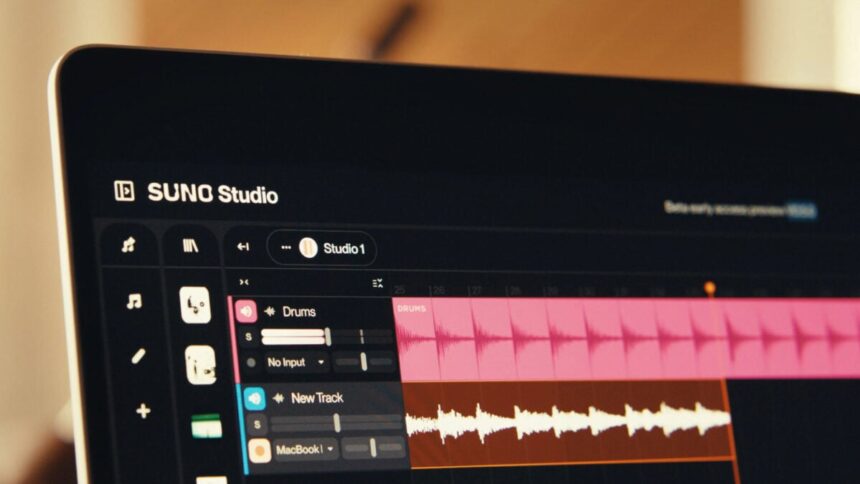
AI models tend to be black boxes, but it seems they do become a little less opaque if you forcibly crack them open. According to a report from 404 Media, a hacker who allegedly breached AI music generation platform Suno back in November 2025 was able to get a peek into the trove of training data that was used to build Suno’s models—and it contains lots of works from artists that the company seems to have scraped from streaming platforms.
Per 404 Media, the hacker was able to get their hands on source code from Suno between 2023 and 2024, which seems to include scraping instructions and a sense of just how much material Suno’s model was sucking up. The code seems to suggest that Suno scraped material from the lyrics platform Genius, YouTube Music, streaming platform Deezer, and various stock music libraries like Freesound and the International Music Score Library Project.
A file related to YouTube Music suggested that at the time, the company had scraped 2,013,545 music clips from the platform. Another dataset quantified it by time rather than files: 113,879 hours of music from YouTube Music, 17,615 from Genius, 62,117 hours from royalty-free music site Pond5—and the list goes on.
A spokesperson for Suno confirmed the hack to Gizmodo. “In November of 2025, we determined that Suno had been the subject of a limited security incident that was quickly contained,” the spokesperson said. “At the time, we immediately conducted an investigation and verified that the incident primarily involved outdated source code that is no longer in use at Suno.”
The breach also reportedly included customers’ emails or phone numbers and Stripe payment details. Suno said that “no sensitive personal information was compromised” and noted, “Importantly, Suno does not have access to customers’ full credit card numbers in Stripe.” The company did not inform impacted customers individually. “Based on the limited nature of the customer information believed to be involved, we determined that individual notifications were not warranted under applicable privacy laws,” the spokesperson said.
As for all that scraped data, Suno holds that the hack hasn’t revealed anything new. “Our goal has always been to help people create original new music, not replicate someone else’s. That’s why we build our models around what we call ‘Original Creation, By Design,’” the spokesperson said. “For example, we intentionally do not use artist names as a category of training metadata because we want our models to help people create brand new songs, not music that replicates other artists’ existing work. It’s also why we built Suno with detection filters that block or prevent a user from using specific artist, song, or album names as prompts, and prevent users from uploading lyrics or sound recordings that match existing works.”
Suno has been the subject of several lawsuits over its music generation model—including one case that would seem to contradict its claims of safeguards against obvious knock-offs. In a case brought against Suno by major labels—including Universal Music Group, Capitol Records, Atlantic Records, Warner Music, and Sony Music—the labels allege, among other things, that prompting “1954 rock and roll billy haley comets” in Suno resulted in an output that allegedly directly rips off Bill Haley’s “style and melody.”
As for the actual material scraped by Suno, the company basically seems to argue that it is all fair game. “As we have stated in public filings and disclosures, Suno’s AI models have been trained on publicly available music files and related metadata accessible on third-party websites on the open Internet,” a spokesperson for the company said.
The company has admitted in legal filings that its training data “includes essentially all music files of reasonable quality that are accessible on the open internet,” but claims that its scraping and use of the material for training its models falls under fair use. Whether that defense holds or not is a very open question—there have only been a few rulings on the question, and they’ve been split thus far.
Suno obviously has opted not to wait for clarity and has built its model seemingly on the assumption that either its fair use defense will win out or it’ll just pay whatever fine it gets hit with should a ruling go against it. To its credit, it’s been pretty transparent about the fact that it’s scraping everything. Now, thanks to the hack, we’ve just got a clearer sense of the scale.
Read the full article here