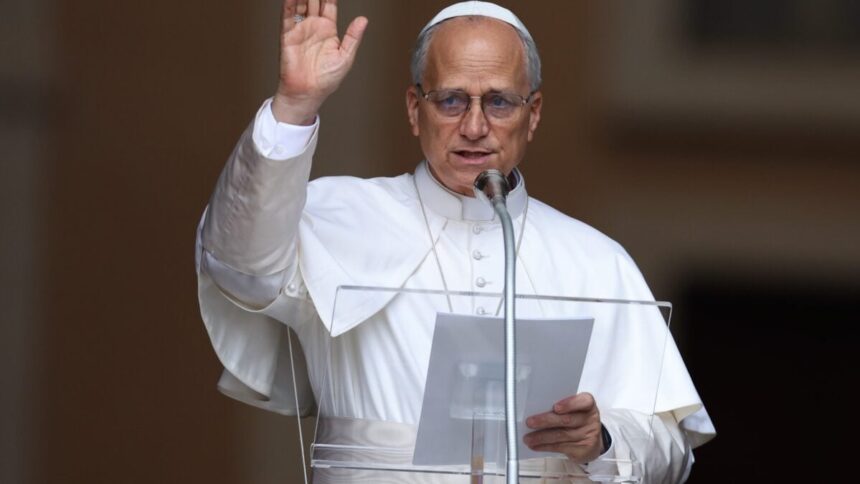
Pope Leo XIV’s recent encyclical on AI could set off a wave of workers seeking religious exemptions from using the tech at work.
One software engineer in North Carolina already secured one last month, Business Insider reports.
Erin Maus, a Unitarian Universalist, first sought the accommodation in April at the large tech-entertainment company where she works, which she described as progressive. She argued that using AI did not align with her religious beliefs because of environmental and ethical concerns.
Maus was granted the exemption in May, before the pope’s AI remarks.
“I’m writing my code and reviewing my code by hand, which seems crazy to say,” Maus told Business Insider. “Just two years ago, how else would you do it?”
Maus is unlikely to be the only person seeking a similar accommodation as companies increasingly invest in AI and push, sometimes even mandate, employees to use the technology. In the U.S., the share of employees who say they use AI at least a few times a year at work has nearly doubled from 21% to 40% in 2025, according to Gallup.
Now, the pope’s remarks and official theological document could give some workers a stronger argument.
“In the era of artificial intelligence, when human dignity is threatened by new forms of dehumanization, ours is the pressing duty to remain profoundly human,” the pope wrote in his 43,000-word encyclical titled Magnifica Humanitas, published last month.
He wrote that AI is dehumanizing society by reducing “the mystery of the person into data and performance” and called on the tech industry to avoid “the idolatry of profit that sacrifices the weak.”
The pope continued that “a slower pace in adopting AI does not mean opposing progress; instead, it is an exercise of responsible care for the human family.”
That call for a slower adoption of AI could be enough for some workers to argue they should not be required to use it on the job.
“When he’s speaking, he’s speaking as the pontiff—as a religious figure—so he’s raising these human dignity issues as religious issues, theological issues,” Jonathan Segal, an employment attorney and Duane Morris partner, told HR Brew this month. “I think it is inevitable that some employees will rely on this to say…I can’t use AI because it conflicts with a religious belief that I have.”
Under Title VII of the Civil Rights Act of 1964, employers are required to make reasonable accommodations for workers whose sincerely held religious beliefs conflict with a work requirement, unless the accommodation creates an undue hardship for the employer.
And it’s not a stretch to think some of these requests could at least get serious consideration. Just a few months ago, Rex Healthcare agreed to pay $150,000 to settle a lawsuit from the U.S. Equal Employment Opportunity Commission accusing the company of unlawfully denying a remote employee’s request to be exempted from its mandatory COVID-19 vaccine policy over religious beliefs.
“I think this opens a door—or it’s a little bit of a road map—for employees to raise concerns,” Segal told HR Brew. “What the courts have said—what the EEOC has most definitely said—is that, as the general proposition, we shouldn’t question the legitimacy [of] sincerely held religious beliefs.”
Read the full article here