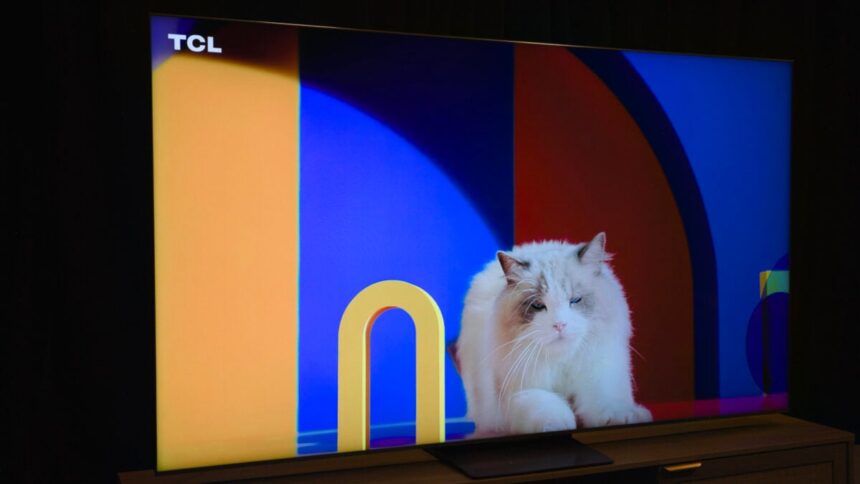
TCL, a brand known for its relatively cheap screens, now has its own flavor of expensive RGB-mini LED TV. But forget all that. Hell, push the whole RGB acronym to the back of your mind because TCL says its good ol’ mini LED televisions, specifically its new “super quantum dot” displays, are not only cheaper but also better than RGB—even its own.
The TV maker just dropped a smattering of new screens across the mini LED spectrum. The new QM8L and QM7L both offer compelling specs—4K resolution, 144Hz refresh rate, more dimming zones, and higher possible brightness—than previous TCL TVs. They also promise to shove even more Google Gemini AI features inside your home entertainment center. Why anyone would want to make ugly AI-generated videos on their TV through Google’s Veo model (available via a future update) is beyond me.
There are a few things going on that set these new TVs apart. The most obvious is in the numbers. Both TVs are scaled-down from the flagship X11L launched back at CES 2026. The QM8L, with its 4K resolution and 144Hz refresh rate, promises 4,000 discrete local dimming zones. That’s supposed to offer better contrast and highlights for HDR (high dynamic range) content than the last-generation QM8K. Sure, the X11L claims to use 20,000 discrete dimming zones, but the QM8L starts at $2,500 at 65 inches. The smallest X11L, at 75 inches, costs $7,000.
Both the QM8L and QM7L can hit the full BT.2020 color gamut. It’s one of those things that matters more on paper than in real life. These screens are built on TCL’s enhanced “super quantum dots,” or SQD, which is an upgrade to previous quantum dot technology with better luminance and improved colors.
If you’re looking for something even cheaper, the QM7L starts at $1,200 for the 55-inch model. Something to be aware of is that the 4K TV contains a less-powerful chip that doesn’t support the enhanced Dolby Vision 2 Max HDR standard. Dolby Vision 2 may provide better HDR content that’s tuned to what you’re watching. The QM8K supports Vision 2, but you’ll have to wait for an OTA (over the air) update that adds it. While Dolby Vision 2 content will be sparse at launch, TCL promised all first-gen Dolby Vision content should be enhanced on these new TVs.
Why TCL would rather you buy a SQD screen
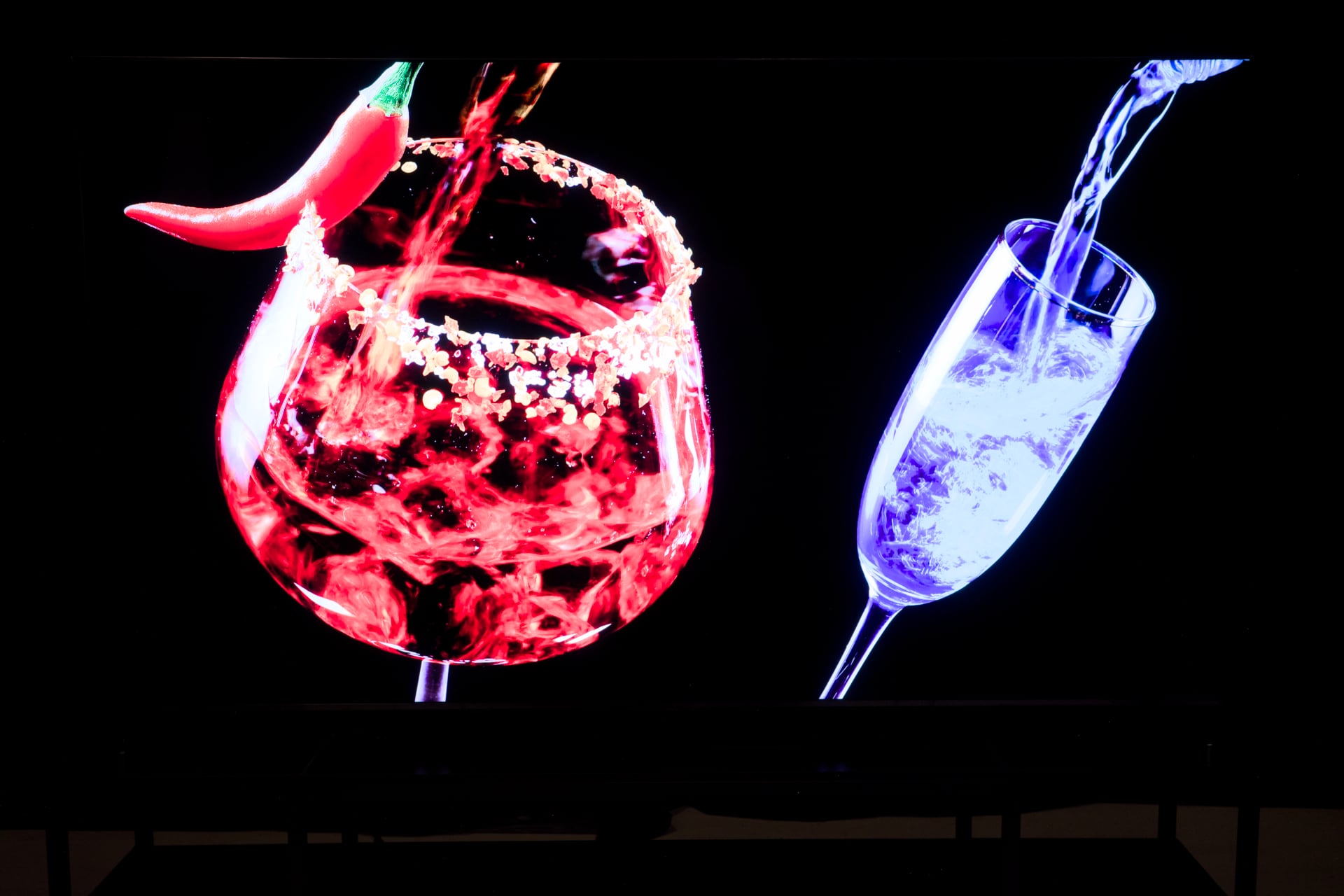
TCL also has a new RGB-mini LED TV—the RM9L—that will compete with micro RGB TVs from companies like Samsung. But you should ignore it. That’s not me saying that; that’s TCL itself claiming the company’s SQD TVs are better and more cost-effective for the average buyer.
Everybody, from Hisense to Samsung to LG, has their own variety of an RGB TV. These TVs rely on tiny LEDs capable of displaying red, green, and blue light independently. RGB display technology is designed akin to mini LED, but it offers a new way of presenting color on a screen. A mini LED uses a bottom layer of slightly larger white LEDs to illuminate different parts of a panel before adding color. The quantum dots layer enhances colors to appear more vibrant.
While TCL proclaims its first RGB-mini LED TV looks the best, the company is adamant that the screen type hides several drawbacks. One is “color crosstalk,” where the light from the red, green, and blue lights may overlap, resulting in potentially inaccurate color. TCL implied you may get worse blooming control—where white spills onto darker sides of the screen—than on a mini LED screen with more dimming zones. In person, TCL’s RM9L is no slouch. It presents a great picture with sharp visuals, minimal haloing and bloom, and some relatively deep blacks (though not as inky as OLED).
I asked TCL explicitly where it saw its RGB-mini LED TV stacking up with the rest of its mini LED lineup. While the RM9L costs $8,000 for its 85-inch model—its smallest size—TCL VP of product planning Scott Ramirez said the QM8L could offer “comparable” picture quality at just $4,000 for the same size.
“If we didn’t make an RGB and we only had SQD, and we said the SQD was better, what would people think?” Ramirez explained. “We said, ‘That’s not what we’re going to do.’ We are going to make an RGB better than other people’s RGB, but then we’re going to make something better than that, which is the X11L.”
Gemini is here, too
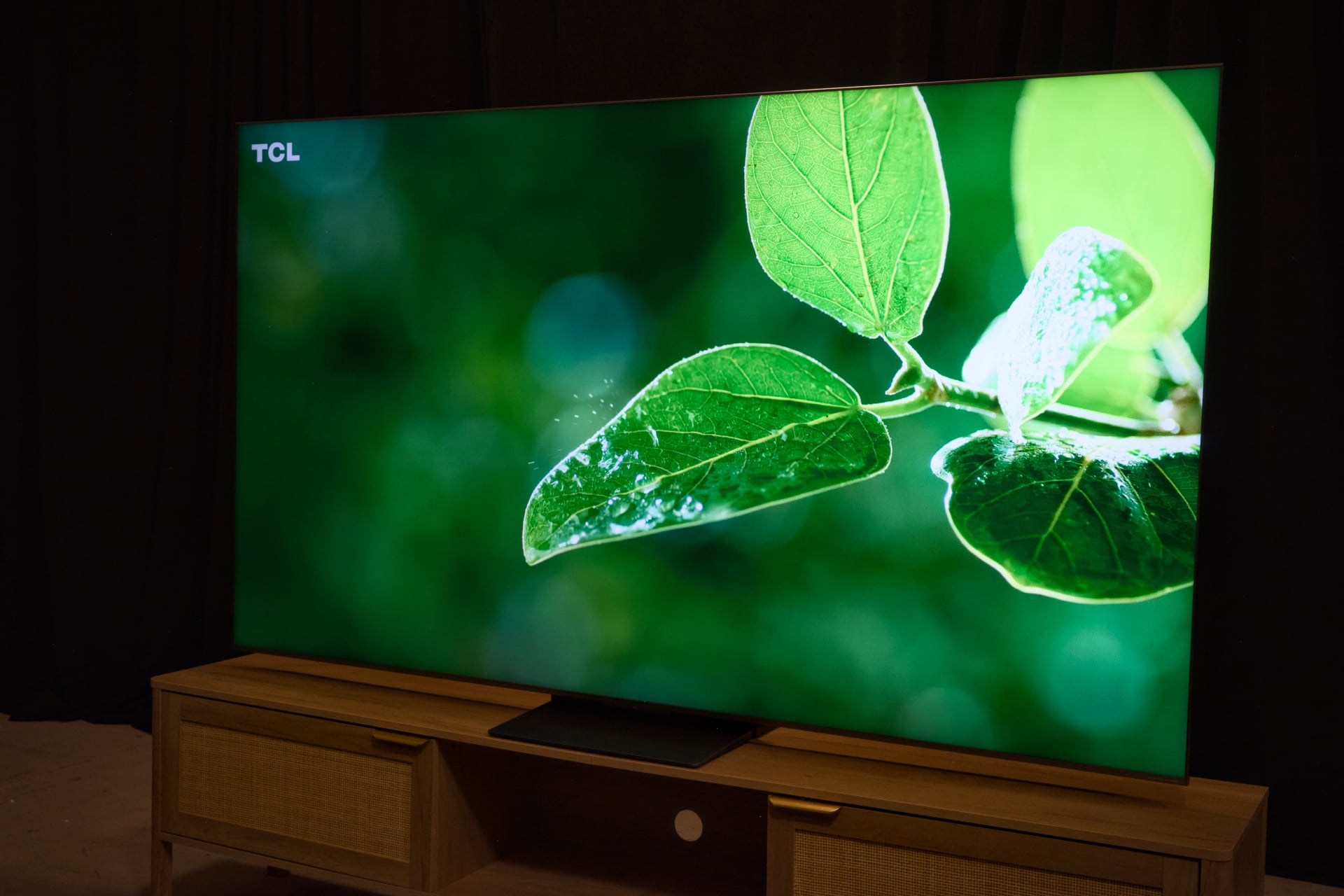
That’s not to say TCL imagines its RGB TV is bad by any standard. If you stared at both the flagship X11L and RM9L showing the same content, you would have to squint to spot any difference in quality. It’s only when some scenes come on, like a pure white flower on a black background, that you can tell there’s any difference in terms of raw brightness. The flagship mini LED X11L manages 10,000 nits of peak brightness. The RGB-mini LED RM9L peaks at a lower 6,000 nits of brightness.
Even if TCL asks you to ignore its RGB TV, you should also ignore the AI. Soulless Google Veo video content is already pointless. In an upcoming software update, users should be able to ask the new TCL TVs to change picture settings for them using Google Gemini. If you want a better picture for sports, the TV may change its display settings or change the gamma and other values to boost the image quality.
Google TV group product manager Jamieson Brettle told me the TV should be able to turn off motion smoothing on command. Soon enough, you won’t have to dig through system settings on your parents’ next TV to nix that too-smooth “soap opera” effect.
Read the full article here