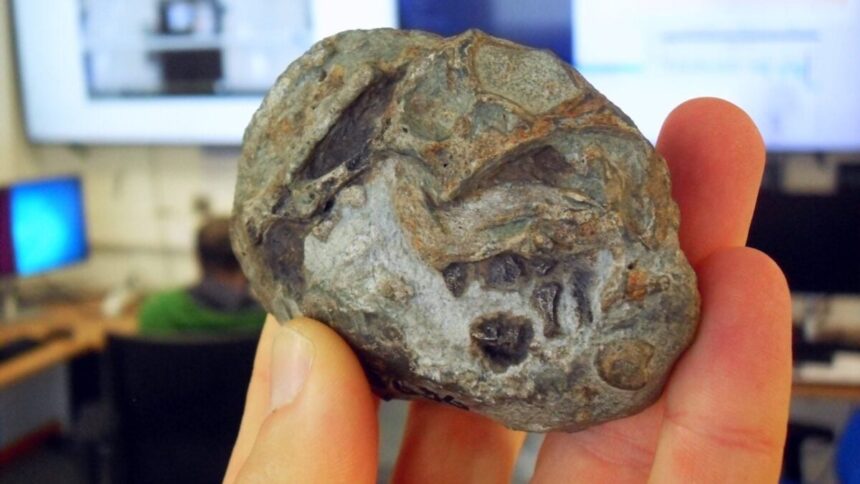
Fantastic numbers of leathery, beaked Lystrosaurus—a distant ancestor to today’s mammals, often the size of a small dog—roamed the sulfurous wastelands of Pangea after the Permian–Triassic extinction event over 251 million years ago. While many of its predators were busy suffocating to death under the endless volcanic soot and sweltering temperatures that led to this era’s “Great Dying,” the little plant-eating Lystrosaurus is believed to have burrowed and hibernated its way to safety.
Now, Paleontologists understand one more quirk of the many far-flung species that once made up the genus Lystrosaurus: These proto-mammals laid eggs—and the sheer size of those eggs were likely critical to their survival.
Lystrosaurus reproduced via eggs so large compared to its own body weight, in fact, that researchers now believe that baby Lystrosaurus were born ready to roll—advanced enough in their development to evade predators, feed themselves, and even make more little Lystrosaurus. Their larger eggs would have also enjoyed another major advantage during this overheated post-apocalypse: a low “surface area to volume ratio” that would have made them less prone to fatal drying out, or “desiccation,” according to a new study of the first confirmed egg containing an embryo of a Lystrosaurus.
“This fossil was discovered during a field excursion I led in 2008,” paleontologist Jennifer Botha, a professor at University of the Witwatersrand in South Africa and a coauthor on the new study, said in a statement. “I suspected even then that it had died within the egg, but at the time, we simply didn’t have the technology to confirm it.”
Ghost in the shell
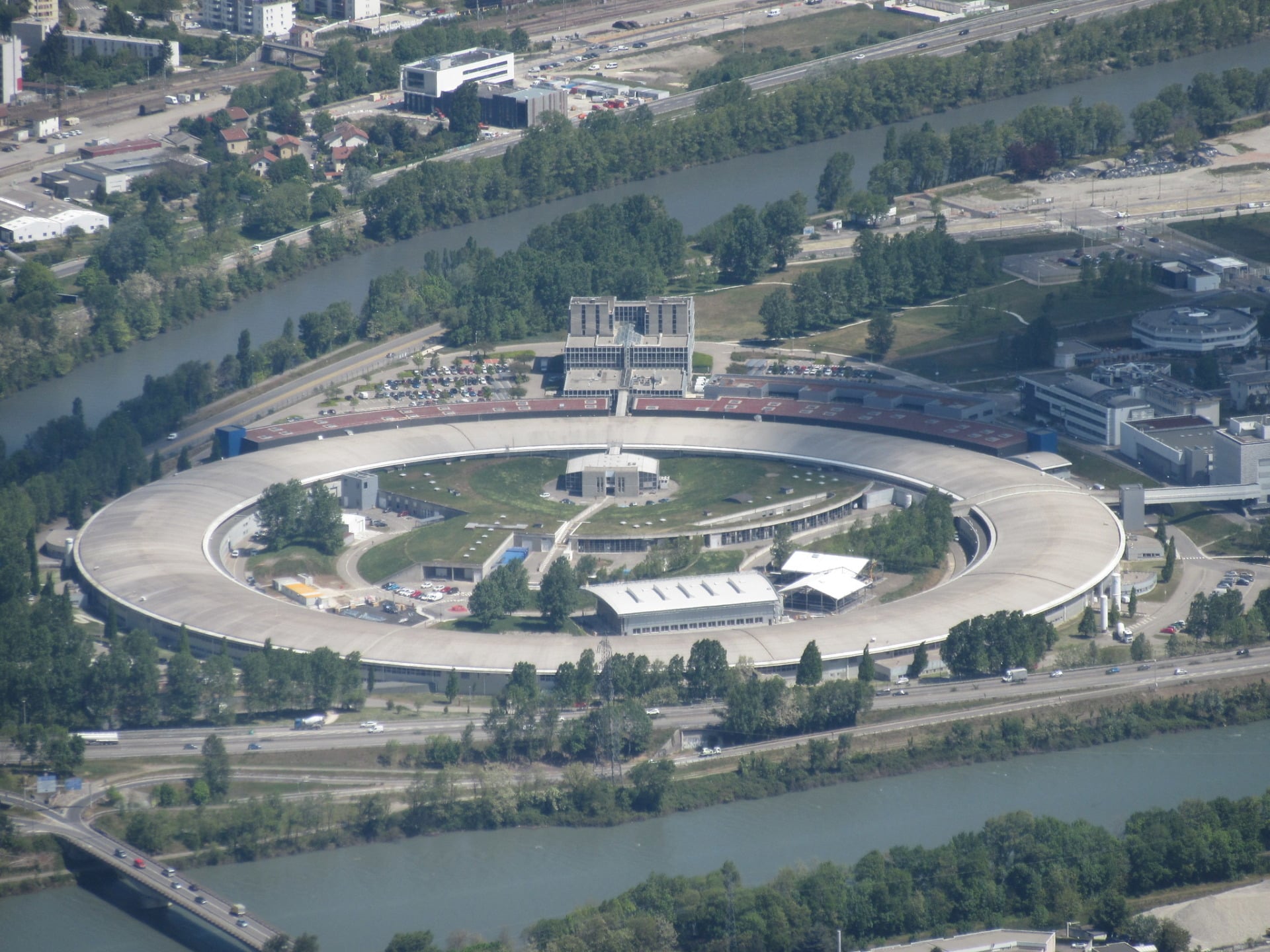
At the field site, Botha was convinced that her team had uncovered a “perfectly curled-up Lystrosaurus hatchling,” but it would take new and more sophisticated X-ray scanning—via a beam intensified within a particle accelerator known as a synchrotron—to get a clearer picture of this fossil. Specifically, it would take well over a decade, and a massive construction project at the European Synchrotron Radiation Facility (ESFR), for such a device to come online. In 2022, ESFR’s BM18 beamline synchrotron X-ray CT imager, became operational.
That’s where Botha’s coauthor, Vincent Fernandez, a permanent beamline scientist at the ESFR in Grenoble, France, came in. Fernandez put the fossil under both X-ray micro-computed tomography (CT) and the new BM18 beamline imager. The high-energy X-ray’s employed by the BM18 gave the team a resolution inside the fossil down to just under 18 micrometers.
“It was essential that we scanned the fossil just right to capture the level of detail needed to resolve such tiny, delicate bones,” Fernandez said in a statement.
The scans illuminated a hidden detail in the Lystrosaurus hatchling’s skeletal structure that confirmed it was much more likely that the specimen had been fossilized as an embryo rather than a newborn.
“When I saw the incomplete mandibular symphysis, I was genuinely excited,” paleontologist and coauthor Julien Benoit said in a statement. “The mandible, the lower jaw, is made up of two halves that must fuse before the animal can feed. The fact that this fusion had not yet occurred shows that the individual would have been incapable of feeding itself.”
The hatchling, in other words, had not yet hatched.
Soft-shell, alternative architecture
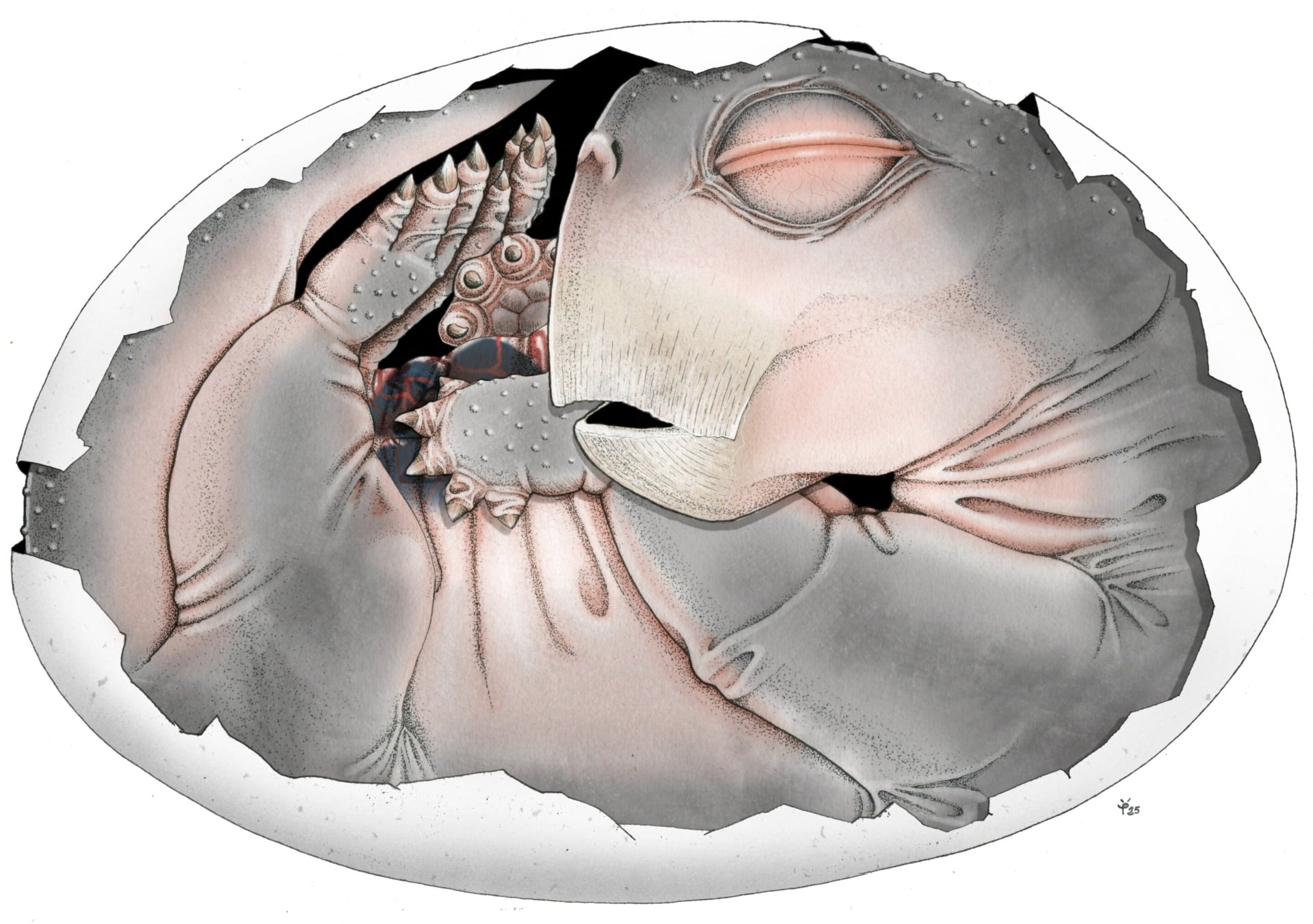
The three researchers hypothesize that Lystrosaurus young likely hatched from “soft and leathery” eggs, which would resolve the perplexing issue of why no prior eggs have ever been discovered for these creatures anywhere in the extant fossil record.
Dinosaur eggs, which typically have much harder shells, will readily calcify into fossils—as wet mineral deposits essentially weatherize them, literally setting the eggs in stone. Lystrosaurus’ soft-shelled and more mammalian eggs, on the other hand, would more than likely decay anonymously into dust.
“Understanding reproduction in mammal ancestors has been a long-lasting enigma,” Fernandez said, “and this fossil provides a key piece to this puzzle.”
According to the ESRF’s official statement, the team’s discovery is not only “the first direct evidence of egg-laying in mammal ancestors” but also “a powerful explanation for how Lystrosaurus came to dominate post-extinction ecosystems.”
Despite their cozy reputation, as sedentary, leaf-chewing burrowers—happy to ride out a torturous, roughly two-million-year-long extinction event—Lystrosaurus survived by growing up fast.
Read the full article here