
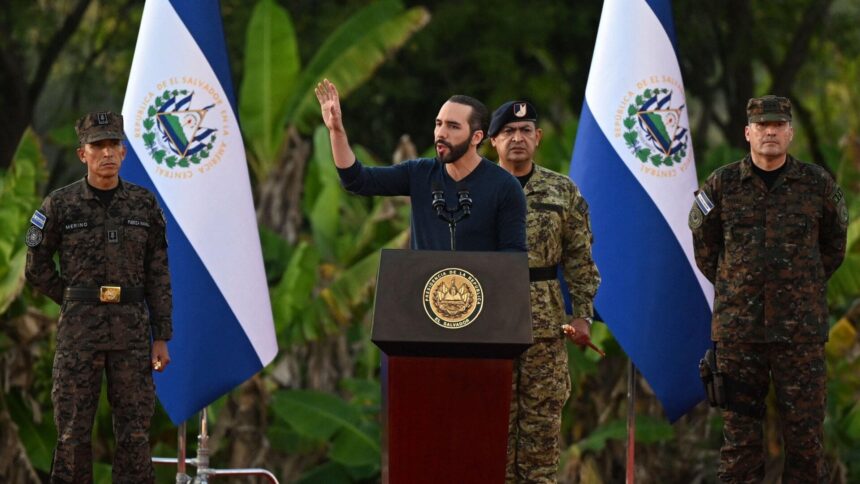
Salvadorean news outlet El Faro has reported that assets tied to two of its shareholders, including bank accounts and property, have been frozen. The outlet maintains that President Nayib Bukele ordered the action as retaliation for its investigations into corruption inside his administration. Notably, the alleged move would contain multiple layers of irony. Bukele has positioned himself as one of Bitcoin’s most vocal advocates, and freezing bank accounts would definitely go against the cypherpunk philosophy that underpins the financial technology. Additionally, had the journalistic organization relied on the cryptocurrency instead of conventional banking channels, such an asset freeze would have been far more difficult to execute.
On Thursday, El Faro publicly detailed the freezes after discovering them through its bank and the property registry rather than any official notice from authorities. Director Carlos Dada called the measures political rather than fiscal and accused the government of trying to silence critical voices. The outlet has long tracked alleged corruption in Bukele’s circle, including recent probes into gang negotiations and a PBS Frontline documentary that aired not long before the accounts were locked. Government auditors had previously accused El Faro of dodging roughly $200,000 in taxes since 2020, a claim the outlet rejects. Bukele’s team offered no immediate comment when reached for comment by the Associated Press, though the president has labeled the organization’s work “fake news” in the past. Prior to this latest development, El Faro had already relocated their headquarters to Costa Rica and now operates in exile.
Bukele first signaled his bitcoin strategy at the Bitcoin 2021 conference in Miami. Days later, the Legislative Assembly passed the Bitcoin Law, making the asset legal tender in the country. It rolled out the Chivo wallet that October and deposited the equivalent of $30 in bitcoin to every citizen who signed up. Additionally, the government began buying bitcoin outright, starting with 400 bitcoin worth about $20.9 million on the day before the law took effect. Over the following months the treasury accumulated at least 2,300 bitcoin at a total cost near $150 million, but the country’s current bitcoin holdings are unclear as there have been conflicting reports regarding whether they’re still buying. Bitcoin ATMs appeared in commercial zones, most notably in the surfing town of El Zonte, which had already earned the nickname Bitcoin Beach. The Bitcoin Law also required every business in the country to accept bitcoin for payments, and Bukele floated plans for a geothermal-powered Bitcoin City at the foot of the Conchagua volcano and $1 billion in so-called volcano bonds to fund both the city and further bitcoin acquisitions.
El Faro’s own reporting on these moves has been consistently skeptical. The outlet has examined the lack of transparency around government bitcoin purchases, the sealed details of the $150 million trust fund, and the gap between official promises and actual results. Its coverage has highlighted how the mandatory acceptance rule clashed with everyday Salvadoran preferences and questioned whether the project truly served ordinary citizens or mainly served to improve Bukele’s image abroad.
The Chivo wallet itself was also seen as controversial both within El Salvador and among the Bitcoin userbase. Although promoted as a simple on-ramp to bitcoin, it operated as a custodial service controlled by a government entity. Users had to submit national ID numbers, birth dates, and selfies for KYC and AML checks, giving authorities visibility into transactions that pure bitcoin wallets avoid. According to WalletScrutiny, the app’s code was also obfuscated and closed-source, making independent audits impossible. A September 2021 survey found 68% of Salvadorans opposed the adoption, and nine out of ten said they did not understand bitcoin. By 2022, only about 20% of businesses accepted the cryptocurrency in practice, and remittances sent via the network stayed below 2%.
More recently, El Salvador has scaled back several signature elements of its Bitcoin strategy to secure a $1.4 billion IMF Extended Fund Facility loan. In January 2025, the assembly amended the Bitcoin Law, removing bitcoin’s mandatory acceptance by businesses, barring its use for taxes or government debts, and stepping away from direct involvement in the Chivo wallet. The changes took effect 90 days later. The IMF had long criticized the volatility and money-laundering risks tied to the original policy.
In 2021 the head of a leading independent media organization in El Salvador joked to me that they might need Bitcoin (even if they opposed all of Bukele’s policies) because eventually their bank accounts would be frozen or censored
Well… https://t.co/LKUVxLNjw8
— Alex Gladstein 🌋 ⚡ (@gladstein) June 20, 2025
Bitcoin users and cypherpunks remain divided over Bukele. Many welcome the first nation-state endorsement of the network and the attention it has drawn to self-custody tools and Lightning Network payments; however, others worry that the accompanying erosion of democratic norms undercuts the technology’s core promise of individual sovereignty. The Human Rights Foundation’s Alex Gladstein captured the tension in a 2021 article published by El Faro. “It’s quite clear that Bukele is dismantling democracy very fast, and that’s antithetical to bitcoin,” he was quoted as saying at the time.
Read the full article here