The American economy increasingly looks like one big casino. Even former President Trump has acknowledged elements of this shift in recent comments, stating, “You know, the whole world, unfortunately, has become somewhat of a casino.” It may be a bad sign that Trump is one of the few people in history to manage to bankrupt a casino.
In recent years, crypto memecoins have exploded in popularity, sports gambling has gone mainstream, prediction markets operate with frequent insider advantages, and people borrow money for DoorDash deliveries. Critics have highlighted these trends for years. A new gamified crypto debit card now offers the latest example, sold under the slogan “buy now, pay maybe.”
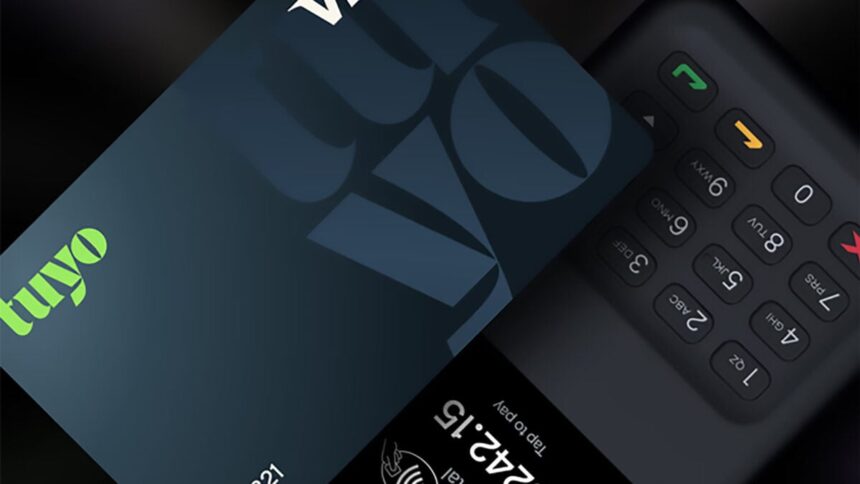
Tuyo markets itself as a DeFi-powered Visa debit card built around the USDC stablecoin on Coinbase’s Base blockchain network. Users hold funds in a self-custodied wallet and can opt into Earn strategies that generate yields via selected DeFi protocols. The card works like a standard debit product in most ways: purchases draw directly from available balances, with no credit extended and no overdrafts possible. Deposits and withdrawals support multiple chains, including Ethereum, Arbitrum, Optimism, and Polygon. The company handles fiat conversions through regulated partners and charges a foreign-exchange spread below 1% plus standard network fees in some cases.
With all that said, the headline feature is “buy now, pay maybe.” When a user swipes the card, Tuyo may elect not to debit certain transactions entirely. From the company’s viewpoint, this creates a novel incentive that makes routine spending more engaging. The day after its initial launch announcement, Tuyo reported waiving charges on more than 1,700 purchases. The company describes the system as an algorithm that selects free transactions to maximize customer satisfaction rather than as a betting mechanic. They stress it is not a lottery, sweepstakes, or game of chance, and they operate it at their sole discretion under separate terms from the card issuer and network.
Of course, in practice, the card effectively turns every payment into a spin at the roulette table. Customers have no way to predict which transaction will qualify as free. The company does not publish the odds or any statistical details about how frequently purchases get waived. That lack of transparency matters because setups like this tend to favor the house over the long run. Fintech attorney Ariel Givner put it directly on X: “This is engineered addiction. It preys on the same psychological hooks as casinos and loot boxes. By dangling the unpredictable ‘maybe’ of a free purchase… it turns everyday spending into a slot machine.” She added that the 1,700 waived transactions amounted to early marketing spend designed to generate buzz and FOMO, while most users will receive nothing.
Gamified rewards programs have existed in various forms for a long time. For example, the Fold app gives bitcoin back on purchases and then lets users spin a wheel for bonus multipliers that can range from a few percentage points up to an entire bitcoin. Merchants have run similar campaigns for decades. For much lower stakes, the McDonald’s Monopoly game turns ordinary food purchases into a board-game-style contest where customers collect game pieces for chances at cash prizes, cars, or vacations. These programs have long shown that injecting randomness and the possibility of an outsized win can influence buying behavior.
The same social-engineering tactics that built addictive social media feeds are now spreading through financial apps, and those apps are steadily becoming more similar to gambling platforms. Coinbase began as a simple service for buying and holding bitcoin, but it has since grown into a full casino environment with thousands of cryptocurrencies, derivatives, and a recent emphasis on prediction markets, even leading to pushback from users during the recent NCAA basketball tournament. Robinhood has taken a parallel route, expanding from basic stock trading into crypto and event-based prediction contracts.
The volume of gambling-like activity across the economy worries many market analysts and observers. Patterns of this sort have often appeared in societies nearing economic or social breakdown. Inflation pressures from the COVID period have somewhat cooled, yet the current atmosphere has reminded some, such as investment researcher Luke Gromen, of sections of the 1975 book When Money Dies, which examined hyperinflation in the Weimar Republic in the years leading up to the Nazi takeover. One passage reads: “Gambling on the stock exchange had become the fashion: the only way to avoid losing all one’s money and perhaps add to it.”
Today, the dynamic has less to do with outright hyperinflation and more to do with people on lower economic rungs trying to keep pace amid widening inequality. Federal Reserve figures for the third quarter of 2025 show the top 1% of households owned 31.7% of national wealth, the highest share since the Fed began tracking the data in 1989. That group’s $55 trillion in assets equaled the combined total held by the bottom 90%.
In any economy built this way, the real profits flow to the house and the insiders tied to it, exacerbating the very wealth inequality problem people are desperately trying to push back against. Sportsbooks posted record revenue of $16.96 billion in 2025, an 11% jump from the year before, on a total betting handle of $166.94 billion. The Trump family saw its net worth rise by $1.4 billion from crypto-related ventures during the same period, bringing digital assets to roughly 20% of the family’s $6.8 billion fortune. Those projects, which include a DeFi platform, memecoins, and mining operations, have drawn multiple accusations of unprecedented levels of corruption and policy influence, in addition to a lack of trust from the voting public that elected figures will regulate the industry.
The Tuyo card is only the latest product to wrap everyday finance in a casino wrapper. But the overall trend of gambling becoming an increasingly large part of daily life is not something that should be taken lightly.
Read the full article here