
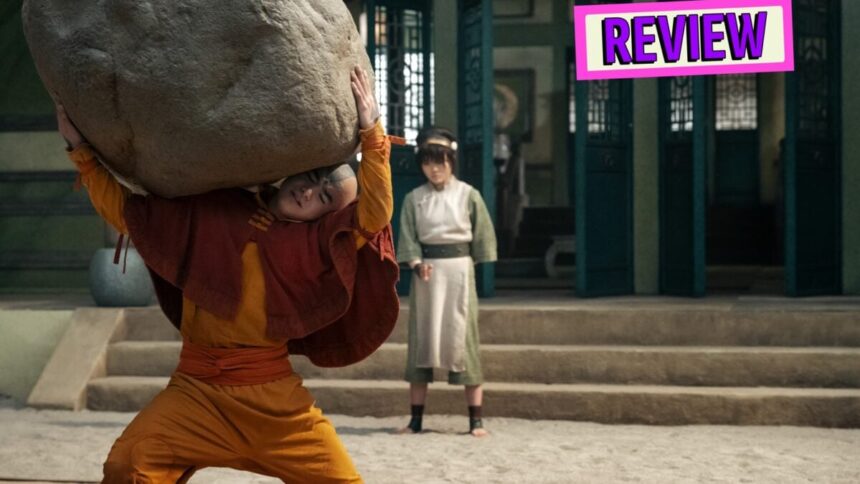
We live in a time when millennials who grew up watching Avatar: The Last Airbender on Nickelodeon can’t seem to catch a break. Whether it’s M. Night Shyamalan’s so-bad-you-can’t-even-hate-watch it 2010 film, Paramount not seeming to care too deeply about Avatar Aang: The Last Airbender leaking online, or the first season of Netflix’s live-action series—sans creators Bryan Konietzko and Michael Dante DiMartino—taking head-scratching creative liberties that did more harm than good with diehard fans of the series, let alone fans of animation, who’re once bitten and twice shy by the mere mention of “live-action” anything. However, we also live in an age when live-action projects can surprise us by being quite good, giving Netflix, misplaced or otherwise, confidence to keep on trucking until morale improves.
Which brings us to the second season of the live-action Avatar: The Last Airbender series and where it shakes out in this equation. Long story short: it’s fine. Not an absolute disaster by any means. Short story long: it still feels incredibly imbalanced as a live-action show based on a cartoon, begging the question of why it even exists.
After having mastered waterbending and fending off the invading Fire Nation in a bittersweet victory, thanks to the assistance of the kaiju-sized Ocean Spirit, the second go-around with the live-action Gaang sees Aang (Gordon Cormier) traveling from the Northern Water Tribe to the Earth Kingdom in hopes of finding a teacher to help him master earthbending. Unfortunately, Aang’s trip isn’t a direct flight to mastering the elements. Key among the troubles weighing on his arrowed head are contending with Fire Lord Ozai (Daniel Dae Kim) siccing his lightning-wielding daughter Azula (Elizabeth Yu), on his air bison’s trail, peeking over his shoulder at the ever-present threat of her brother, Prince Zuko (Dallas Liu), and saving the Earth Kingdom of Ba Sing Se from an invasion by the Fire Nation. His last hurdle as the teenage savior of humanity would have been easier to overcome had Ba Sing Se’s citizens and king not fallen for the propaganda claiming there was no war in the first place.
On paper, the second season of Avatar: The Last Airbender is one that’s all but assured to be the one to watch. After all, it adapts the second book of the animated series, where the show inarguably hit its stride, bringing along fan-favorite characters like the greatest earthbender ever, Toph Beifong (Miyako), the tease of the long road of redemption ahead for the disgraced Prince Zuko, and Aang’s moral dilemma of succumbing to the unsolicited advice from his past lives to become an ends-justify-the-means Avatar like his predecessors, or something greater. On top of all the element-bending kung fu action, political subterfuge, and mix-and-match of chimeric beasts that make up the world of Avatar, this season is one that feels like a layup not to mess up.
Unfortunately, its showrunners also have an affinity for the animated series’ second season, leading to the jerry-rigging of many of its big reveals—like Azula—in its first season. That leaves this season with little in the way of genuine things to look forward to, beyond recoiling at how the show would rework, stretch out, and overcomplicate what already worked in the animated series. And of course, groaning at all of its forced referential nods.
As with the previous season, Avatar‘s second season feels like it was brought to life purely on weaponized nostalgia. That and extra padding baked into its seven hour-long episodes, stretching otherwise bite-sized chunks of the cartoon into something trying its damnedest to resemble prestige television. If you’ll pardon the mixed metaphor, what’s left is a live-action series unspooling the thread of its source material. A ship of Theseus with unnecessary additions that make you long for the old animated dirigible you once knew. Instead of setting sail with it to see it reach the finish line, you’re only aboard to cynically see how it’ll capsize.
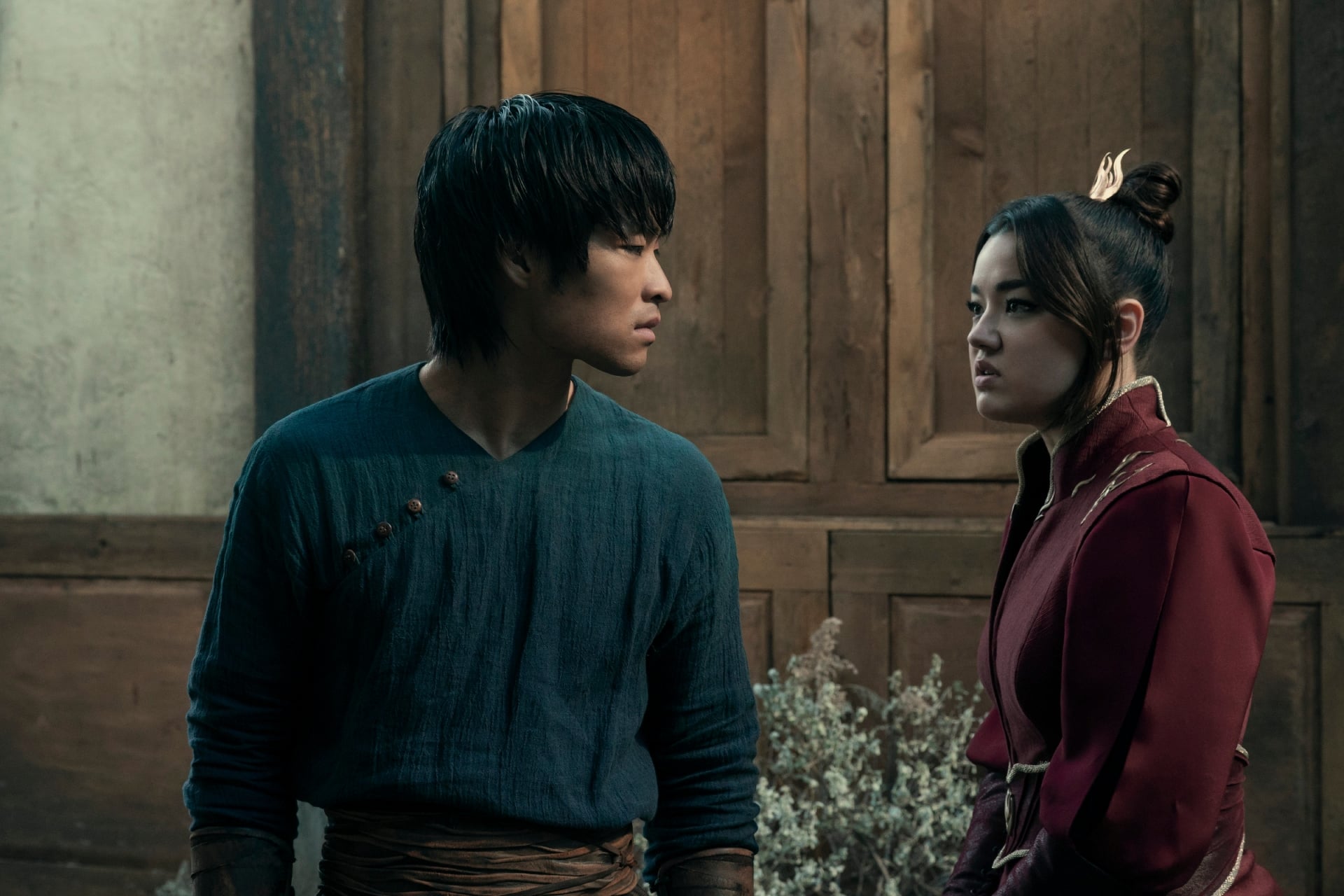
That’s not to say there aren’t moments that work this season. Granted, many of them are the same beats that worked in season one, with a few additions that make season two feel like it’s going the extra mile to justify its existence. Some ships look nice coasting at the pier. Liu still gives the strongest performance as Zuko, layering agony, turmoil, and humility in ways that transcend live-action cosplay and making the character his own. Ian Ousley is even more in his bag as Sokka; most of his non-referential quips are the show’s highlights.
Likewise, Miyako fits into the ensemble as the missing piece that makes its crew feel whole, playing Aang’s bratty, quick-witted teacher with the same born-for-this-role energy as Iñaki Godoy as Luffy in Netflix’s live-action One Piece series. Less central but just as crucial are the serene, nature-documentary-style title cards and the unshakable sense that the cast is having fun, or at least feels more comfortable, bantering with each other.
Now for the negatives. When I weigh my enjoyment of Avatar’s second season against its bright spots, it’s impossible to ignore how punishingly long it feels. It’s a slog. The series clings to last season’s worst habit: compressing four or five cartoon episodes into a single, hour‑long installment. By the time the credits roll—or, more realistically, by the time I check the timestamp, groan, and realize I’m still trapped in the same bloated episode I started—I’m struck by how anemic the story feels despite its runtime.
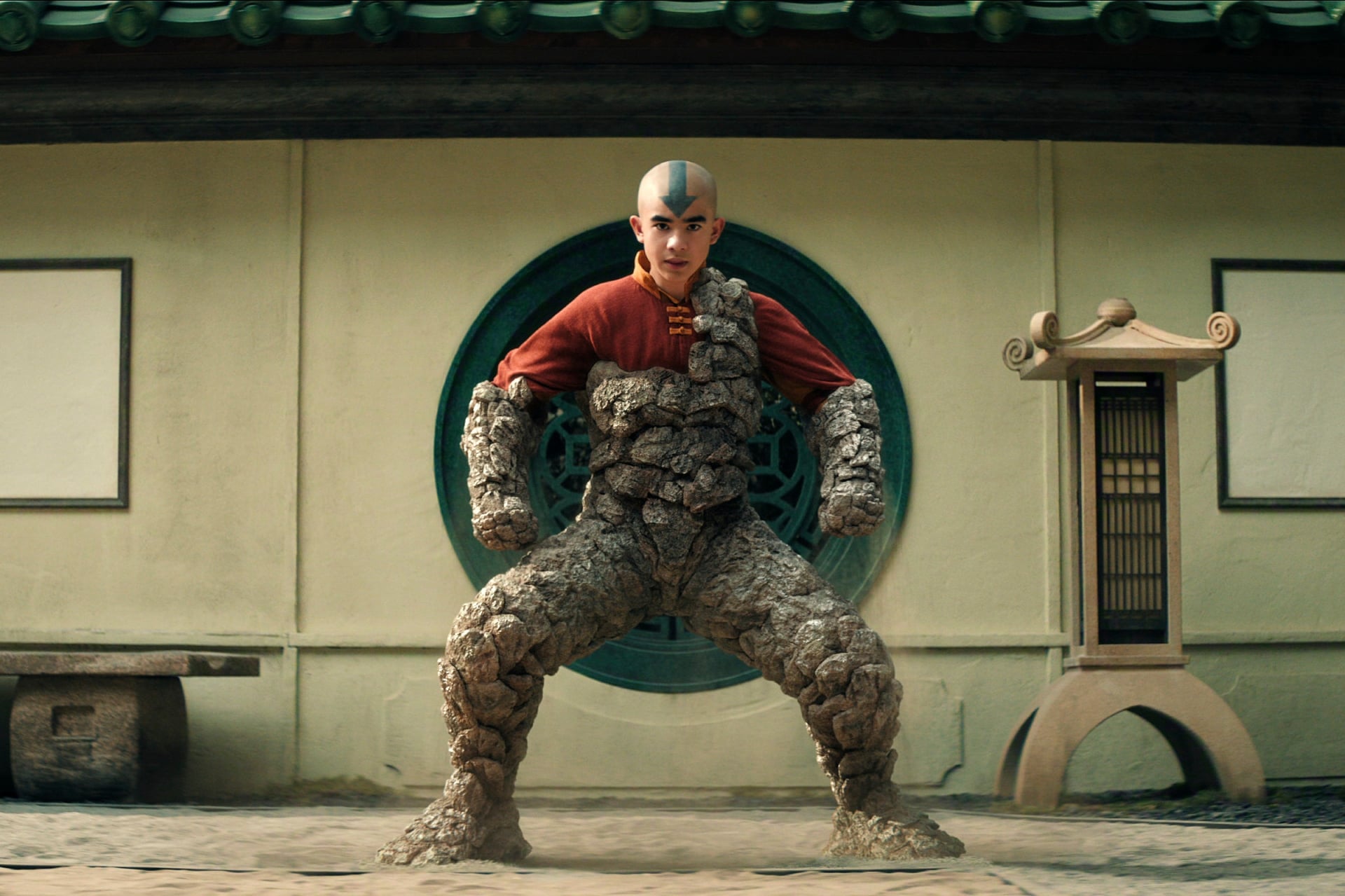
Despite the maximized runtime, the show somehow plays like a SparkNotes version of the original. Any genuine sense of endearment with its characters comes less from the show itself and more from callback fodder that jingles at the senses like keys waved in front of a toddler. Reference humor is cute, sure, but hearing those jingly keys for an hour at a time across seven episodes is too cute for its own good. And the show leans on that crutch constantly, stuffing itself with Easter eggs instead of trusting its own storytelling.
As if pre-emptively overcorrecting for fears that this season would hew too close to its source material as a high-fidelity photocopy of the cartoon, the show routinely has characters take abrupt left turns, abandoning any semblance of personality established in earlier scenes—occasionally in the same scene—for trite, manufactured drama. A hat on a hat, if you will. As a consequence of these frustrating, unnecessary flourishes, character motivations are reworked and overcomplicated in ways that are more confusing than compelling.
Momo and Appa—the series’ beloved tag-along critters—might as well be stick figures waved across the screen or omitted entirely, given how much of an afterthought they are in CGI, taking up the lower third of scenes. Despite being powered up by the magic of time skips, Kiawentiio still feels like she was left adrift with terribly little to do as Katara. And most painfully, Cormier’s Aang feels like he’s acting in a different room from his costars half the time, given how hit-or-miss his chemistry is with them.
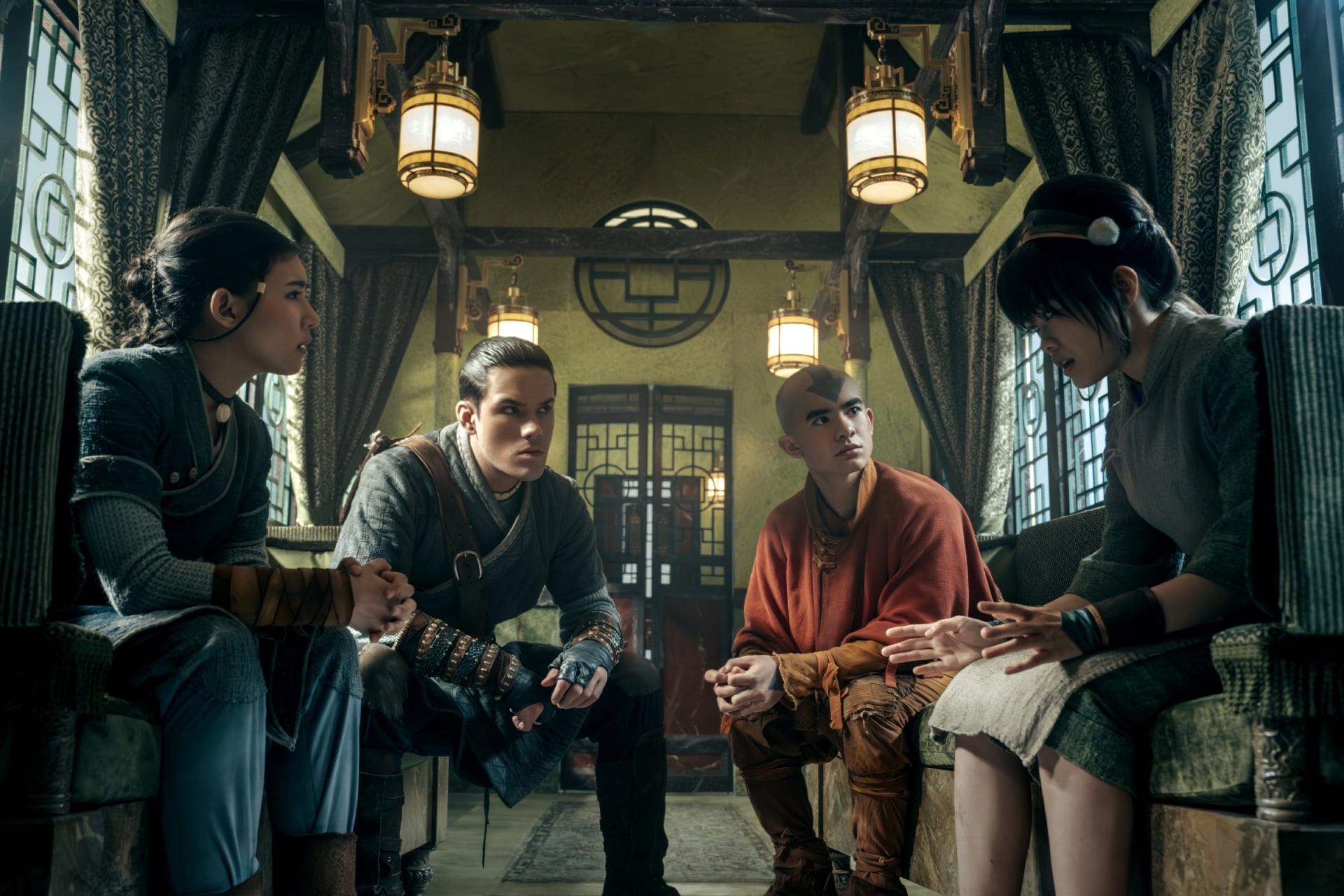
The march toward season two’s final episode becomes a parade of characters teleporting into scenes because the script demands it, third‑act fallout because the script demands it, and side characters delivering exposition dumps until the heroes shift focus to the next batch of side characters for even more exposition because the script demands it. In turn, its heroes become less like active protagonists and more like players mashing through dialogue in a meandering videogame cutscene—one that would’ve been better served by letting us see the exciting stories its supporting characters enthusiastically drone on about rather than recounting them in a morose slurry of dialogue.
That’s not to say every creative liberty is dead on arrival. The show lands some genuinely cool team‑ups and character interactions that feel like well‑written fan fiction. And certain action sequences—especially Azula and Zuko’s firebending face‑off—showcase choreography, VFX, and sound design at their best. Outside those highlights, though, the action is frustratingly obscured by a distracting vignette effect, making the pantomimed movements look stiff and awkward whenever anyone bothers to bend at all.
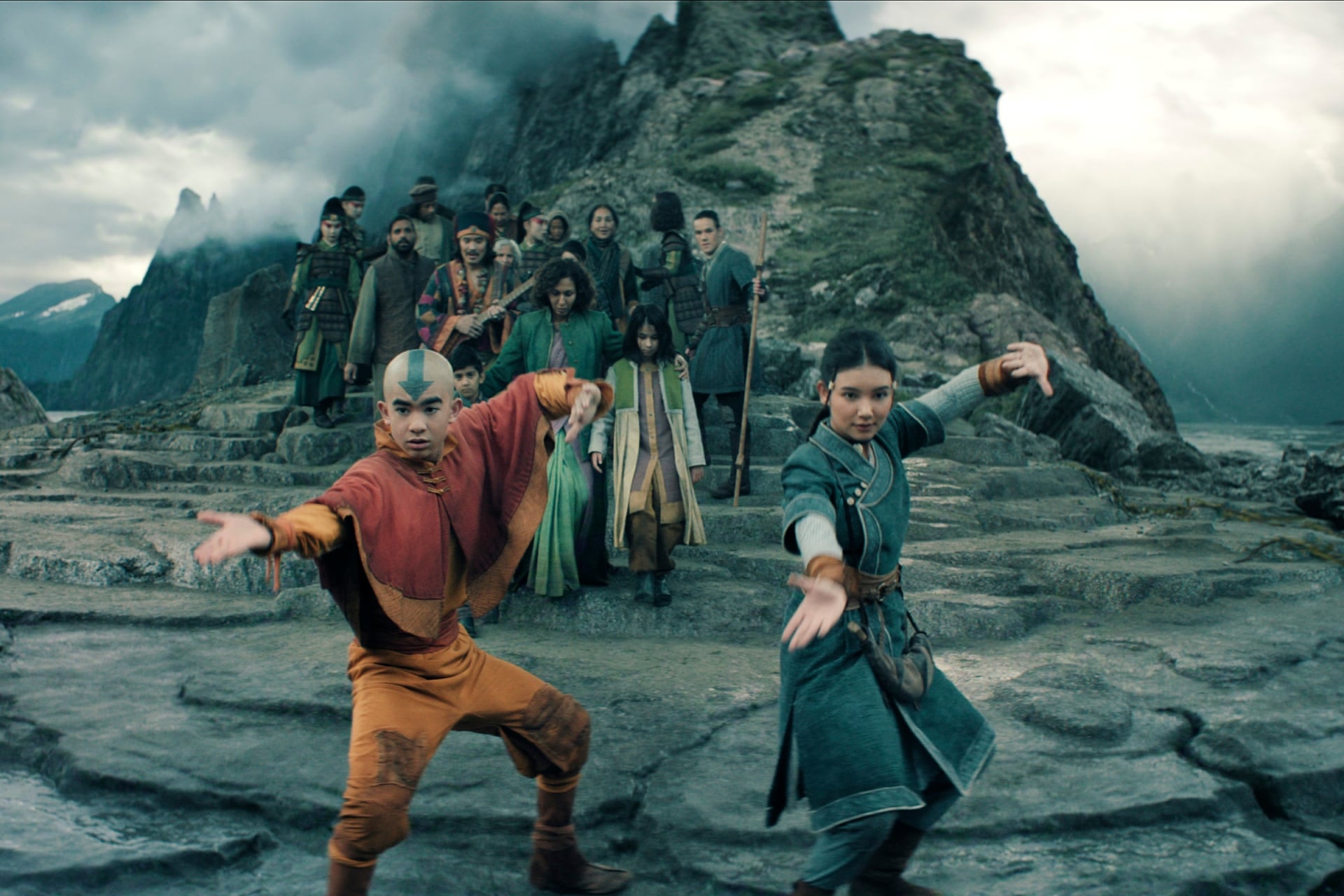
And therein lies the core flaw of the live-action series: much of the original series’ magic lay in its animation. The elegant, hand-drawn elasticity of its impactful, complex action sequences, the emotional range and expressiveness of its characters, and its larger-than-life worldbuilding—these are the hallmarks that made Avatar a household name. Bridging it into live action on name recognition alone isn’t enough to make it a worthwhile watch, even if it does make for easy, inattentive dialogue-heavy content to pad Netflix’s catalog. That, ultimately, is the conceptual problem with the live-action show.
In an age where creative forces keep pushing live‑action adaptations forward regardless of the above, Avatar might as well be the Teflon Don of this Sisyphean creative exercise, seeing as how it’s secured a third and final season despite how so-so its second outing was. Hopefully, by then, it will have found its positive jing as a live‑action adaptation instead of languishing in the neutral jing of its second season.
Season two of Avatar: The Last Airbender is streaming on Netflix.
Want more io9 news? Check out when to expect the latest Marvel, Star Wars, and Star Trek releases, what’s next for the DC Universe on film and TV, and everything you need to know about the future of Doctor Who.
Read the full article here