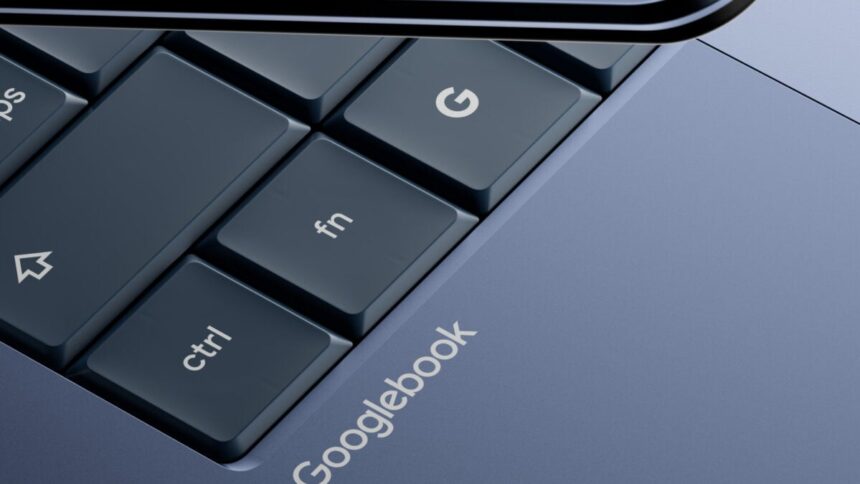
Google’s newfangled Googlebooks promise a new “seamless” laptop option for Android fanatics. But to those who have actually used ChromeOS over the past decade, it’s looking increasingly unlikely that Google will deliver something comparable to the Windows or macOS experience.
In its announcement on Tuesday, Google didn’t differentiate its newly announced Googlebooks from its age-old Chromebooks in any particularly useful way. We’ve scrolled through a mountain of leaks and rumors about the so-called Aluminum operating system. Google has stated that the name is an internal designation but has yet to publicly disclose the system’s actual name or any identifying details.
But what we’ve seen so far has positioned Aluminum as a mere upgrade to Chrome OS rather than an overhaul. Notorious Google leaker Mystic Leaks shared a full 16-minute video of this new operating system on Telegram (first spotted by Android Authority) in the hours before Google’s Googlebook announcement. Mystic Leaks claimed to have run this supposed copy of Google’s OS on a MacBook Pro using an emulator.
Essentially, the new OS appears to have cribbed many design elements straight from Android, including the Quick Settings and Notifications panels. There are a few desktop-only capabilities you won’t find on Android, such as a Task Manager. The other unique feature seems to be access to virtual desktops, which let you switch between different app setups on the fly.
When we first heard of Aluminum, we were more intrigued by the prospect of Android coming to roost in ChromeOS, ostensibly granting Google-fueled laptops a metric ton of native apps they’d lacked before. But even that hasn’t materialized yet. When Google shared details about the Googlebook a few days ago, it said users would be able to run Android apps on their desktops via their phones, in small, mobile-sized windows. Apple has offered similar functionality—you can mirror a nearby iPhone on a Mac screen— since the rollout of macOS Sequoia in 2024. Meh.
It looks like the standout feature of these Googlebooks is instead going to be the “Magic Pointer.” This is the age-old mouse cursor with an AI engine crammed inside. Wiggling the cursor activates its AI capabilities, allowing the onboard intelligence to understand the context of what you’re doing.
We’re reimagining a 50-year-old interface – the mouse pointer – with AI. 🖱️
These experimental demos show how people can intuitively direct Gemini on their screens using motion, speech, and natural shorthand to get things done 🧵 pic.twitter.com/p6fhgNcopz
— Google DeepMind (@GoogleDeepMind) May 12, 2026
Google DeepMind developed Magic Pointer, though it seems to have been scaled back from a full agentic experience. In a series of X posts, DeepMind shared videos showing how the mouse cursor could highlight text in a browser, such as an online recipe, and add it to a Google Keep shopping list. The AI model built into the cursor could use image recognition to understand what’s happening on the screen. Such that if you click on a sign for a local restaurant, it will help you book a table using Google’s own reservation interface.
This is all still words at this point, of course: We have yet to see a Googlebook in the flesh, let alone test any of its headline features. The Android maker said it was working with major PC manufacturers, including Acer, Lenovo, Asus, Dell, and HP, on new devices. There’s still time to be surprised. As for what kind of processor is inside, Intel wrote on X that it was working with Google on “premium, powerful devices.” This could refer to the recently revealed Wildcat Lake CPUs built for more affordable laptops. We can infer from talks with Google and Qualcomm last year that there may also be ARM-based Googlebooks in the works.
We’re thrilled to partner with @Google on something we’ve been building with them – Googlebook.
Premium, powerful devices designed for Intelligence. We can’t wait to get it into your hands this fall.
Learn more at https://t.co/KEF9BpwmLl#Googlebook #NEXT #Intel pic.twitter.com/PoZClUEFPI
— Intel (@intel) May 13, 2026
More powerful chips can only do so much to make a laptop usable, of course. It’s the software that will determine if these devices are anything more than a browser in a box. But don’t worry: if Aluminum doesn’t end up being all it’s cracked up to be, ChromeOS isn’t dead (probably). Google spokesperson Peter Du told The Verge that new Chromebook models will still hit the scene after Googlebooks launch. The question will then become whether Google, a company notorious for killing products, will keep both ChromeOS and Aluminum trucking side by side.
Read the full article here