

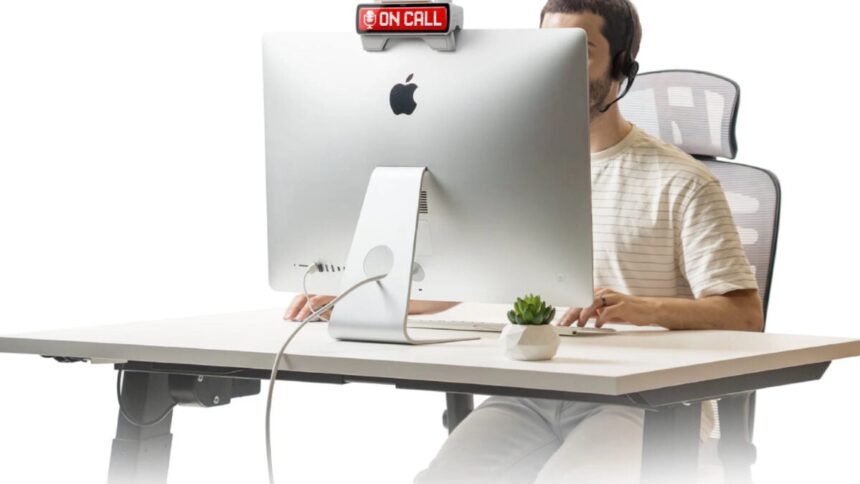
The creators of Flipper Zero, the pen-testing multitool that has earned a reputation as a favorite gadget for questionable tinkering, are finally releasing their focus-focused device next month. The Busy Bar, first announced in April 2025, will go on sale July 14, according to The Verge, with the first 3,000 units available at a discounted price.
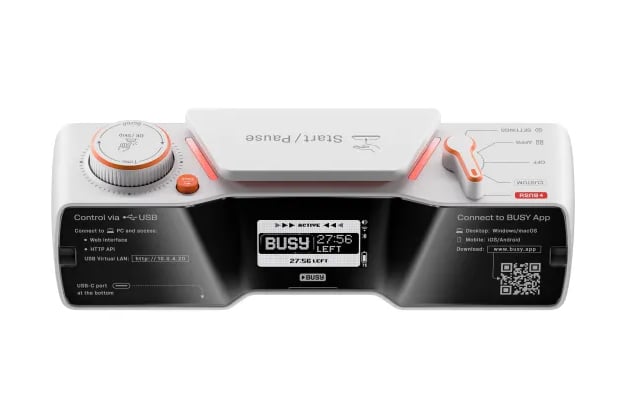
The goal of the Busy Bar is to hack productivity in the way the Flipper Zero hacks, well, basically everything else. It’s set up to be a very modern take on the Pomodoro timer, letting you set a duration that you’d like to place your full focus on your work. To help make that happen for you, the Busy Bar displays a “Busy” message on an LED screen that is meant to face anyone who might walk up to you while you’re working.
Now, obviously, something that simple wouldn’t be worth the $249 price tag that this thing comes with (unless you’re one of the first 3,000 to order, then you’ll get it for $199), and it wouldn’t exactly live up to the reputation of Flipper’s hacking ways. So, the Busy Bar is also compatible with Matter, an open-source connectivity standard for smart home devices. That allows you to set up any number of internet-connected devices to react to your focus time. Lock your door, pause the music coming from your speaker, turn on your desk lamp—whatever gets you in the zone.
The Busy Bar also works with the company’s Busy app, which is an app that you can use to block yourself from using certain apps or visiting certain sites on your device while you’re trying to focus. With the Busy Bar integration, it’ll put your phone on lockdown when you hit the “Start/Pause” button. The company says it’ll also create an open API for the Busy Bar so it can connect to other third-party apps in the future.
The Busy Bar is technically the second device to come out of the Flipper Zero labs, outside of the Flipper line of multi-tools. A third device, a “network multitool” called Flipper One, was revealed to be in the works last month and will reportedly be made available to pre-order via Kickstarter later this year—though the price of RAM may prove to be a limiting factor for the early run of the company’s “cyberdeck” solution.
Read the full article here