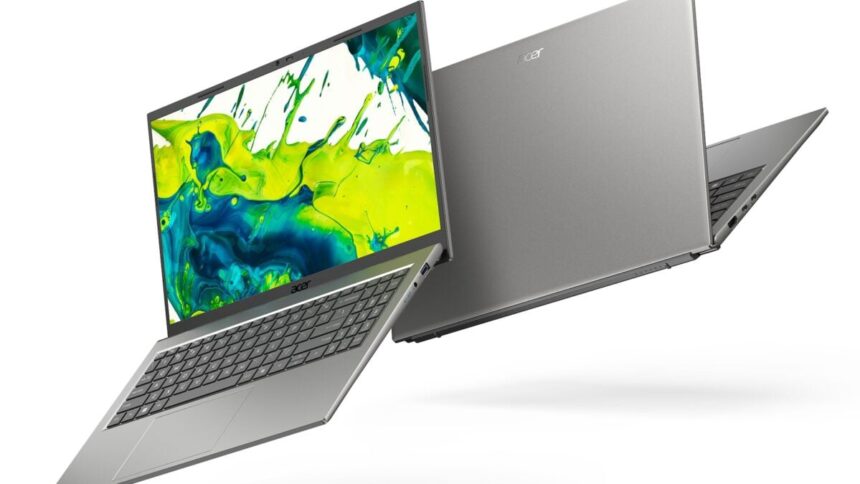
What does the “C” in Qualcomm’s all-new Snapdragon C chips stand for? “Compute.” As if Qualcomm’s Snapdragon X series chips weren’t “computer” enough for today’s PC market, the company now hopes to claim a stake in the sudden boomtown of budget-end laptops (that—hopefully—aren’t just flimsy pieces of crap).
Qualcomm isn’t offering any real details or hardware specifics about what to expect from Snapdragon C, one of its new reveals at Computex 2026. The chip was built for laptops that cost “$300 and up,” a market currently dominated by Apple’s $600 MacBook Neo. With that price point in mind, PC maker Acer is the first out the door. It’s showing off its Acer Aspire Go 15, featuring Qualcomm’s new chip, at the computing show.
At first glance, the Aspire Go 15 is an ultrathin laptop with MacBook Neo-like specs, including 8GB of RAM and a 512GB SSD. However, Acer promises this ARM-based notebook comes with a 15.6-inch display—larger than the 13-inch Neo’s—and an extra HDMI 1.4 port that’s missing on Apple’s budget notebook. At the same time, it features a smaller 1,200p resolution than the Neo’s 2,408 x 1,506. The company isn’t yet ready to reveal whether Aspire sports anything like the sturdy all-aluminum chassis that made the budget MacBook such a hit. It also hasn’t shared pricing yet, though it promised we’ll know more “at a later date.”
Nobody else seems to want to share more than the basics either. In a video call with tech media, Qualcomm was hesitant to describe the exact specs of the Snapdragon C. The chipmaker’s head of PC products, Mandar Deshpande, confirmed that the platform was not using Qualcomm’s Oryon CPU cores. That’s the CPU used in the company’s latest high-end PC and mobile CPUs, including the Snapdragon 8 Elite Gen 5 and Snapdragon X2. The Aspire Go 15’s stated specs indicate that the chip features a variety of Qualcomm Adreno GPUs, though we don’t expect it to be anywhere close to a graphics powerhouse.
Deshpande did say that the makeup of this chip would be “similar” to that of Qualcomm’s other non-flagship chips that lack Oryon CPU cores. Still, it’s unclear whether Qualcomm would take a page from Apple and base its new chip on its current mobile platforms (geared toward a larger-screen experience). Apple’s A18 Pro chip has proved perfectly capable of performing all the basic tasks you need on a laptop like the MacBook Neo, all the way up through light video editing.
Qualcomm’s “purpose-built platform for entry-tier users” will also compete against Intel’s Wildcat Lake chips for lower-end PCs. But even if they can outperform the MacBook Neo, what’s more important for these low-cost PCs is not to look, sound, or feel like some flimsy plastic with a bad screen.
Read the full article here