Update: 11:20 a.m. ET Friday, June 5: NASA lifted the shelter in place order for its personnel aboard the International Space Station just before 11 a.m. ET on Friday.
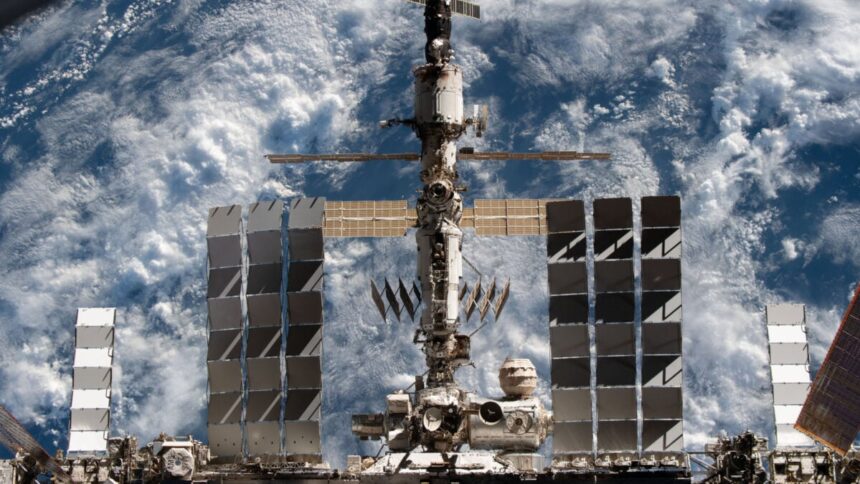
NASA has lifted a shelter in place order for its astronauts aboard the International Space Station as the Russian crew attempts to repair a worsening leak on its side of the station, the agency said Friday.
The four Crew 12 astronauts—NASA’s Jessica Meir, Jack Hathaway, the European Space Agency’s Sophie Adenot, and Russian cosmonaut Andrey Fedyaev—and NASA astronaut Chris Williams received orders from mission control at 9:04 a.m. ET to don their spacesuits and enter their Crew Dragon spacecraft, a NASA official told Reuters.
This would have allowed them to depart the space station quickly in the event that the leak warranted an emergency evacuation, but just before 11 a.m. ET, NASA Press Secretary Bethany Stevens said the agency had instructed the crew members inside the Dragon spacecraft to end safe haven procedures and return to planned operations. Roscosmos has paused structural repair efforts to gather more measurements and data on the leak.
Roscosmos has paused Friday’s structural repair efforts inside the Zvezda service module transfer tunnel, known as PrK, as more measurements and data is assessed. Given this development, NASA has instructed the crew members inside the Dragon spacecraft to end the safe haven…
— Bethany Stevens (@NASASpox) June 5, 2026
The Russian portion of the ISS, called the Zvezda service module, has long suffered from cracks and leaks. NASA and Roscosmos have spent years trying to address a particular leak inside the vestibule (named PrK) that connects to a docking port to the module, and last year, a new pressure signal in a segment of the Zvezda module suggested they had repaired it. Unfortunately, the leak reappeared in May.
According to Stevens, the leak that forced NASA’s ISS astronauts to shelter in place today is also coming from the PrK, so it’s likely the same one. On Monday, the amount of air leaking from the Russian module increased from a pound of air per day to two pounds, a senior NASA official told Reuters.
This is a developing story and will be updated with new information.
Read the full article here