In Pliny the Elder’s Natural History, the Roman scholar described how the Empire used a unique organic mixture to keep boats waterproof. By tracking something atypical from a 2,200-year-old shipwreck, researchers confirmed this is not just true, but that Roman shipbuilders also likely kept refurbishing their ships during their journeys.
A Frontiers in Materials study published today describes how studying trapped pollen from the Roman shipwreck, designated Ilovik-Paržine 1, revealed the composition and origin of waterproof coating materials. As organic matter easily degrades over time, it was difficult for naval archaeologists to grasp a full understanding of ancient shipbuilding techniques. To overcome these challenges, the team behind the study designed an interdisciplinary analysis combining archaeology, chemistry, and palynology (the study of pollen grains).
The team confirmed not only Roman shipbuilders’ usage of sophisticated waterproof techniques but also how ships would consistently get refurbished with more coating to keep them sailing for a long time.
“This approach allows us to investigate potential variations related to functional or technical differences or even to repair phases in the application of waterproofing materials,” study co-authors Armelle Charrié and Quentin Couillebault told Gizmodo in an email. This aimed to “produce more robust interpretations and broaden the range of hypotheses,” they added.
Revisiting a shipwreck
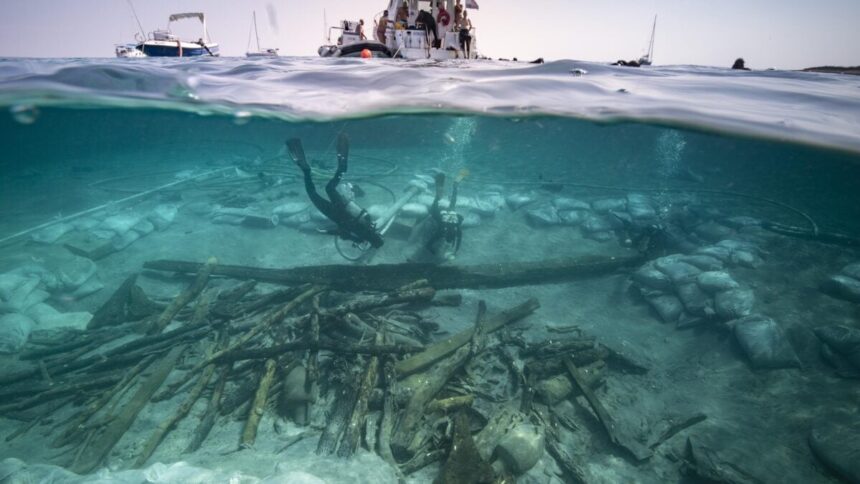
Ilovik-Paržine 1 was initially discovered in 2016 and has since been studied extensively. These investigations, however, primarily looked into the structural design and age of the ship. It was during these projects that researchers noticed a thick layer of organic adhesive coating on the hull’s exterior and interior, according to the study.
“Organic archaeomaterials are of increasing interest, as they are rich in essential and unprecedented information,” explained Charrié and Couillebault, bioarchaeologists at the University of Strasbourg and Aix-Marseille University in France, respectively. “They provide information on many domains such as costume, funeral practices, food, domestic life, or manufacturing techniques of studied populations.”
But these organic materials rarely survive. So the leftover coating presented the researchers with a rare, invaluable opportunity to study ship coating, which Charrié had investigated before in other shipwrecks.
Pollen and zopissa
Speaking to Gizmodo, the researchers stressed that the different disciplines played very specific roles in the study. Palynology, which looks for pollen grains trapped during the coating’s manufacturing or application process, hinted at when and where waterproof repairs occurred. Chemical analysis confirmed the molecular fingerprint corresponding to zopissa, a pine tar and beeswax mix described by Pliny the Elder.
As a result, the team uncovered a very sophisticated shipbuilding process. For instance, zopissa’s inclusion of beeswax and tar improved the adhesive’s flexibility. The pollen trapped between zopissa layers was tracked back to a high diversity of environments, from dense forests of holly oak, pine, olive, or hazel to alder and ash to areas in closer proximity to the water. This complementary information allowed the team to paint a fuller picture of all the different places the ship must have sailed before its demise.
A record of sailors
Most importantly, these findings clued the team into broader cultural practices in the region. The samples had four to five phases of coating, applied at different times and locations. This allowed the researchers to reconstruct a feasible navigation route around the Adriatic for the vessel and even pinpoint when and where it received repairs and recoating.
What’s more, the oldest archaeological usage of zopissa dates back to the late 7th century BCE, corresponding to an “archaic Greek tradition,” Charrié and Couillebault told Gizmodo. This indicates an extensive “circulation of technical knowledge and the phenomena of technological transfer across the Mediterranean basin,” the researchers explained.
Read the full article here