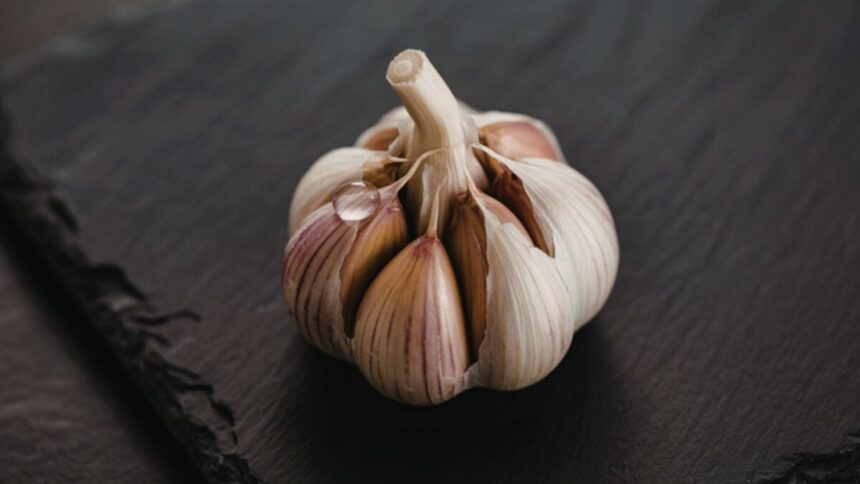
Vampires aren’t real but there are plenty of actual creatures out there that hunger for human blood, like mosquitoes. Recent research has found that a folk remedy for vamps, garlic, might also do wonders against these bloodsucking fiends.
Scientists at Yale University were looking for plant compounds that could naturally deter potential pests. They discovered that garlic can hinder mating and egg-laying among both mosquitos and flies and even identified the exact compound responsible for it. The team’s research could lead to novel, more environmentally friendly pest control strategies, they say.
“Fruits and vegetables present a source of compounds that are inexpensive and safe,” they wrote in their paper, published last month in the journal Cell.
Garlic birth control?
People have touted garlic as a potential weapon against mosquitoes before. Often, though, this has involved using garlic as a repellant, either by directly applying it to the skin or eating it in hopes of becoming less appealing to the bugs. Studies examining these uses have suggested a modest effect at best.
The study researchers weren’t necessarily looking to prove garlic is a mosquito aid. They conducted a broad analysis of 43 vegetables and fruits—or “phytoscreen”—in hopes of finding natural compounds that could somehow interfere with the behavior of pest insects in a helpful way. And as it turns out, garlic contains one of the more potent candidates, a compound called diallyl disulfide.
The team’s initial experiments found that diallyl disulfide could disturb the mating and egg-laying behaviors in Drosophila, aka fruit flies. It appeared to do the same with species of Aedes mosquitoes, a group well known for spreading some of the most dangerous human diseases in the world, like malaria. And it interfered with the mating ability of the tsetse fly Glossina morsitans, which spreads sleeping sickness in people.
Subsequent experiments determined that diallyl disulfide affects these insects through taste, not smell, specifically via a receptor known as TrpA1. Other research found that garlic seems to increase the expression of a gene responsible for a hormone that controls a mosquito’s sense of satiety, or fullness. Increasing this satiety then appears to trigger avoidance behaviors like not mating or laying eggs.
“The notion of using garlic to deter blood-feeding creatures was proposed in 1897 by Bram Stoker in his novel ‘Dracula.’ Maybe he was onto something,” said senior study author John Carlson, a developmental biologist at Yale, in a press release from the university.
What next?
The researchers note that some gardeners already use garlic to ward off insect pests, so their work seems to provide a chemical explanation as to why this can work.
Importantly, their research also shows the potential of using phytoscreening to identify and develop cheap, safe, and easily available products for deterring all sorts of bothersome insects.
Read the full article here