To avoid the worst impacts of climate change, the global community must rapidly transition to renewable energy while also expanding carbon dioxide removal—technologies that literally pull this greenhouse gas out of the atmosphere. Both endeavors will be costly, but a new study strongly suggests the U.S. should prioritize investing in renewable energy over expensive, energy-intensive direct air capture schemes.
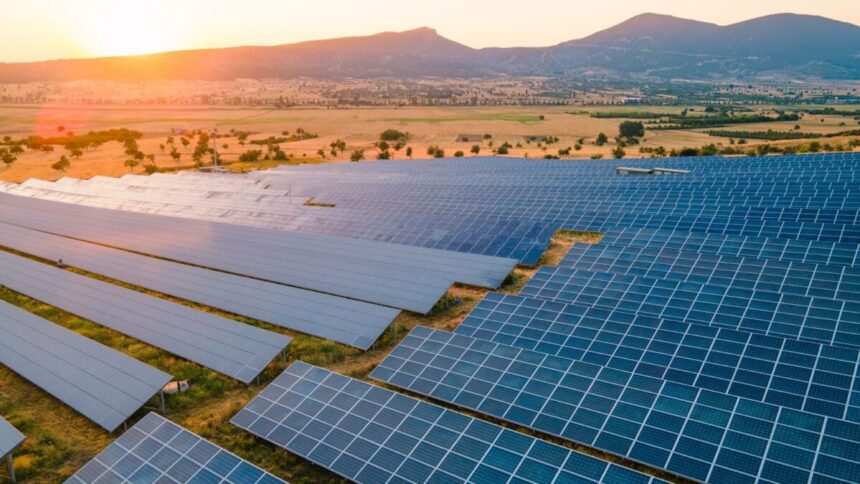
The findings, published Monday in Communications Sustainability, show that renewable energy is far more cost-effective than direct air capture—a growing carbon removal strategy—at reducing atmospheric carbon. Across nearly every U.S. region through 2050, money spent deploying wind or solar power will deliver a greater combined climate and public health benefit than if it is spent on direct air capture, according to the study.
“Our study basically asks, if someone has $100 million they are willing to invest in reducing CO2 in the atmosphere, what is the best way for them to spend this money?” senior author Jonathan J. Buonocore, an assistant professor of environmental health at Boston University, told Gizmodo in an email.
“We found that $100 million will reduce much more CO2 if this was invested in wind or solar, especially in coal-heavy grids in the U.S., than if it was invested in direct air capture,” he explained. “Also, investing in renewables will reduce air pollution, which direct air capture cannot.”
Drawdown versus emissions reduction
Carbon removal and renewable energy generation approach the climate crisis from two opposing angles. Transitioning from fossil fuels to clean power sources prevents more carbon from entering the atmosphere, while carbon removal reduces the amount of carbon that’s already in the atmosphere. The Intergovernmental Panel on Climate Change has determined that both strategies will be essential to stabilizing CO2-induced global surface temperature rise.
There are several ways to pull carbon out of the atmosphere. Earth’s ecosystems do this naturally, storing captured atmospheric carbon in soils, forests, and the ocean. Humans can enhance these natural carbon sinks through various interventions, but as the climate crisis has rapidly intensified, technologies like direct air capture have emerged as a more aggressive way to reduce atmospheric carbon.
The trouble is, direct air capture remains underdeveloped due to its prohibitively high cost, energy demand, and the need to scale manufacturing. Still, this technology is increasingly recognized as a necessary near-term complement to phasing out emissions. And since climate mitigation resources are limited, figuring out how to best allocate investments is critical.
DAC can’t compete yet
To figure out whether direct air capture could be cost competitive with renewable energy (specifically wind and solar), Buonocore and his colleagues modeled the climate and public health benefits of each strategy for the same amount of dollars spent.
The researchers monetized climate benefits using the social cost of carbon: the dollar amount equivalent to the long-term damage done by one ton of CO2 emissions in a given year. For public health, they used a model to estimate avoided air pollution exposure and reduced mortality risk, then monetized those benefits using the value of a statistical life—the same metric used by the Environmental Protection Agency.
Because direct air capture is still in its infancy, the researchers modeled its benefits under four different efficiency improvement scenarios ranging from its current commercial performance (which requires 5,500 kilowatt-hours of electricity and $1,000 to capture one ton of CO2) to a “breakthrough” scenario (800 kWh and $100 per ton of captured CO2), which is at the extreme low end of published projections.
“Only under the ‘breakthrough’ scenario, which would involve efficiency improving by a factor of approximately 7, and cost dropping to 10% of what it is currently, does direct air capture perform better than renewables,” Buonocore said.
Part of the problem is that direct air capture only removes CO2 from the atmosphere. By replacing fossil fuels, renewable energy reduces emissions of fine particulate matter, nitrogen oxides, sulfur dioxide, and other hazardous air pollutants. Thus, direct air capture offers a smaller public health benefit. In fact, under the current commercial performance scenario, grid-connected direct air capture produced more greenhouse gases and air pollution damage through 2050 than it offset.
To be clear, Buonocore and his colleagues are not arguing that we should abandon direct air capture, but their study emphasizes the importance of prioritizing renewable energy investments in the near-term.
“Our work here indicates that it would be more cost-effective to deploy renewables and likely do other decarbonization to basically ‘stop the flow’ of CO2 into the atmosphere, and that DAC would then be necessary to clean up the excess CO2 after most other major sources of CO2 have been stopped.”
Read the full article here