

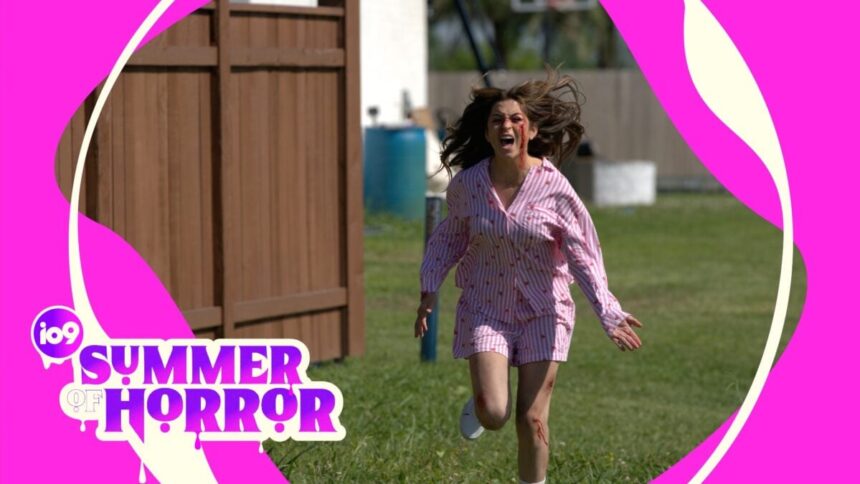
Faces of Death hit theaters in April, just a month before Obsession arrived and reminded audiences how much fun could be had watching an indie horror movie that’s equal parts clever and cruel.
Faces wasn’t a major box-office hit, but its release on Shudder this week presents the ideal way to watch it: on the small screen, with the original Faces of Death—the 1978 film that exists within the 2026 film’s universe and inspires many of its events—already available on the same streamer.
We openly disdained remaking Faces of Death the moment it was announced. It seemed so pointless. The cult classic’s entire gimmick is making the viewer question if what they’re watching is “real” or not; it’s positioned as a documentary stuffed with footage designed to make your stomach lurch. The animal deaths it depicts, as in a slaughterhouse sequence or when we see a farmer chop the head off a chicken, seem authentic. The autopsy scenes also look believable.
But a lot of Faces of Death consists of sequences that are either obviously fake or edited in such a way that they feel repurposed and retooled for maximum shock value. It’s all framed as a peek into images collected by one Dr. Frances B. Gröss (played by actor Michael Carr), a pathologist whose worldwide travels, camera in hand, helped him build up this macabre library he’s disclosing with the viewer now, complete with his narration.
The production values evoke In Search Of…, the Leonard Nimoy-hosted documentary series that premiered in 1976 and purported to investigate different mysteries, including but not limited to UFOs, cryptids, ancient mysteries, and psychic phenomena. (As it turns out, writer-director John Alan Schwartz, who used pseudonyms for his Faces of Death credits, actually worked as a production assistant on In Search Of…, so the comparison feels especially apt.)
Faces of Death also fits into the “mondo” movie trend, which first emerged in the 1960s with Mondo Cane and is echoed in Faces’ grimy exploitative elements, as well as the parts that now look screamingly culturally insensitive. And Faces is maybe the genre’s greatest example of infusing a movie with a quality so taboo and forbidden that it feels like something you should watch in secret… or maybe shouldn’t be watching at all.
“I know what I have witnessed. Now it is your turn,” the perfectly named Dr. Gröss intones at the start of the movie, and it’s that same feeling of “share my repulsion” being thrust upon the viewer that propels the new Faces of Death, in ways that evoke both 1970s sleaze and the hyper-online culture we’re now living in.
Director and co-writer Daniel Goldhaber made the 2018 Netflix film Cam, about a webcam model whose quest for success on an OnlyFans-like site turns surreal when a doppelganger becomes her biggest rival. He and Faces of Death co-writer Isa Mazzei, who also wrote Cam, clearly have an interest in the ways horror can intersect with how people present themselves online.
The 21st-century Faces of Death does away with the conceit that the film itself might be real. That time has passed, especially in a post-Blair Witch Project world. Instead, it centers that idea within its narrative through main character Margot (Euphoria‘s Barbie Ferreira). She works a dystopian office job as a moderator for a TikTok-like platform that prizes its most questionable submissions, despite claiming that it wants to protect its users from them.
Anything too risqué or illegal has to be removed, but the mods are told to work as fast as possible. They’re also instructed not to engage with any of the content beyond what’s functionally necessary. “Don’t even think about it, if you can help it,” Margot tells a group of new hires, though she herself has a tough time sticking to that rule.
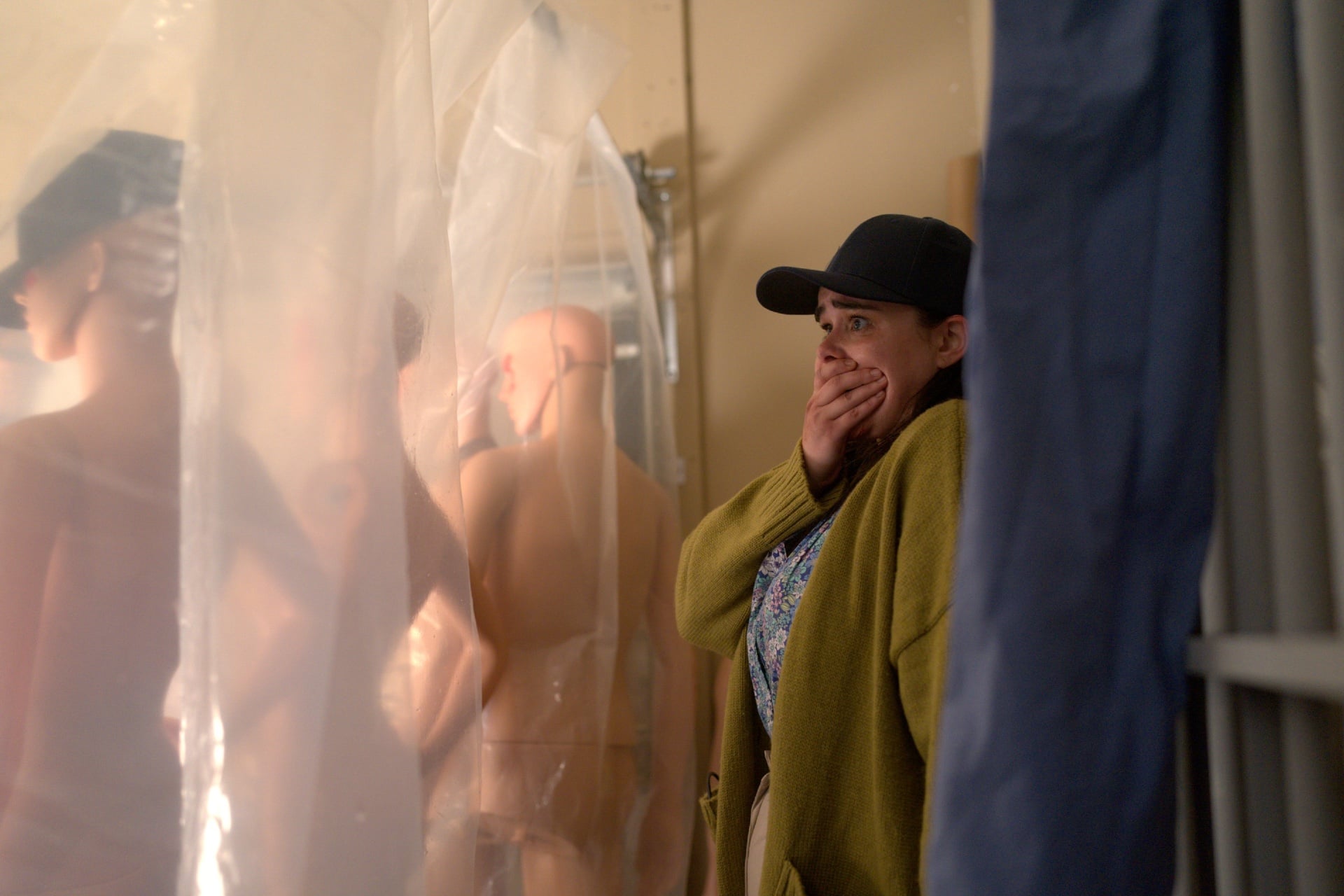
Margot, we soon learn, is haunted by a recent tragedy that was recorded and went hugely viral, to the point that total strangers recognize her on the street. So she’s especially vulnerable to the trauma inherent in her workplace, and it’s not long before she starts clocking a seemingly connected series of disturbing clips. They’re hideous crimes that look real, but how could they be? Nobody would actually strap a person into an electric chair, film their brains being fried, and put it on the internet… would they?
The uneasy feeling Margot can’t shake becomes an obsession. But it’s not until she discovers 1978’s Faces of Death in her roommate’s ramshackle collection of VHS tapes that she realizes what’s happening: a detail-oriented copycat killer is out there patterning what look like very real murders after Faces of Death‘s greatest fakes.
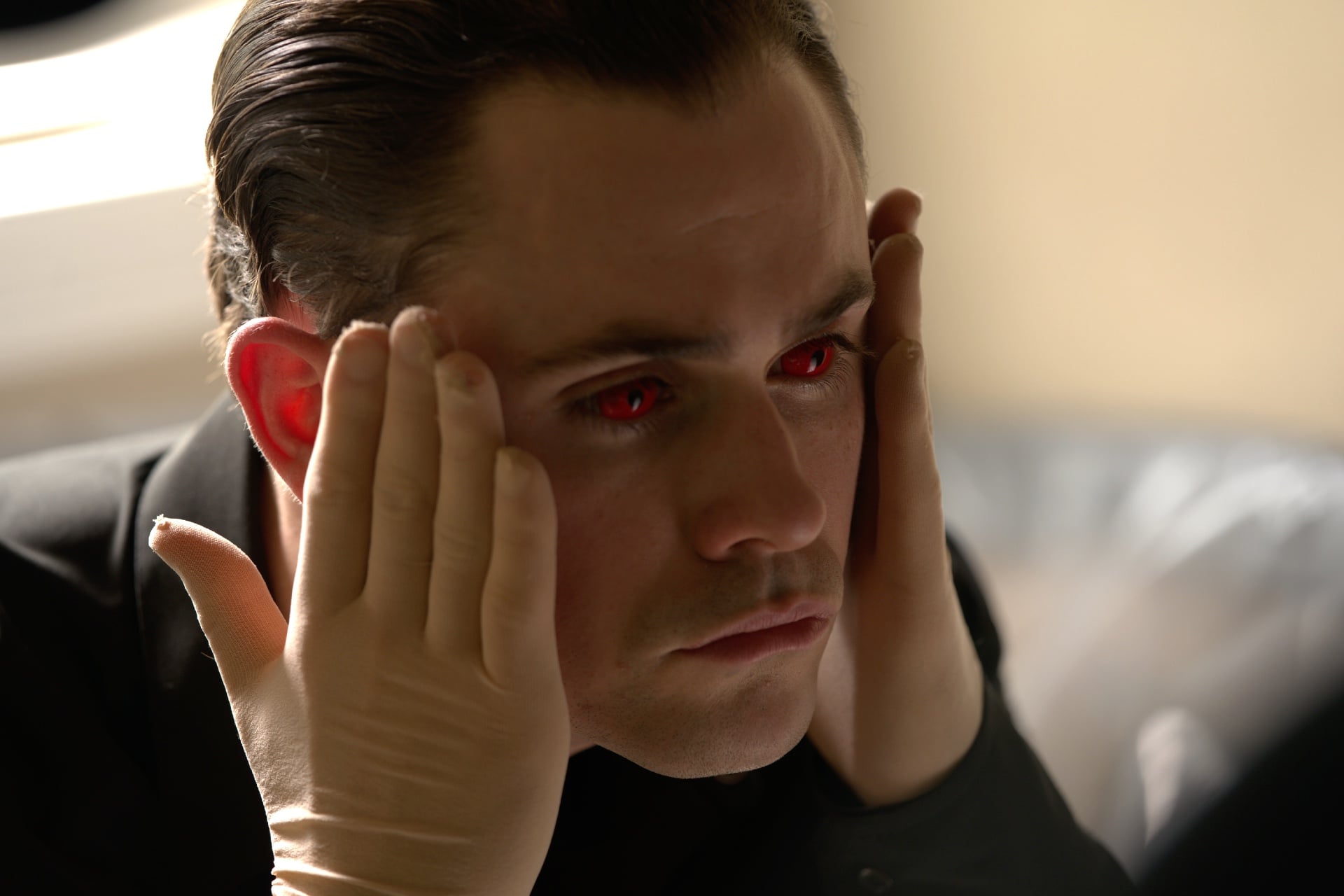
Is it real? We have additional context because Faces of Death also introduces us to characters outside of Margot’s world, including an influencer (Josie Totah) whose habit of sharing her life online catches the attention of a dangerous creep (Dacre Montgomery). But Margot, who has nowhere but Reddit to turn for guidance, becomes fixated on that question, and Faces of Death follows her down an increasingly gory rabbit hole.
Grim and downbeat until the end, Faces of Death finds a way to embed the original film’s devilish quandary into a tale that reflects back on contemporary viewing habits—not to mention how the quest for online validation can become an unhealthy fixation. Curiously, it holds back on digging into AI, the prevalence of which has made trusting even one’s own eyes a dicey proposition lately. Chances are, that awful video the algorithm tossed in your path—the one that made you gasp and look twice—is a completely computer-generated nightmare. But what if it’s not?
Faces of Death knows skepticism is healthy. But it also knows that sometimes, imagery that seems impossible can certainly make you wonder. Then it goes one step further by uncovering a truth so gruesome nobody would dare believe it.
Faces of Death hits Shudder Friday, July 10; on July 17, you can tune in for a “watch party double feature” showcasing both the 1978 and 2026 versions.
Want more io9 news? Check out when to expect the latest Marvel, Star Wars, and Star Trek releases, what’s next for the DC Universe on film and TV, and everything you need to know about the future of Doctor Who.
Read the full article here