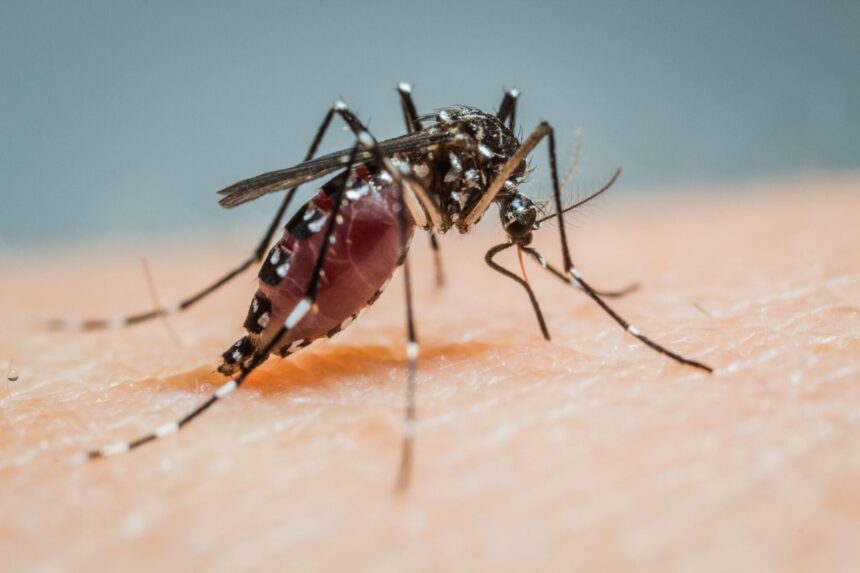
A dangerous disease spread by mosquitoes might be surging in the United States. Surveillance data from the Centers for Disease Control and Prevention shows a sharp rise in cases of dengue.
CDC scientists detailed their findings in a report published this month. In 2024, there were nearly 4,000 reported cases of dengue within the U.S., a record high and well above the typical yearly average. Though most of these cases were travel-related, the risk of local transmission seems to be increasing over time, the researchers say.
“Dengue is a public health threat to persons of all ages,” they wrote in their paper, published in the Morbidity and Mortality Weekly Report (MMWR).
‘Bone-breaking’ pain
Dengue is a mosquito-borne viral disease. Though most initial infections cause no symptoms, about a quarter of people will experience flu-like illness. Some can also develop pain so excruciating that it’s been compared to breaking a bone, leading to its nickname of “breakbone fever.”
Between 1% and 5% of people with dengue can further experience severe, life-threatening complications like internal bleeding and shock. There are four major serotypes of the dengue virus, and surviving an infection only provides immunity to that specific type. Catching a second infection from another type of the virus raises the risk of severe dengue.
The Aedes mosquitoes that typically spread dengue live in tropical areas. But over the past few decades, their range has expanded, as has dengue. Since 2000, there’s been a large rise in reported dengue cases across the world, and things have gotten even worse as of late. In 2024, there were over 14 million documented cases globally, according to the World Health Organization, a “historic high” and more than double the tally of 2023 (which was itself a record at the time). The vast majority of these cases occurred in the Americas.
According to the CDC report, there were a total of 3,798 U.S. dengue cases in 2024—a 359% increase from the annual average between 2010 and 2023 (828 cases). Of these, 108 people developed severe dengue, and six ultimately died.
The future of dengue
The U.S. spike in cases likely reflects the global surge. About 97% of these cases were associated with travel, meaning the infection was initially caught elsewhere.
At the same time, there were over 100 locally acquired cases documented in 2024. In three states, Florida, California, and Texas, cases were found in multiple counties. That suggests the virus was introduced into these areas more than once, rather than these cases being part of a single large outbreak. And the potential for dengue gaining a steady foothold within the U.S. is certainly there, since Aedes mosquitoes can be found in much of the country.
“Although these introductions did not lead to larger outbreaks in the continental United States, they indicate an increasing risk for locally acquired cases, underscoring the need for enhanced surveillance, vector control, and public health preparedness and response efforts in areas with competent mosquito vectors,” the authors wrote. About half of U.S. counties are already home to dengue-spreading mosquitoes, they added, while three-quarters have the climate needed to make them cozy.
Thankfully, 2025 was less of a nightmare dengue-wise, though there were still more than six million suspected and confirmed cases reported in the Americas. And the true toll is always substantially higher, given that many infected people do not experience illness. So while 2024 may have been an especially bad year for dengue in the U.S. and the world, it’s likely to be a persistent and growing problem moving forward, thanks partly to factors like climate change.
Read the full article here