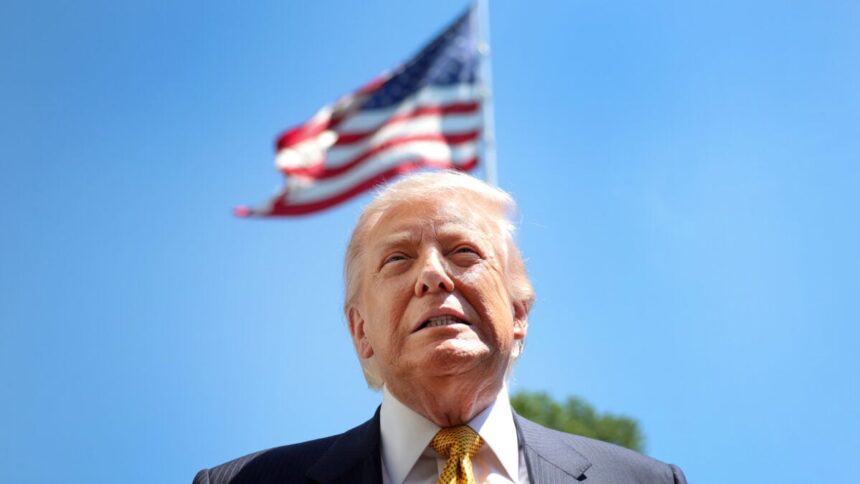
After taking equity stakes in chipmakers and rare-earth element miners, the Trump administration has a new industry on its radar: quantum computing.
On Thursday, the Department of Commerce announced that it was investing more than $2 billion in nine quantum computing companies. In turn, it’ll receive “a minority, non-controlling equity stake” in each.
Quantum computers are an emerging technology that works on the subatomic level with the potential to significantly disrupt many industries. While scientists have developed some working quantum computers, the technology is still far from reaching its full potential. Researchers claim that a hypothetical, full-fledged quantum computer would be much faster than classical computers and go beyond existing human knowledge on how nature behaves.
That means these computers could hypothetically usher in breakthroughs in medicine that would have taken humans perhaps decades to solve. But it also comes with risks. Cybersecurity experts and the entire crypto industry worry that quantum computers could break all cryptographic security and threaten online security and the financial system, a doomsday scenario often referred to as Q-Day.
There is significant disagreement on when that feared Q-Day will come. Earlier this year, Google speculated that the time could come as early as 2029, but some experts claim that it is still decades away.
The Department of Commerce said in a press release on Thursday that the decision was spurred by quantum computing’s potential for breakthroughs in advanced materials, biopharmaceutical discovery, financial modeling, and energy systems, and for its “significant implications for national defense.”
“A strong domestic quantum ecosystem is essential for U.S. national security, technological resilience and long-term strategic leadership,” the Department wrote in the press release.
Half of the Administration’s $2 billion investment is going to tech giant IBM to build an American quantum chip foundry. To helm the research and development efforts, IBM said it will form a new subsidiary called Anderon that will be headquartered in Albany, New York.
The next-largest recipient is semiconductor giant GlobalFoundries, which will receive $375 million to establish a domestic quantum chip foundry of its own.
Quantum computing companies Atom Computing, Diraq, D-Wave, PsiQuantum, Quantinuum, and Rigetti will also each receive funding to address specific technical and manufacturing hurdles standing in the way of achieving Q-Day. One of these companies, PsiQuantum, counts Donald Trump Jr.’s venture firm 1789 Capital as an investor, a relationship that has been scrutinized by Senators Elizabeth Warren, Richard Blumenthal, and Andy Kim. Another company on that list, D-Wave, went public in 2022. Emil Michael, the Pentagon’s current attack dog when it comes to Anthropic, led the process for D-Wave’s IPO.
Corporate intervention has become the Trump administration’s favored strategy for bolstering industries it deems critical for national security and competition with China. The trend was first sparked last August when the administration became Intel’s largest shareholder with a 10% stake.
Shortly after, Trump’s commerce chief Howard Lutnick announced a series of investments in companies that mine critical rare earth elements. One of those companies was a three-year-old startup called Vulcan Elements. Trump Jr.’s venture capital firm, 1789 Capital, also happens to be an investor in Vulcan Elements. Friends in high places, it seems.
Read the full article here