

OpenAI’s legal headaches are growing.
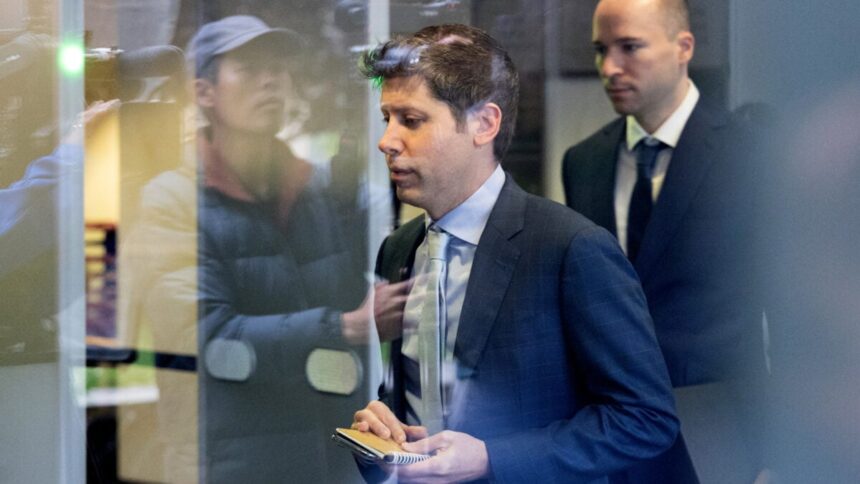
On Monday, Florida Attorney General James Uthmeier sued OpenAI and its CEO Sam Altman, claiming that the AI giant’s success and $852 billion valuation “has not been earned.”
“The rise of OpenAI is attributable to a web of deceit and the exploitation of users (including Floridians), leveraging their data and safety to boost OpenAI’s market value at unacceptable costs,” Uthemeir claims in the civil action complaint.
The lawsuit has been described by the AG’s office as a “first-in-the-nation state-led lawsuit” to take on OpenAI and Altman, claiming that the company knowingly put forth a dangerous and “shockingly unreliable” product with ChatGPT. The complaint accuses the company of falsely marketing ChatGPT as safe in pursuit of monetary gains, which has manifested numerous dangerous outcomes that “outweigh any benefit of using ChatGPT.”
“Because of Defendants’ misrepresentations about ChatGPT and their careless introduction of ChatGPT to Florida and the world, mass shooters have been aided and abetted in deadly rampages, vulnerable people have been encouraged into suicide, professionals have suffered public humiliation, users have lost critical thinking skills, and minors have become addicted to a tool that feigns human compassion to collect their data with no parental oversight,” the complaint says. “These harms cannot reasonably be avoided by the public, whether consumers or innocent bystanders, because Defendants take no effort to make the public aware of them.”
The lawsuit comes after the Office of Statewide Prosecution, also under Florida AG Uthmeier’s leadership, launched a separate, ongoing criminal investigation into the alleged role ChatGPT played in a 2025 mass shooting at Florida State University that took the lives of two people.
The mass shooting at FSU was far from the first time ChatGPT was accused of facilitating a violent attack. Earlier this year, mourning family members in the Tumbler Ridge district in British Columbia, Canada, sued OpenAI, alleging that the perpetrator of a mass shooting at the local high school had conversations with the company’s controversially sycophantic GPT-4o model months before the attack. The shooter, who later committed what has tragically been named one of the deadliest mass shootings in Canadian history, had his account flagged for “gun violence activity and planning” by OpenAI’s internal systems months before the shooting took place, but authorities were not notified. Altman has since issued an apology, admitting that the company should have alerted law enforcement.
The complaint also alleges that a deliberate lack of safeguards for vulnerable users, like minors, has led to AI chatbot addictions and a consequent host of mental health problems. The chatbot, and yet again specifically its GPT-4o model, was also the subject of a wrongful death lawsuit filed last year by the parents of a teenager who allegedly committed suicide after months of back-and-forth planning conversations with ChatGPT. While ChatGPT is arguably the most well-known AI chatbot, other AI chatbot proprietors have also been implicated with similar claims. Two separate Florida families have sued Character.AI and Google’s Gemini each for allegedly encouraging their sons to kill themselves.
In making the case that Altman has knowingly concealed these harms to profit from the unsafe ChatGPT models, the complaint also makes references to a New Yorker investigation published in April, quoting reports of Altman’s alleged penchant for lying and “sociopathic” tendencies.
The Florida AG’s legal challenge and request for a trial by jury comes freshly after OpenAI made it out of a lengthy legal battle with Elon Musk, one that yet again alleged deceitful practices by OpenAI. Though the jury ultimately ruled against Musk, the trial brought the AI company considerable negative press and unearthed some ugly truths regarding the former non-profit’s transition to a for-profit structure, at a time when OpenAI is trying to navigate the path forward for an incredibly consequential IPO, the SEC filing for which is reportedly set to hit pretty much any time now.
Read the full article here