For both dietary and environmental reasons, we’re rethinking our consumption of meat. But for earlier humans, meat consumption appeared to be a critical, yet somewhat poorly understood, contributor to evolution—and a new study offers some novel insights into how nuanced this actually was.
Published today in Proceedings of the National Academy of Sciences, the findings describe how fossil evidence from animal bones and hominin remains strongly suggest that the earliest members of the genus Homo used a varied yet consistent pattern of carcass use to consume meat. According to study lead author Francis Forrest, researchers consider meat-eating to be a major evolutionary turning point. However, how early humans accessed meat was unclear. Were they scavenging leftovers or engaging in more active forms of hunting and scavenging? The latest findings indicate it was a mix of both, Forrest, a biological anthropologist at Fairfield University, told Gizmodo.
“Understanding early human foraging is important because it shows how our ancestors dealt with real survival problems,” Forrest added. “They had to find food, avoid danger, compete with other animals, and adjust when conditions changed. Those are not small details. They are part of the story of how humans became so adaptable.”
Hints of carnivory
The team investigated animal bones to determine whether the marks left behind could reveal anything significant about what caused them. For the study, the researchers analyzed a 1.6 million-year-old fossil assemblage from the Koobi Fora Formation in Kenya.
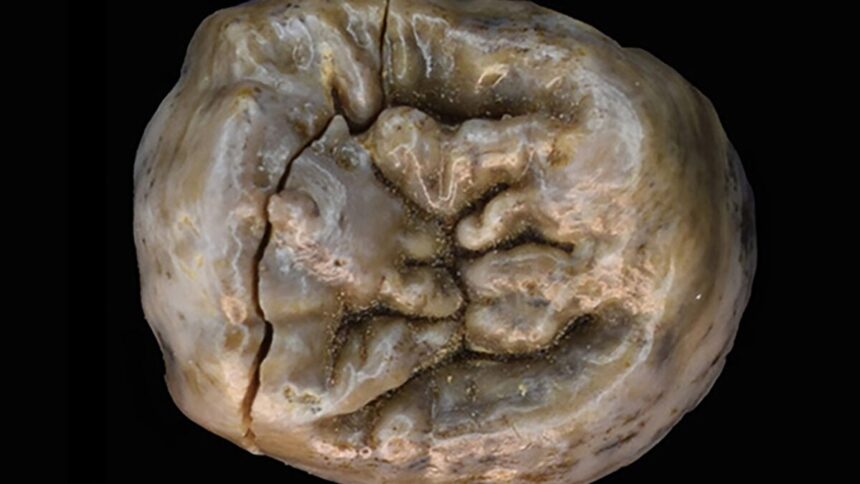
This included geological data, ancient hominid tooth fossils, and skeletal remains generally from grazing bovids. The team also compared the newly analyzed evidence with assemblages from other regions to look for any patterns in early human behavior.
“The question was whether the traces of carcass use we observed there were isolated examples or evidence of a broader, consistent strategy,” Forrest explained. “We analyzed the bones using several lines of evidence, including cut marks from stone tools, percussion marks from breaking bones for marrow, carnivore tooth marks, skeletal part representation, and fragmentation.”
Marked in bones
These imprints hinted at how early humans accessed animal carcasses and which parts of the skeleton were transported and processed, he added. The analysis revealed a surprisingly rich level of detail. For instance, it’s likely that early humans got to the carcasses while there was still a lot of meat on the bones, as opposed to foraging long after other predators had their fill.
In addition, it appears that the meatiest parts were also transported elsewhere for processing and consumption. Then, the bones were broken open for marrow. There were some animal bones with sparse human-made cuts, suggesting that hominins did scavenge at times, according to the paper.
Slow but steady
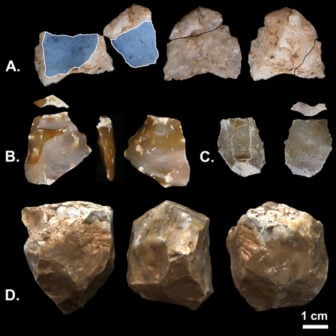
Overall, the findings illuminate the steady yet persistent progress of human behavior, Forrest said. Most studies on human evolution—for good reason—often focus on human fossils or stone tools, but there’s also information to be garnered from the remains of living creatures that coexisted with humans, he explained.
Forrest told Gizmodo that there’s still remaining work to be done with the assemblage analyzed for this study, such as an upcoming paper on how the assemblage of fossils formed in the first place. Going forward, however, the latest study raises questions on how the availability, size, habitat use, and vulnerability of animals shaped early human behavior.
“That can help move the discussion beyond a simple hunting-versus-scavenging question and toward a more realistic picture of the ecological conditions that influenced foraging behavior,” he said, adding, “that matters today because humans are not limited to one environment or one way of living. We survive by learning, cooperating, making tools, and changing our behavior when circumstances change.”
Read the full article here