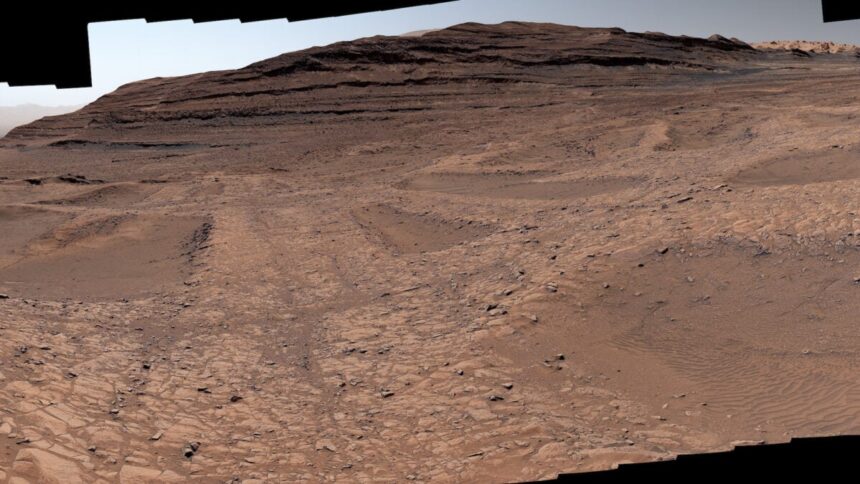
NASA’s Curiosity rover got a closer look at strange geological patterns on Mars: hardened ridges with sandy hollows in between that resemble giant spiderwebs when viewed from above. The ancient formations were created by water that once flowed across the Red Planet, leaving behind clues to Mars’s potential habitability in its early past.
Over the past six months, Curiosity has been carefully treading across a region filled with delicate zigzag ridges that formed when groundwater deposited minerals in cracks that later hardened. Known as boxwork formations, these ridges suggest water flowed in this part of Mars later than scientists expected, raising new questions about how long microbial life could have survived on the Red Planet billions of years ago.
Martian spiderwebs
These types of geological formations are also found on Earth, although they’re typically a few centimeters tall and found in caves or dry, sandy environments. The boxwork formations on Mars, however, are approximately 3 to 6 feet (1 to 2 meters) tall and were found along Curiosity’s trail up Mount Sharp.
Each layer of the 3-mile-tall (5-kilometer-tall) mountain formed in a different era of the planet’s changing climate. The higher Curiosity climbs up Mount Sharp, the more data it gathers showing that water on Mars dried out over time, with occasional wet periods suggesting the return of rivers and lakes.
“Seeing boxwork this far up the mountain suggests the groundwater table had to be pretty high,” Tina Seeger from Rice University in Houston, one of the mission scientists leading the boxwork investigation, said in a statement. “And that means the water needed for sustaining life could have lasted much longer than we thought looking from orbit.”
Scientists believe the groundwater once flowed through large fractures in the bedrock, leaving behind minerals, according to NASA. Those minerals then strengthened some areas, which became ridges, while other parts without mineral reinforcement were eventually hollowed out by wind.
Crispy nodules
Orbital imagery of the boxwork formations gave scientists some clues as to how they formed, but Curiosity was able to drive up to the ridges to reveal what they looked like up close.
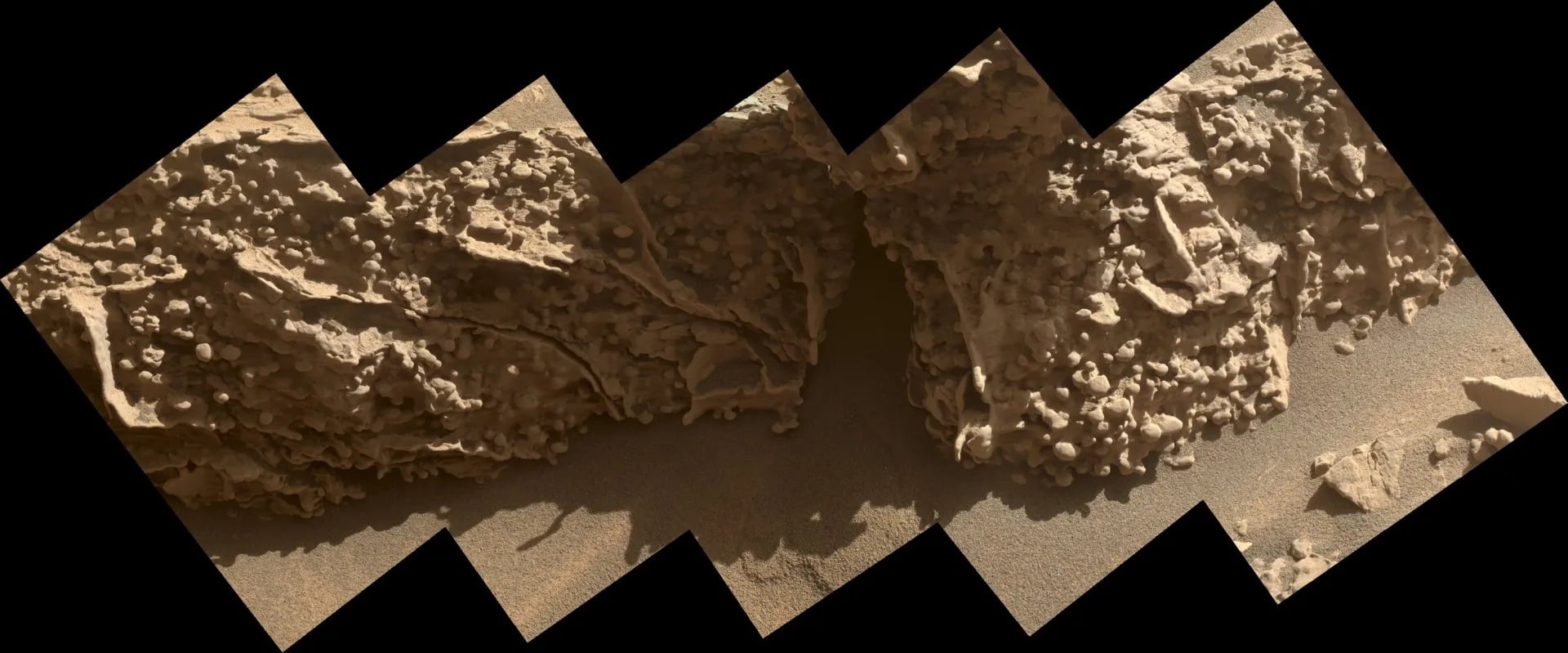
The rover discovered small bumps in the nodules region that were formed by minerals left behind as water on Mars dried up billions of years ago. Surprisingly, the nodules were found along the ridge’s walls and in the hollows between them rather than in the central fractures.
“We can’t quite explain yet why the nodules appear where they do,” Seeger said. “Maybe the ridges were cemented by minerals first, and later episodes of groundwater left nodules around them.”
Curiosity will keep exploring the ridges until sometime in March before moving on to a different region on Mount Sharp, learning more about how the Red Planet’s climate changed over time.
The rover had a bumpy ride driving along the ridges, some of which were not much wider than the SUV-sized Curiosity. “It almost feels like a highway we can drive on. But then we have to go down into the hollows, where you need to be mindful of Curiosity’s wheels slipping or having trouble turning in the sand,” Ashley Stroupe, operations systems engineer at NASA’s Jet Propulsion Laboratory, said in a statement. “There’s always a solution. It just takes trying different paths.”
Read the full article here