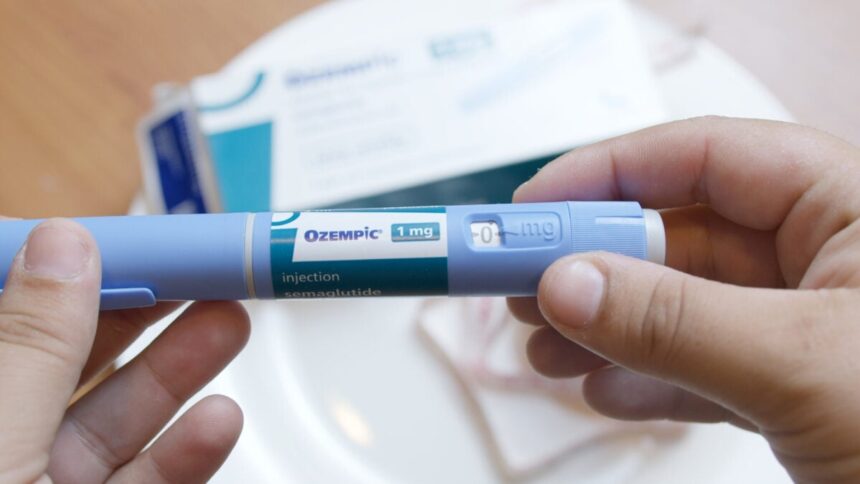
People struggling with obesity can now reliably lose weight thanks to the emergence of GLP-1 drugs like semaglutide, the active ingredient in the popular medications Ozempic and Wegovy. Unfortunately, recent research finds that GLP-1 users might also lose respect from others, too.
Scientists at Rice University studied how volunteers reacted to various fictional scenarios about an obese person. People were on average harsher toward those who lost weight via GLP-1 drugs than toward those who lost weight through diet and exercise alone, the researchers found. Remarkably, they were even meaner to GLP-1 users than to obese people who hadn’t lost any weight at all. The findings suggest that some people are especially judgmental about GLP-1 drugs and the people who take them.
“As GLP-1s have gained popularity, people have begun to stigmatize those who lose weight using GLP-1s,” the authors wrote in their paper, published last month in the International Journal of Obesity.
The GLP-1 stigma
As anyone who’s ever struggled with their size well knows, people can get awfully moralistic when it comes to weight. People generally tend to look down on those with obesity, for instance, ascribing all sorts of stereotypes about their lack of willpower or laziness. This stigmatization can even extend to doctors, who are more likely to ignore the needs of their obese patients than thinner ones. All of this is despite the fact that obesity is a complex medical condition linked to many outside factors not so easily under our control.
If that isn’t bad enough, people can get snooty about the ways someone tries to lose weight. Studies have found that people think less of people who lose weight via bariatric surgery compared to people who do so via dieting and exercise alone. Some early research has suggested that a similar thing has started to happen with the people who take GLP-1s as well, but the current study researchers wanted to test this out experimentally.
They recruited over 1,300 people online to take part in two experiments.
In the first experiment, people were presented with three different kinds of situations about a 38-year-old person who’s had obesity since puberty. In one, the person lost 35 pounds over a year’s time with GLP-1 therapy; in the other, they lost the same weight with only lifestyle changes; and in the third, they weren’t described as having lost any weight at all. The volunteers were asked to rate the person’s likely traits, both negative and positive, and whether they would likely enjoy spending time with the person. Negative traits included being undisciplined, self-indulgent, and weak-willed.
As expected, people rated someone more negatively if they were taking a GLP-1 to lose weight compared to lifestyle changes alone. But to the researchers’ surprise, the GLP-1 user was also seen as worse compared to someone who hadn’t lost any weight recently.
In the second experiment, they tested how people viewed someone who had regained the weight they lost with either GLP-1 therapy or lifestyle changes alone. Compared to someone who maintained their weight loss, the volunteers judged weight regainers more harshly. Interestingly enough, however, the level of animosity was roughly the same no matter how the person originally lost weight.
“Thus, individuals pursuing these treatments can become mired in a ‘damned if you do, damned if you don’t’ situation, wherein remaining at a higher weight means enduring weight stigma, but losing (and potentially regaining) weight after using a GLP-1 also makes them vulnerable to judgment and discrimination,” the researchers wrote.
What this means
The team’s research doesn’t necessarily prove that GLP-1 users routinely face stigmatization. The researchers note that in real life, people often won’t know about someone’s weight history unless they were explicitly told about it. Similarly, there’s nothing specific that would help someone tell whether a person has lost weight with a GLP-1 drug as opposed to strictly diet and exercise. So the researchers say there should be more studies examining the personal experiences of people taking a GLP-1.
Still, you don’t have to go too far online to see people moralizing about these drugs being an easy way out for those with obesity. And the stigma surrounding GLP-1s might also help explain why some people are so eager to believe in persistent myths about their dangerous side effects. Every drug has its tradeoffs and risks, but no, Ozempic is not shredding away people’s bones, for instance.
“There is, therefore, a clear need for interventions that address the stigma associated with using GLP-1s for weight loss,” the authors wrote. These interventions should include public health campaigns to dispel misinformation about GLP-1s, along with specialized training for medical professionals, they added.
Read the full article here