
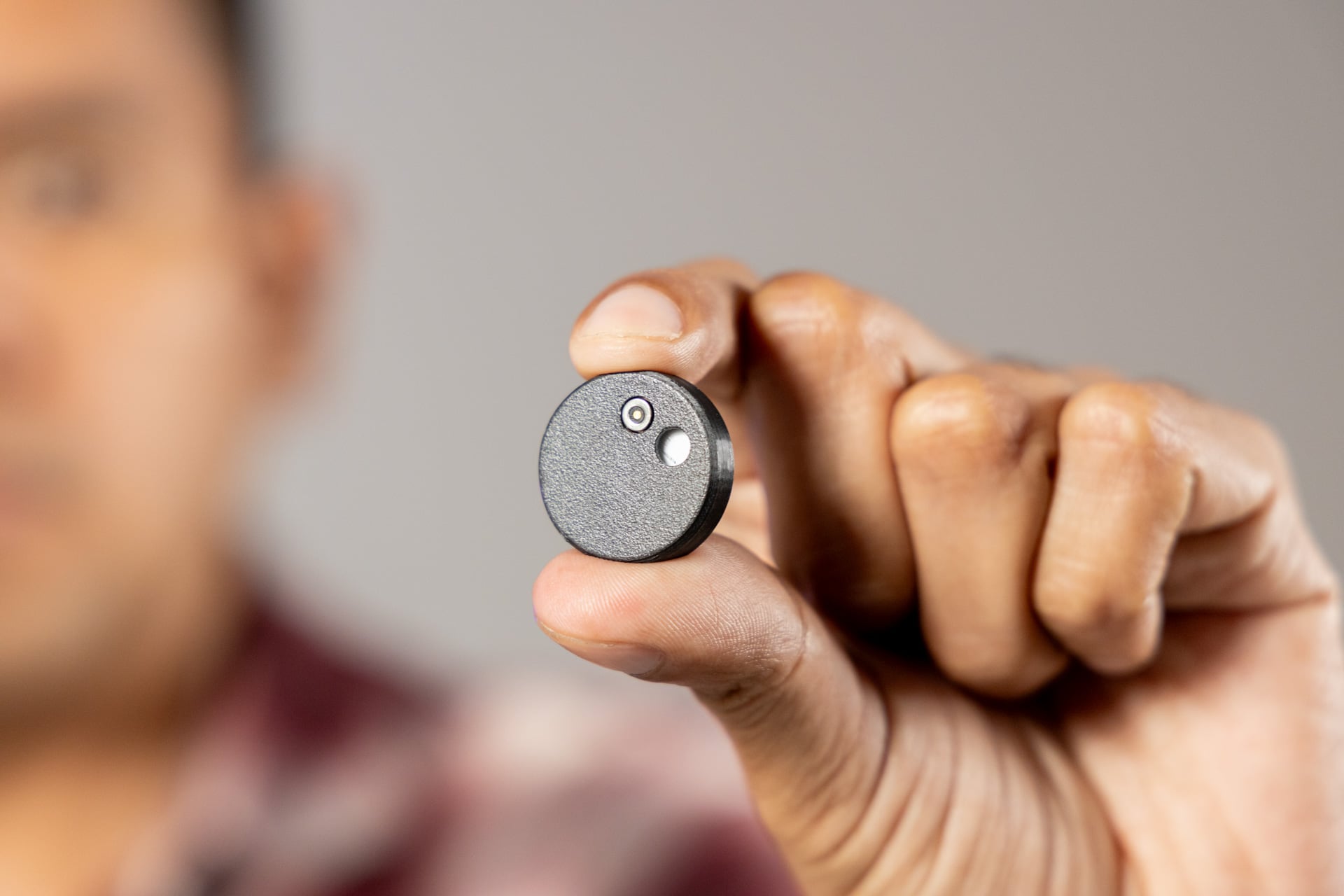
My mornings are fairly consistent, thanks largely to the furry alarm clock that demands breakfast at 7 a.m. sharp, my cat Cheddar. The last few days, though, I’ve had to add a novel item to my morning ritual: carefully sticking a nickle-sized device onto my underwear so that it can track my farts for the next 21 or so hours. Ah, but don’t worry, it’s all in the name of science.
I’ve now had the opportunity—nay, the privilege—to test out the Smart Underwear wearable developed by researchers at the University of Maryland, led by Brantley Hall. Hall and his team are using the device and hundreds of eager volunteers to answer the many enduring questions surrounding our flatulence. What they learn will not only shed light on a vital biological function we rarely discuss in polite company, it could someday help people improve their gut microbiome and health.
Fartology
Bar none, the first question my friends and family asked when I mentioned my little experiment was: Why? Why are scientists even bothering to study our farts in the first place? It’s a query that Hall is well used to, and he’s got a succinct response.
“The short-term goal of this project right now is to set the baseline,” he told me over Zoom. “We don’t really have an up-to-date view of what the normal flatulence pattern is.”
That’s not to say no one has tried to figure out our farts before. Gastroenterologist Michael D. Levitt dedicated roughly seven decades of his life to studying flatulence until retiring in 2023—so much so that he became known as Dr. Farts. Levitt’s pioneering work in the field, compromised of more than 200 research articles, revealed certain mysteries about farting, including its usual gas composition. He helped confirm that only a small percentage of these gases, roughly 1%, actually account for a fart’s notorious smell and that these stinky gases are sulfur-based.
“This is the guy whose shoulders we’re standing on,” Hall said of Levitt.
Important as Levitt and others’ research has been, it’s largely based on people’s self-reporting of their farting habits or the use of tubes directly inserted into people’s rear ends to collect farts for analysis. People’s memories can be foggy even under the best circumstances. And while rectal devices might be a lot more accurate, they’re not people-friendly, to put it lightly. The Smart Underwear now provides a much easier way to keep an eye on our farts than Levitt’s butt tubes.
Much like a wayward squeak on a first date, though, Hall’s career in fartology wasn’t intentional.
“I didn’t set out to be a fart scientist. I’m actually a mechanistic microbiologist. But what we’re measuring is the microbiology that’s happening in your gut,” he said.
While sulfur is the culprit behind a fart’s stink, the team’s device specifically senses the large amounts of hydrogen found in a fart. This hydrogen is exclusively created by certain bacteria that live in our gut as a product of fermentation. Some of it leaves the body via our breathing or burps, but the majority comes out in our farts. Thus, the detection of hydrogen is not only a strong signal for someone having just farted—it’s one that can tell us a lot about the gut bacteria that make it.
Hall’s team was originally trying to study microbial fermentation through sensors that could detect the hydrogen produced by bacteria in an oxygen-free, or anaerobic, chamber. The sensors didn’t seem to work in these chambers, however. So, in a moment of equal parts inspiration and frustration, Hall literally put the device down his pants and farted on it—which produced a huge, clear signal. As it turns out, the sensor needed oxygen to work, and from there, the researchers realized they had created an ideal fart detector.
The Human Flatus Atlas
The team’s work eventually led them to the Human Flatus Atlas, a project billed as the world’s “first scientific expedition” into farting (flatus is technically the medical term for the gas that builds up in our intestines).
The researchers initially produced a batch of 800 devices for the project, which started in February. The interest from potential volunteers was so high, however, that they soon had to temporarily pause enrollment. Despite that, Hall was kind enough to provide me with two spare copies of the wearable.
The current device—now in its 13th or so iteration—is far less clunkier to wear than the original created more than five years ago. Over Zoom, Hall showed off the V1 Smart Underwear, a clunky-looking device with wires coming out of it, along with a clip that’s supposed to be attached to your belt. Other versions used double-sided tape to do the trick, which volunteers still hated, Hall said.
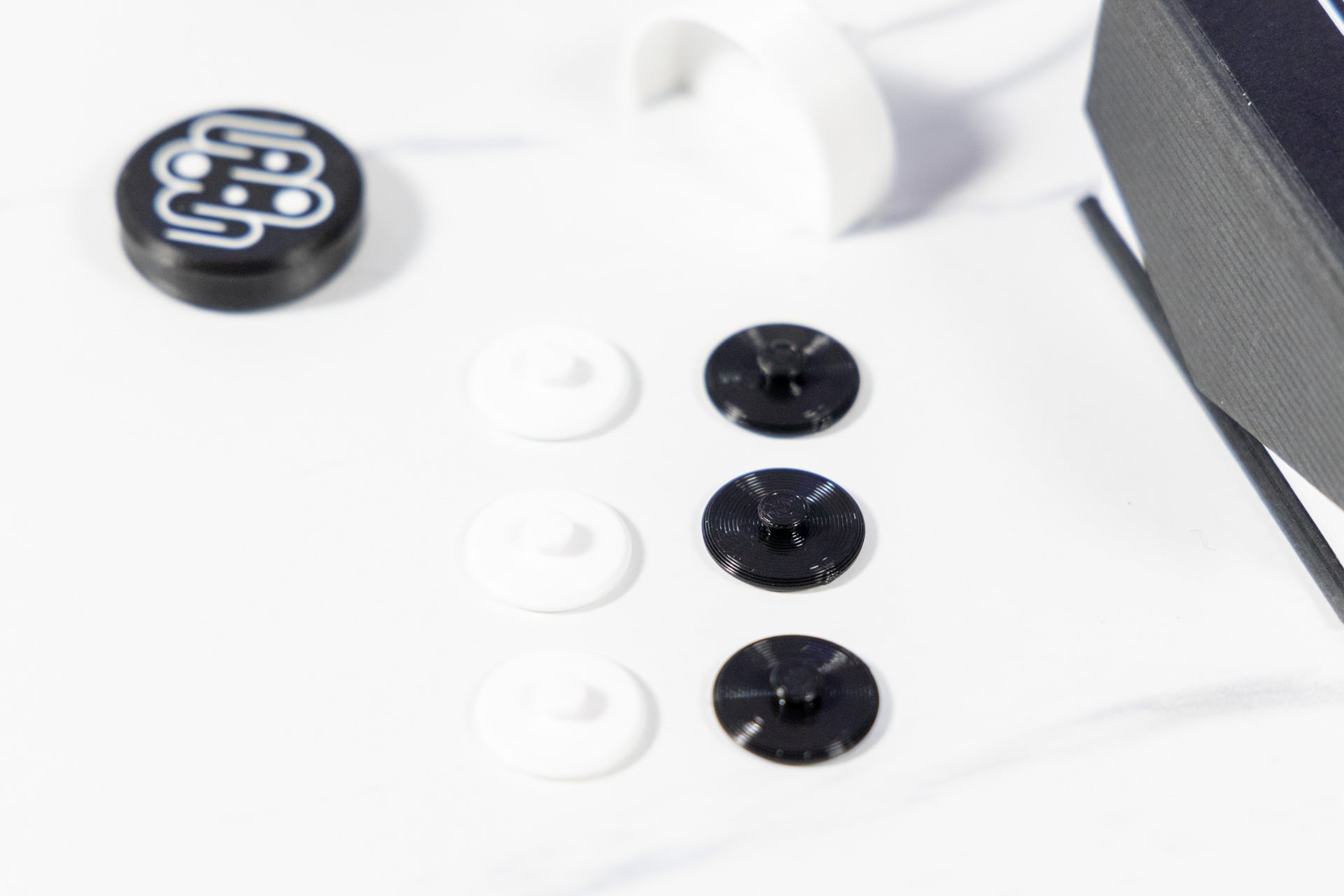
The Smart Underwear these days is a small light device that’s attached to the center of your underwear with a simple button clip. The device goes on the bottom surface of the underwear and connects through the fabric to the clip on the other side (in case of thicker underwear, two sizes of clip are included). Though I did have a little trouble attaching the device on the first day, it quickly became a snap. And true to Hall’s reassurance early on, actually wearing the device was completely free of any discomfort across all three days of use. Honestly, there were chunks of the day where I forgot I even had it on.
I followed the same procedure as the study participants. In the morning, I charged the device with a provided charger and connected it to the team’s accompanying app, where data from the previous day would be sent to; then I would start a new session of data collection. Though the device tracks farts all on its own, the study does ask people to record when and what they’re eating via a photo. This allows the device to see how long after eating it takes for people’s farts to bubble up. Based on the frequency and intensity of these farts, it can also quantify how metabolically active your microbiome was that day.
Lessons from farting

Thankfully, I’ve never considered myself an overly gassy person. That said, there certainly have been times when I’ve regretted the ingestion of certain foods, particularly dairy, over the bloating and gas they can cause.
So while I wasn’t expecting to be a farting champ, I did think my diet would leave plenty to be counted. In fact, on Hall’s suggestion, I planned to briefly try out a low FODMAP diet on the last day of the experiment. FODMAP is short for fermentable oligosaccharides, disaccharides, monosaccharides, and polyols. They’re basically carbohydrates that can’t be fully digested by the body, so they’re instead broken down by our gut bacteria. High FODMAP foods like dairy, high fructose corn syrup, and highly processed meats are sometimes linked to irritable bowel syndrome or other gut issues, and a low FODMAP diet can be used to temporarily reduce symptoms and identify specific triggers for chronic gut problems.
To my pleasant surprise, my first day was light on farts, even though I indulged in my favorite beverage as of late: a delicious large iced tea with milk. The device tracked nine farts that day. The second day, I ate even more foods I’ve personally linked to gas, like buffalo wings, which did seem to boost my count (23 farts). By day three, I went back to my usual diet and only had three farts total.
Now, it’s possible that I somehow borked up the device’s data collection. The results of all three days lined up with my subjective recollections, though, and I was definitely paying more attention to my farts than usual. Given that I’m a 37-year-old man with no major health conditions, digestive or otherwise, it’s also probably not too surprising that my fart activity is relatively low.
Broadly speaking, the team’s research has already started to question some common notions about farting.
In a recently published pilot study, for instance, the researchers tracked the farts of 19 healthy adult volunteers. On average, they found, the volunteers farted 32 times a day—roughly twice the amount reported by the studies back in Levitt’s heyday. There was plenty of variation between the volunteers as well: the single lowest fart count in a day was four, while the highest was a whopping 59 “flatus events.”
In early May, the researchers also presented preliminary data from a subset of volunteers. Out of 37 people, they identified 24 who seemed to have lactose intolerance, based on increased microbiome activity after they consumed dairy. Yet only 12 of these people correctly reported they farted more post-lactose (22 did). And the team’s research so far, according to Hall, suggests that some people are especially bad at gauging their fart levels, namely those who think they’re excessively farting. That’s important, since it might mean people who visit their doctor over excessive farting actually need different treatments that aren’t simply focused on gassiness. All these findings will have to be vetted further with more data from the full project, of course.
As silly as fart tracking might sound, Hall and his team are hopeful their work really can benefit people. “By adding this dimension of objectivity, we can help advance care,” he said. Down the road, their research might even boost cancer prevention efforts.
Hall notes that colorectal cancer is negatively linked to fiber consumption, such that people who eat the most fiber are less likely to develop it. Right now, 95% of Americans probably aren’t getting enough daily fiber intake. And one reason why, at least for some people, is that high fiber diets can cause the gut microbiome to churn out ample amounts of gas, bloating, and farting.
“Long term, there’s the potential to recode our microbiome to produce less gas,” Hall said. “It’s not something we’re going to do tomorrow. But by understanding how electron flow happens in the microbiome, we think we can measure then recode it so that people can eat healthy, high-fiber diets.”
Hall and fellow UMN researcher Santiago Botasini have co-founded the company Ventoscity LLC to eventually commercialize their technology. For now, the team is still working on the small stuff. By this summer, they’re hoping to release data from the first large batch of volunteers, roughly 500 people. They’ve also upgraded the casing from the version I received (no more 3D printing), and they’re looking to detect more gases through different sensors or techniques (carbon dioxide and methane are other byproducts of gut bacteria, while nitrogen and oxygen are found in farts, too). Eventually, the Human Flatus Atlas itself might enroll thousands of participants, and the team already has a hefty waiting list to pick from.
“It was about 8,000 right away in the first couple weeks. And it’s been like 50 people per day ever since. So it’s weirdly not slowed down,” Hall said of the people signing up to be potential volunteers.
My few days with the Smart Underwear have left me truly appreciative of my farts, along with the microbial alchemy that makes them possible. And the immediate buzz surrounding the project shows just how curious we are about the gas we pass. Based on the many responses that Hall has gotten from people around the world, the cultural prudishness surrounding farting really seems to be more of an American thing.
“I met someone from Vietnam and they were talking about how they just let them rip at the table. And it’s not something that they even discuss. It’s funny, and they just let it go. I think it’s so humanizing and people want to talk about it,” he said. “I get a lot of emails with very detailed stories about people’s fart history. So it’s been a lot of fun, too.”
Read the full article here