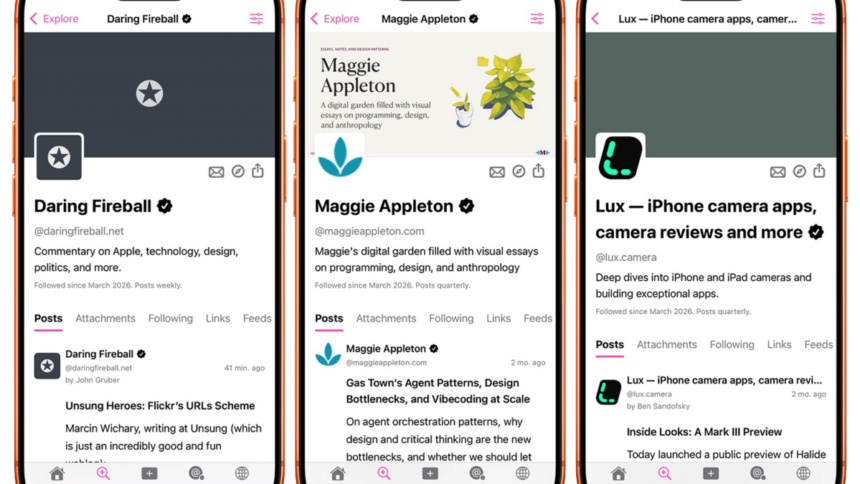
Spend far too many hours mindlessly scrolling social media feeds, where a black-box algorithm fine-tuned for maximum engagement dictates what you see—and maximizes your sense of doom in the process? Well, what if you could spend entirely too many hours mindlessly scrolling something that *looks* like your social feed, but it’s actually just the stuff you want to see?
That’s the theory behind HyperTexting, a new app that promises to rebuild your timeline around the content you like without advertisements, algorithms, or AI slop. The app was built by Caleb Hailey, a 20-year tech industry veteran and RSS feed evangelist who has a desire to return the modern web to something closer to what it could have been if we hadn’t let the social giants devour the whole thing.
Per the app’s website, HyperTexting allows users to follow basically any feed that you can find online: news outlets, independent journalists, content creators, podcasters—as long as they have an RSS feed available, HyperTexting can pick up on it. Once you follow, the content is put into your feed and shown to you on a reverse-chronological timeline, with the newest content populating first and allowing you to scroll down to see what happened earlier in the day.
If you want to see content from a specific outlet that you follow, you can visit it like you would a “profile” page on social media. And if you really want to see stuff outside of your own feeds, there is an option for that: an “Explore” tab that shows you what content is trending, a la Nuzzel, a once promising social curation app that Twitter killed because why would those folks let anything useful exist?
While you can manually add just about any feed to your HyperTexting scroll, there is also a Safari extension available that allows you to quickly add any interesting site that you come across and want to keep tabs on.
In reality, HyperTexting is kind of a new wrapper for RSS, a method of keeping up with your favorite parts of the web that basically died out once social media came about. But you know what? RSS feeds are great. They’re simple, easy to manage and customize, and largely free of the bullshit that otherwise clutters the modern web. If it takes putting that into something that resembles a social feed to get people to engage, so be it.
Read the full article here