Is there anything more annoying than leaving the house in shorts and flip flops, only to get caught in an unexpected downpour? The weather report is rarely spot-on, but if forecasts have seemed particularly inaccurate recently, it’s because they have been.
The National Oceanic and Atmospheric Administration (NOAA) was among several agencies gutted by the Trump Administration’s Department of Government Efficiency in 2025. That February, the U.S. Office of Personnel Management abruptly fired 880 NOAA employees. Two months later, NOAA approved over 1,000 deferred resignations or buyouts. These sweeping staff cuts forced the National Weather Service (NWS), the forecasting arm of NOAA, to halt or reduce weather balloon launches at 11 locations.
“We’re going to lose data because of this staffing,” Michael Morgan, an atmospheric scientist at the University of Wisconsin-Madison and former NOAA administrator, said at the time. “And that loss of data then translates into less precise forecasts, more uncertainties in the forecast.”
Before the cuts, the NWS was launching weather balloons twice per day (once in the morning and once in the evening) from 100 locations. Today, the number of morning launches in the Lower 48 has been reduced by half, according to MyRadar senior meteorologist Matthew Cappucci.
“As an atmospheric scientist myself, I can say firsthand—the forecasts I’m able to offer you are less accurate than they would otherwise be,” he wrote on X on Saturday. “I’m not able to predict severe weather with the confidence I normally would. That is extremely concerning.”
Have weather forecasts seemed less accurate lately? There’s a major contributing factor: nearly half the morning weather balloons in the Lower 48 are “missing.”
This is an ongoing crisis that is degrading critical severe weather forecasts that we all rely on. It’s having real,… pic.twitter.com/xMajo4MzUs
— Matthew Cappucci (@MatthewCappucci) June 27, 2026
Deflated data
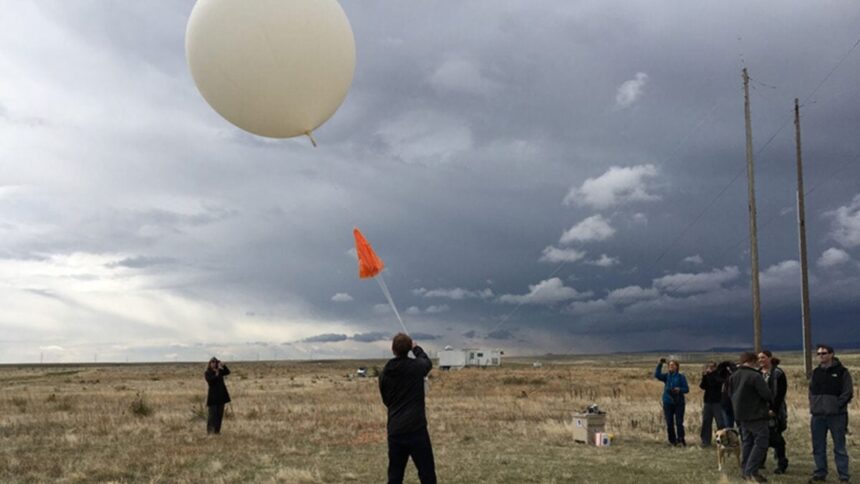
Weather balloons, also known as sounding balloons or radiosondes, carry instruments that measure temperature, wind, humidity, and pressure high into the atmosphere. Meteorologists feed the data they gather into forecast models, providing a snapshot of current conditions so that the models can predict future conditions.
Federal forecasters have relied on weather balloons for more than a century, though today’s models are far more advanced. This technology has stood the test of time because it remains the easiest, most cost-effective way to capture a vertical snapshot of the atmosphere in real time. Unlike satellites, weather balloons gather direct measurements and therefore play a crucial role in ensuring forecast accuracy.
According to Cappucci, the NWS has historically launched balloons around 7 a.m. and 7 p.m. ET daily, but that’s no longer happening. Following the Trump administration’s staffing cuts, many sites that haven’t stopped weather balloon operations altogether have pushed morning launches to early afternoon.
“That’s not helpful for morning severe weather forecasts,” he explains. “In other words, you get less lead time. Less advanced notice. Quicker ramp-ups and ramp-downs to the forecast. We’re not able to get jet stream, temperature, moisture or wind profiles of the atmosphere each morning like we otherwise would.”
Dealing with the logistical challenges of unreliable daily forecasts is a nuisance, but when it comes to predicting severe weather, a lack of data can be dangerous. In May, the start of peak tornado season for the Southern Plains, NWS offices in Kansas failed to conduct three-quarters of scheduled morning weather balloon launches.
“That’s unacceptable,” U.S. Representative Sharice Davids (D-Kan.) said at the time. “Kansans deserve confidence that the systems meant to keep them safe are fully operational during tornado season and meteorologists deserve the reliable data they need to do their jobs.”
With climate change exacerbating the threat of extreme weather, it’s never been more important to ensure that federal forecasters have access to accurate, real-time atmospheric measurements. With every cancelled weather balloon launch, the risk to the public grows.
Read the full article here