By using this site, you agree to the Privacy Policy and Terms of Use.
Accept
Tech Consumer JournalTech Consumer JournalTech Consumer Journal
  • News
  • Phones
  • Tablets
  • Wearable
  • Home Tech
  • Streaming
  • More Articles
Reading: A Giant ‘Planet Factory’ Beyond Jupiter May Have Churned out the Building Blocks of the Solar System
Share
Sign In
Notification Show More
Font ResizerAa
Tech Consumer JournalTech Consumer Journal
Font ResizerAa
  • News
  • Phones
  • Tablets
  • Wearable
  • Home Tech
  • Streaming
  • More Articles
Search
  • News
  • Phones
  • Tablets
  • Wearable
  • Home Tech
  • Streaming
  • More Articles
Have an existing account? Sign In
Follow US
  • Contact
  • Blog
  • Complaint
  • Advertise
© 2022 Foxiz News Network. Ruby Design Company. All Rights Reserved.
Tech Consumer Journal > News > A Giant ‘Planet Factory’ Beyond Jupiter May Have Churned out the Building Blocks of the Solar System
News

A Giant ‘Planet Factory’ Beyond Jupiter May Have Churned out the Building Blocks of the Solar System

News Room
Last updated: June 2, 2026 7:01 am
News Room
Share
SHARE

Scientists may have found one of the main sources of rocky material for the solar system, forming diverse populations of baby planets over millions of years.

In a recent study published in The Astrophysical Journal, a team of researchers from the Max Planck Institute for Solar System Research (MPS) in Germany describe a planet-forming region beyond Jupiter responsible for generations of planetesimals with vastly different compositions.

Celestial baby making

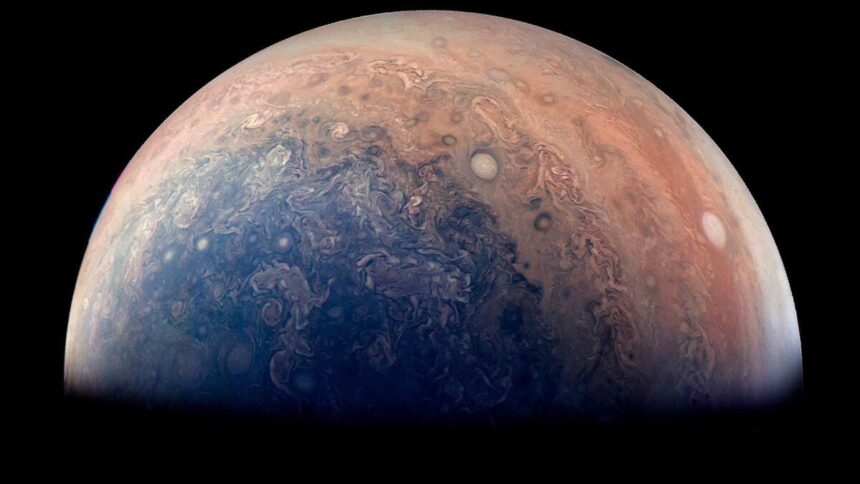
The solar system formed roughly 4.5 billion years ago from the collapse of a giant cloud of gas and dust, and while the material at the center would go on to form the Sun, the remaining debris clumped together over time to form the building blocks of planets.

There may be more to the story, however. Scientists believe that different regions of the solar system may have evolved under varying conditions while multiple stages of the planet formation process could have been taking place at the same time.

© MPS / hormesdesign.de

The researchers behind the new study set out to uncover the early history of the solar system, narrowing in on a time period between two to four million years after its initial birth. By that time, Jupiter had already gathered much of the surrounding material around its orbit, possibly creating a gap in the disk of gas and dust from which the solar system initially formed.

That process may have trapped large amounts of dust by creating a ring of higher pressure gas just beyond Jupiter. These so-called dust traps could have kept producing different types of planetesimals, the building blocks of planets, over millions of years.

“There is strong evidence that dust traps were the preferred birthplace of planetesimals in our Solar System,” Joanna Drążkowska, head of the Lise Meitner Group on planet formation at MPS, said in a statement.

Orbital factory

Using computer simulations, the researchers recreated collisions between microscopic particles, as well as large-scale movements in the solar system’s protoplanetary disk.

“Different types of planetesimals apparently formed in the same region of the early dust and gas disk, only at different times,” Drążkowska said. “The region just outside Jupiter’s orbit offered excellent conditions for this.”

The researchers found that some particles could break apart, stick together, or become trapped in certain regions like the one beyond Jupiter. The gas giant also acted as a barrier, keeping larger, more sturdy chunks behind it while letting smaller dust grains through into the inner solar system. At the same time, new planetesimals were forming, sucking up some of the material from the disk.

The two different processes helped create two distinct populations of planetesimals over time: one made of mostly fragile material and another forming from stable matter. The findings suggest that dust-traps, such as the one that formed beyond Jupiter, could have been the preferred birthplace of planetary building blocks that would go on to help form the rest of the solar system.

As scientists continue to probe the origin story of our star system, they may help uncover different layers of how Earth and its neighboring planets came to be.

Read the full article here

You Might Also Like

Sam Altman Sued by Florida AG Over Alleged Exploitation of ChatGPT Users for Profit

Today’s Worst Idea Is Letting Zack Snyder Remake ‘Escape From New York’

Plenty of People With Normal BMI Are Clinically Obese, Study Finds

China’s BYD Is Offering to Pay for Some Crashes Involving Its Self-Driving Tech

Hackers Tricked Meta AI Into Handing Out Access to Major Instagram Accounts

Share This Article
Facebook Twitter Copy Link Print
Previous Article China’s BYD Is Offering to Pay for Some Crashes Involving Its Self-Driving Tech
Next Article Plenty of People With Normal BMI Are Clinically Obese, Study Finds
Leave a comment

Leave a Reply Cancel reply

Your email address will not be published. Required fields are marked *

Stay Connected

248.1kLike
69.1kFollow
134kPin
54.3kFollow

Latest News

MSI’s New Claw 8 Ex Could Be the Pinnacle of Gaming Handhelds
News
Bernie Sanders Continues to Be Only Democrat(ish) Lawmaker Willing to Govern on AI
News
Google Is Suddenly Competing For $80 Billion in Investor Money That Could Have Gone to the Big AI IPOs
News
AMD’s RX 9070 GRE Graphics Card Is a Compromise No Matter How You Slice It
News
DuckDuckGo’s Doing Numbers After Pitching Itself as the Home of AI-Free Web Searches
News
Asus Just Gave the Xbox Ally X a Huge Screen Upgrade—but There’s a Catch
News
Everyone Wants a Piece of Xreal’s AR Glasses
News
Researchers Confirm Oldest Cave Art in Britain a Century After It Was Dismissed as a Mineral Deposit
News

You Might also Like

News

‘Gold Standard’ for Mental Health Diagnosis May Leave Patients Miscategorized, Study Finds

News Room News Room 5 Min Read
News

Summon the Witch: ‘Hokum’ Comes Home Tomorrow

News Room News Room 3 Min Read
News

Here’s Your First Look at Lex Luthor in ‘Man of Tomorrow’

News Room News Room 3 Min Read
Tech Consumer JournalTech Consumer Journal
Follow US
2024 © Prices.com LLC. All Rights Reserved.
  • Privacy Policy
  • Terms of use
  • For Advertisers
  • Contact
Welcome Back!

Sign in to your account

Username or Email Address
Password

Lost your password?