Shortly after four astronauts returned from their trip around the Moon, a crew of tiny space travelers were already on the move. Scientists sent microscopic worms to the International Space Station (ISS) as part of the same broader effort to extend human presence deeper into space.
The space-faring worms arrived at the space station on Monday aboard Northrop Grumman’s Cygnus XL spacecraft. The uncrewed spacecraft delivered about 11,000 pounds (4,990 kilograms) of science equipment and supplies to the ISS, including a miniature space laboratory with the wriggly inhabitants inside.
The scientists behind the experiment are hoping these small creatures will help better inform them on human health during long duration space travel.
Space worms
The experiment, led by the University of Exeter in England, is designed to study how living organisms respond to the harsh space environment. “It might sound surprising, but these tiny worms could play a big role in the future of human spaceflight,” U.K. Space Minister Liz Lloyd said in a statement.
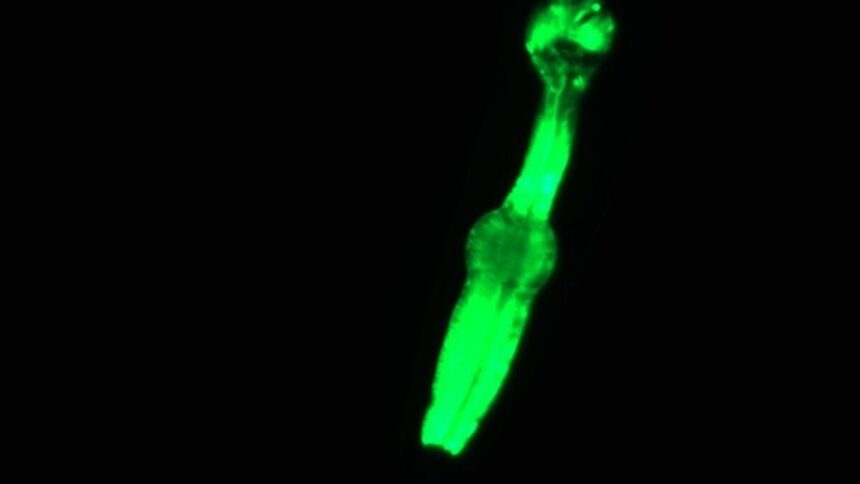
The worms are called C. elegans nematode worms, a tiny roundworm that measures around 1 millimeter in length. Because of its transparent body, researchers can watch its cells develop under a microscope. The roundworm is also fast-growing and genetically tractable, making it an ideal candidate for biological research.
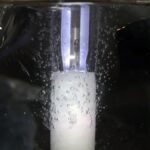
The worms are placed inside a miniature lab called the Petri Pod. The self-contained experiment is housed in a unit that measures approximately 4 x 11 inches (10 x 30 centimeters) and weighs around 6 pounds (3 kilograms).
The unit has 12 chambers, four of which can be actively imaged using fluorescent and white light. Each chamber provides a miniaturized life support environment for the worms, maintaining temperature, pressure and a trapped volume of air for them to breathe when exposed to the vacuum of space. They will also receive a supply of food through an agar carrier.
Miniature mission
The worms will spend some time inside the space station before being mounted on the outside of the ISS. From there, the small creatures will spend around 15 weeks inside their miniaturized environment while being exposed to zero-gravity and radiation of outer space.
Throughout that time, the researchers will monitor the worms’ health, using miniaturized cameras to capture stills and time-lapse videos. The experiment will collect data on temperature, pressure, and accumulated dose of radiation experienced by the worms, and send the data back to Earth.
“NASA’s Artemis programme marks a new era of human exploration, with astronauts set to live and work on the Moon for extended periods for the first time. To do that safely, we need to understand how the body responds to the extreme conditions of deep space,” Tim Etheridge, a researcher at the University of Exeter Medical School, said in a statement. “By studying how these worms survive and adapt in space, we can begin to identify the biological mechanisms that will ultimately help protect astronauts during long-duration missions – and bring us one step closer to humans living on the Moon.”
Read the full article here