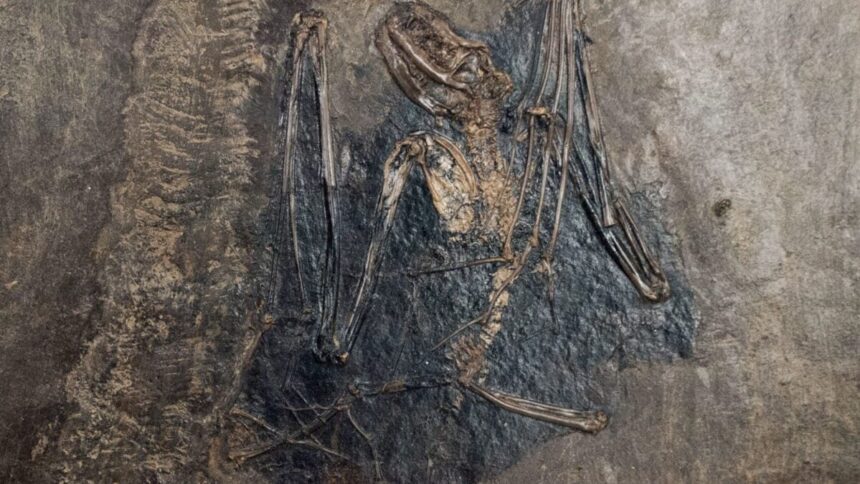
Scientists have finally solved an enduring mystery about the only true flying mammal in the world. In a study out today, a large international team of researchers seems to have pinpointed the exact geographical origins of the bat.
The researchers analyzed dozens of ancient bat fossils and sequenced the genomes of over 100 different species across all known families of bat. Based on this analysis, the very first bats almost certainly originated from Europe, they found. The still-growing genome collection should help scientists answer many more questions about these remarkable animals.
“By publishing the genome assemblies and all the data, we expect to catalyze the study of bats as mammals with a series of unique anatomical, aging, and immunological traits,” study author Liliana Davalos, a conservation biologist and phylogeneticist at Stony Brook University in New York, told Gizmodo.
The origin debate over bats
Bats are some of the most successful mammals in the world. There are at least 1,500 species of bat, accounting for about one-fifth of all mammal species. Yet it’s proven surprisingly hard to figure out exactly where they came from and when they first appeared.
Past studies looking at bat genomes have separately concluded that they likely originated in Asia, Africa, and North America. These studies largely relied on examining living bat species or were conducted before the discovery of key fossils, Davalos says. Nearly a decade ago, in 2017, Davalos and her colleagues began a large-scale collaboration intended to help address this and other lingering questions: the Bat1k project.
The end goal of the project is to sequence the genomes of all bat species living today. But for this early phase, the researchers sequenced 103 species from all 21 families of bat—still no easy task. They also included 44 fossil bats in their larger analysis and were able to reconstruct 26 ancestral bat chromosomes. It’s the largest combined bat genome and fossil study ever conducted, according to Davalos—a herculean effort that involved 134 researchers from 64 countries.
The major finding from this genetic expedition is that the oldest bats probably came from Europe roughly 65 million years ago. Scientists knew the oldest discovered bats had already evolved to be capable of powered flight, but the team’s new work indicates that another key trait of living bats, their ability to use echolocation, also originated early on in their lineage as well and was present in the very first known branch of bats, called Eochiroptera.
For context, the asteroid that wiped out all non-avian dinosaurs struck Earth 66 million years ago. So if this interpretation is correct, that means bats emerged almost immediately once the dinos were gone.
The team’s research was published Wednesday in the journal Nature.
Much more to learn
While researchers may have answered one vital question about ancient bats, there’s still plenty we don’t understand about the bats we share a planet with today.
“We hope showing the origin and evolution of bats through time can promote attention to ecological research that can inform conservation, as approximately 80% of bat species are either threatened with extinction, their populations are in decline, the population trend is unknown, or we don’t really know anything about them,” Davalos said.
Davalos says that it will take substantial resources and funding to ultimately sequence all living bat species—resources that are even more precarious in the U.S. these days, at least partly due to the Trump administration’s efforts to curb or more strongly dictate the use of federal research funding. But the team is committed to pushing ahead with their work, and Davalos is optimistic about the project’s potential to help them and other scientists unravel the many mysteries of bats.
“We will continue expanding the database of genome assemblies from all living genera and use this database to discover how bats do all the things they do: live for decades despite being tiny, suppress extreme inflammatory responses that promote aging and backfire when responding to viruses, and have amazing dietary specializations from blood to nothing but nectar yet maintain their health.”
Now I’m just wondering when Hollywood will finally let Robert Pattinson down a gallon of nectar before his nightly Gotham patrol like a proper Batman should.
Read the full article here