Democrats in Pennsylvania have introduced a bill that would stop retailers from changing the price of essential goods and services in a given 24 hour period. And it’s just the latest push at the state level to fight the rise of so-called surveillance pricing, the practice of rapidly changing prices for different consumers using high tech tools. At least a dozen states are considering legislation this year around the topic.
Surveillance pricing has long been a thing online, where retailers can easily show different prices to different consumers. Ridesharing companies like Uber, for instance, can charge users more when they have lower battery life on their phone. And Instacart was recently caught using AI to experiment with seeing how much consumers would pay for various groceries, with some people paying up to 23% more for the same goods.
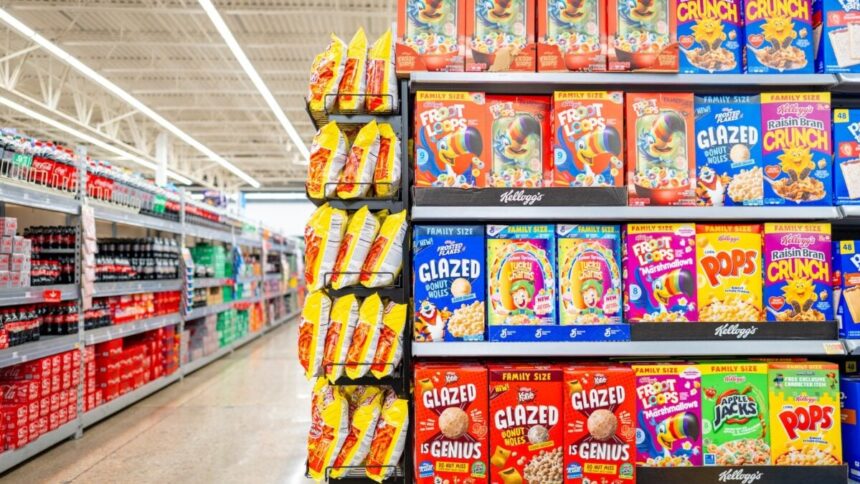
But consumers at brick and mortar stores have become increasingly concerned about how things like digital price tags and cameras in store could potentially be used to change prices. Retailers can hypothetically use the same tools to charge different prices based on age, race, gender, and past buying history, among a host of other variables. And states are trying to fight back even before things get out of hand in sci-fi dystopian ways.
The proposed legislation in Pennsylvania, Senate Bill 1205, would amend the state’s Unfair Trade Practices and Consumer Protection Law to include any rapid changes to prices on essential goods within a 24 hour period. The law would ban changes “based on demand or other factors, including through the use of artificial intelligence or an artificial intelligence model that retrains or recalibrates based on received information.”
The idea, of course, is that changing prices more than once a day would be unnecessary unless you were utilizing a dynamic or surveillance pricing scheme. On a practical level, such changes can be time and labor intensive, but with electronic price tags, things can change rapidly and even automatically, perhaps according to the whims of AI.
As the Arizona Capitol Times notes, there are at least a dozen states currently considering legislation on the topic of dynamic and surveillance pricing, including Arizona, Florida, Hawaii, Illinois, Kentucky, Nebraska, Oklahoma, Pennsylvania, Tennessee, Vermont, Virginia, and Washington. New York became the first state to pass a law around dynamic pricing with the Algorithmic Pricing Disclosure Act, though it just requires disclosure when an algorithm is being used with your personal data to set a price.
George Slover, Senior Counsel for Competition Policy at the Center for Democracy and Technology, testified this week about the proposed legislation in Pennsylvania. Slover studies antitrust issues and has a keen interest in algorithmic collusion and what he calls bespoke pricing. The idea of surveillance pricing is new enough that the terms we used to talk about it haven’t really been settled.
Slover told Gizmodo that it seems like it’s almost exclusively Democratic legislators who are currently interested in the topic but there seems to be increased awareness lately that could lead to more widespread action.
“It’s an issue that people are really getting interested in because the idea is clearly disturbing,” Slover said, “…that the price I’m getting is different than the price that somebody else is getting and that maybe I’m having to pay more.”
“The creepiest one is the surveillance pricing or the bespoke pricing. But the dynamic pricing […] the algorithmically fed price changes, is also disturbing to people when they hear about it.”
One of the problems consumer rights advocates encounter is the fact that the surveillance and dynamic pricing practices are opaque, as former FTC chair Lina Khan explained in a video last year. So in most parts of the country we wouldn’t necessarily know if a retailer was already using various algorithmic methods to set prices using personal data.
Retailers know there’s skepticism out there. Walmart has been rolling out digital shelf labels (DSLs), with 2,300 Walmart stores already sporting the electronic markers, according to the company. The retail giant says it expects every location to have digital shelf labels by the end of this year. And they’re being sold as a way to simply make things more efficient.
“Walmart stores carry tens of thousands of items, and every single one needs to have a clear, accurate shelf price. Between new inventory, Rollbacks and markdowns, pricing updates stack up fast and can take hours, if not days, to complete,” Walmart said in a press release this week.
“Before DSLs, that meant walking up and down aisles swapping out paper tags by hand,” the press release continued. “Now, associates manage planned price changes through a centralized Walmart system, making it easier to keep shelf prices accurate and aligned with what customers see at checkout.”
The press release is quick to insist that “prices are the same for all customers in any given store” and that they’re “consistent regardless of demand, time of day or who is shopping. DSLs simply modernize how prices are displayed at the shelf.” The question is how long that lasts in a world of fast-changing technology.
There’s no evidence that Walmart is using hyper-targeted surveillance pricing inside its brick and mortar stores, but this idea is going to be hanging around in the minds of consumers for some time as we see more experiments with digital shelf labels (and AI) across the retail industry.
Slover told Gizmodo that he believes the most wild ideas about hyper-targeted individualized prices are not imminent, as the public imagination “is getting a little bit ahead of what’s really happening and what’s gonna happen in the near future.” But he concedes that it’s definitely a possibility for the future as “technology is moving at rapid speed.”
Read the full article here