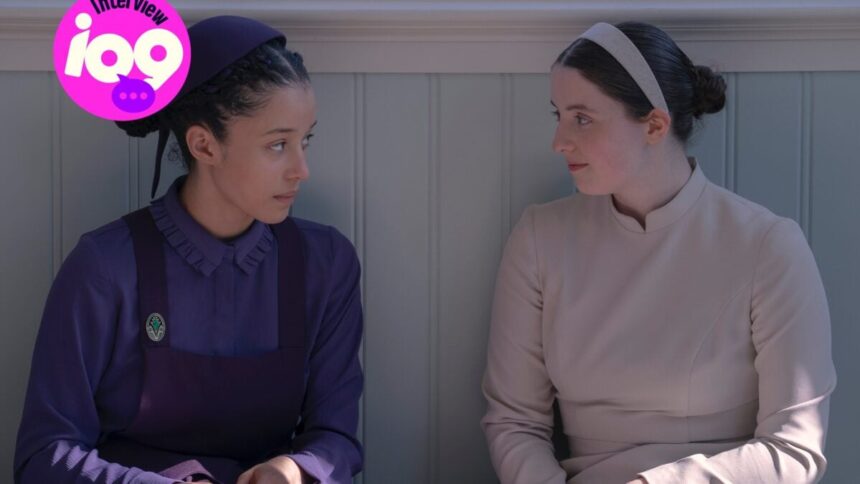
The Testaments arrives this week, bringing viewers back to the world of The Handmaid’s Tale with a different perspective. This time around, we dive into Gilead’s misogynistic, oppressive regime from the point of view of teenage girls who are being groomed to wed the country’s elite leaders.
The show’s main characters may be the daughters of powerful Commanders, but as the show itself explicitly explains in its opening moments, privilege does not protect them from Gilead’s prodigious violence. That includes emotional and physical abuse inflicted by parents, teachers, and other adults they’re supposed to trust. It also encompasses the terror that flows through the air in Gilead, where breaking a rule could mean having a finger chopped off—or something much, much worse.
While The Testaments is a work of fiction, a worst-case scenario of the religious right elevated to absolute power, the new show can at times feel like a reflection of our reality. Similar to The Handmaid’s Tale, the Margaret Atwood adaptation creates a world that feels eerily like something that could potentially happen.
At a recent Testaments press day, io9 asked the cast and showrunner Bruce Miller if they thought their show would be received similarly to The Handmaid’s Tale in that respect—will viewers pick up on parallels between the its story and our real-life dystopia? We also asked if that was something they thought about while they were making the show.
“Yes, indeed,” Ann Dowd said. She returns to The Testaments as Aunt Lydia, the character she won an Emmy for playing in The Handmaid’s Tale. “The treatment of women, losing Roe v. Wade, the rise of the white man as ruler of the day, patriarchal society, the extraordinarily dangerous person we have as president—you couldn’t get more relevant. Authoritarianism, the whole thing. It’s terrifying.”
Mabel Li, who plays Aunt Lydia’s colleague Aunt Vidala, agreed. “Absolutely. It was on my mind the entire time as well. I think what Margaret Atwood does so incredibly is that she shows how fascist states are created and maintained, and I think unfortunately we’re seeing that across the world.”
The younger cast members also felt the importance of the legacy they’re carrying on.
“I think we were acutely aware of the impact that The Handmaid’s Tale had had in real time,” said Lucy Halliday, who plays Daisy. “The costume of The Handmaid’s Tale became emblematic for protest in reality, and the weight of that precedent was felt by us stepping into this world because we want to do it justice, and we want people to feel represented or inspired by The Testaments the same way that they did for The Handmaid’s Tale.”
She continued. “And I think what did resonate with viewers [are] there are so many facets of The Handmaid’s Tale and The Testaments that they could see themselves in or that they’ve experienced in their lives … I’d like to think The Testaments continues to resonate with audiences or people continue to feel represented in a way or empowered in a way that The Handmaid’s Tale also does.”
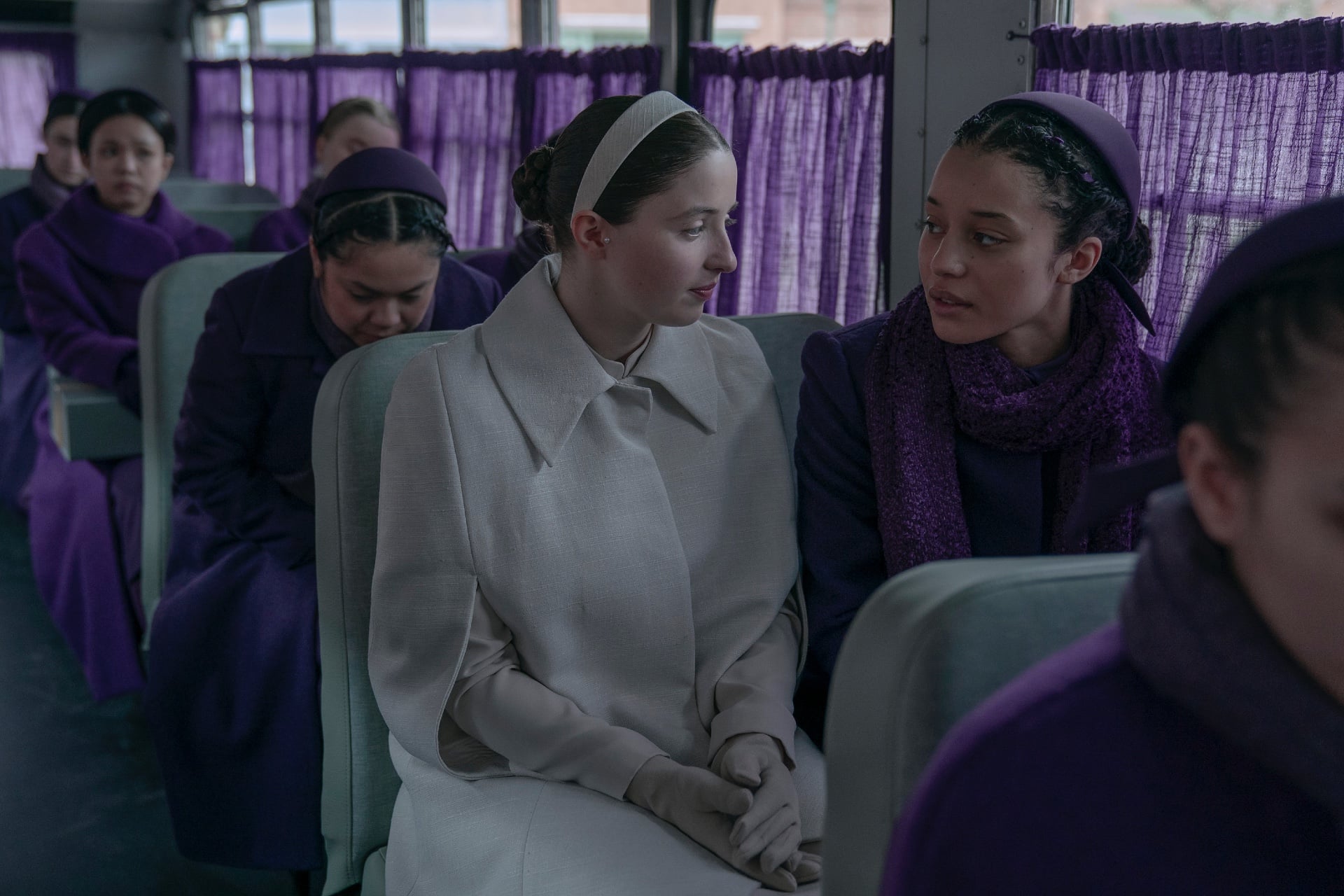
Chase Infiniti, who plays Agnes, agreed. “It’s something that we were aware of while we were shooting,” she said. “But I think also a lot of it that comes into play, especially with The Handmaid’s Tale, is the original books that Margaret Atwood wrote are based off of history. All the events that happen are not, I guess, original in that sense. The Handmaid’s Tale and The Testaments … can also be a cautionary tale in a way, but also a way to hold a mirror up to society because there are things that happen in the show that are unfortunately still happening today.”
Showrunner Bruce Miller echoed the same thoughts. “I do think [with] The Testaments people will find a lot of parallels with our world. That’s what I’ve always found in Margaret’s work: she puts her finger on these friction points that never seemed to go away.”
“I read The Handmaid’s Tale when I was in college, and then I made [the show] 30 years later. People said, ‘Oh my gosh, that’s exactly when you should have [made it].’ [But] anywhere along those 30 years when I read it, I was like, ‘Wow, it seems like she wrote it for this time.’”
“I hope people like the television show and are entertained, and I hope they think about it that deeply. That would be wonderful. But given Margaret’s track record in terms of prescience, I would bet that there are things in there that are things women have been struggling with—a majority of women have been struggling with—in our world for a very long time.”
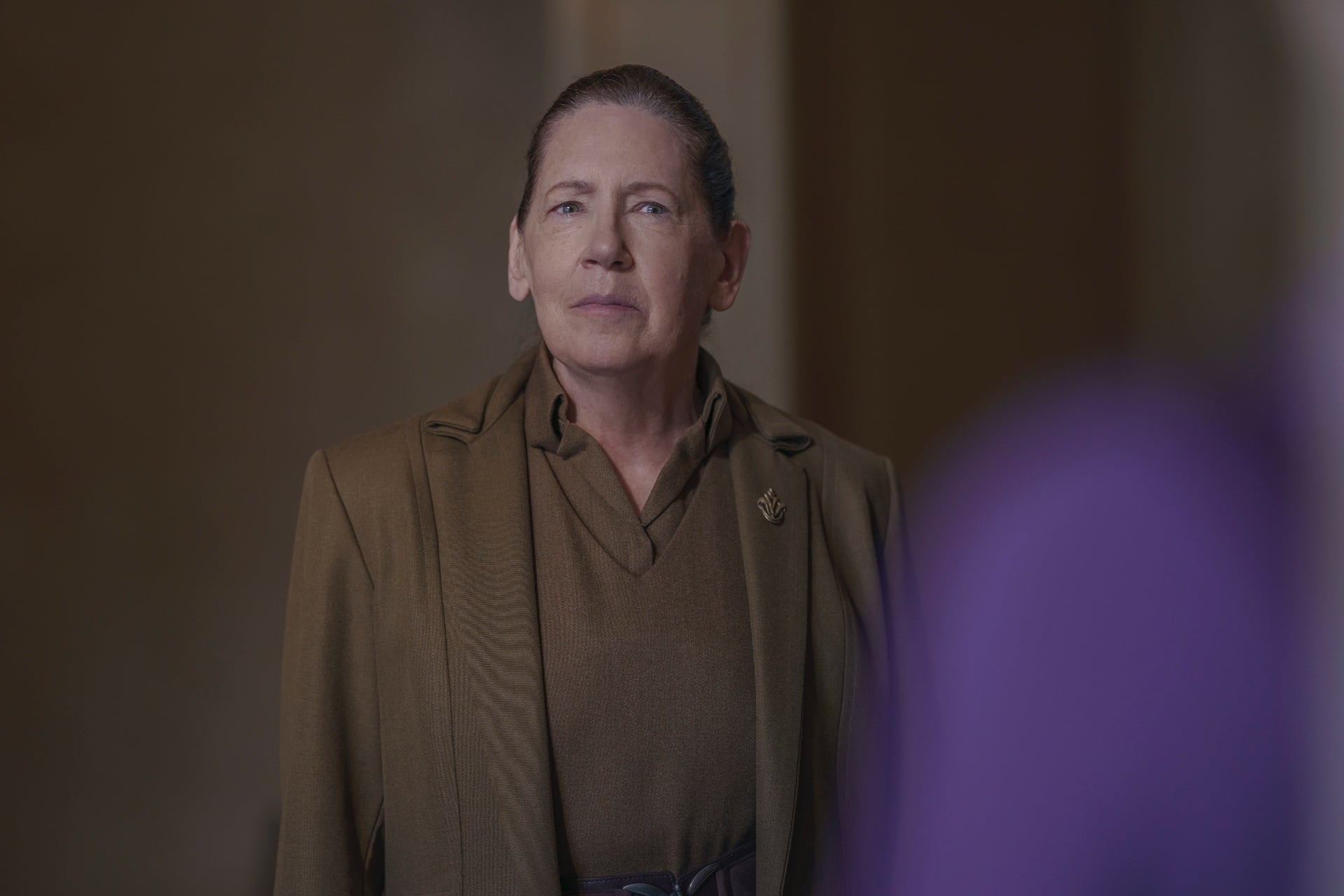
The first three episodes of The Testaments arrive April 8 on Hulu and Hulu on Disney+, with a weekly rollout thereafter.
Want more io9 news? Check out when to expect the latest Marvel, Star Wars, and Star Trek releases, what’s next for the DC Universe on film and TV, and everything you need to know about the future of Doctor Who.
Read the full article here