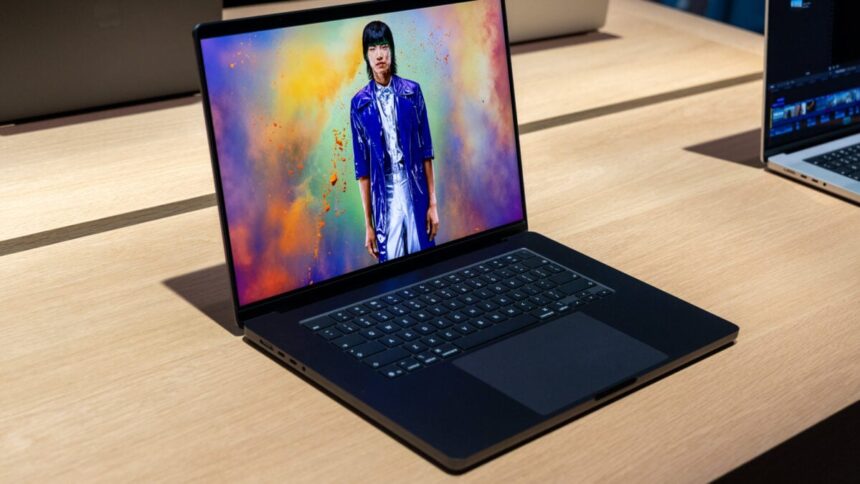
Apple has finally set its MacBooks’ stratification strategy in stone. The low-end, low-cost MacBook Neo is the entry-level Mac. The refreshed M5 MacBook Air is the “everyman” laptop for work tasks like light photo or video editing. The M5 Pro and M5 Max MacBook Pro are the beasts—the expensive, powerful laptops—that would probably be overkill unless you need to run intensive 3D rendering or coding tasks. Now the only question is how well the maxxed-out M5 Max chips actually perform.
If you’ve seen any of the top-end 14-inch or 16-inch MacBook Pro models launched in the last five years, you know what to expect. Apple’s latest high-end laptop comes in two colors, “space black” and silver. There’s no fun color like the MacBook Air’s “sky blue” or any of the Neo’s lollipop tones. The screen is still using the same Liquid Retina XDR technology, which is Apple’s personal blend of mini LED display. There’s still the large notch hanging down from the top of the screen. That doesn’t vibe well with macOS 26’s Liquid Glass clear menu bar. Maybe the long-rumored OLED MacBook will finally excise that big black stalactite.
The new M5 Pro and M5 Max MacBook Pros are up for preorder now and start shipping on March 11.
M5 Max could be a performance beast
The new MacBook Pros in both sizes come with either an M5 Pro or M5 Max chip. There’s a lot happening under the hood with these chips. For those excessively curious about the new chip architecture, Gizmodo went into detail here. For the TL;DR folks out there, the M5 Pro and M5 Max feature a separate GPU and CPU die, allowing Apple to maximize core counts for the top-end M-series chips. They also feature rebranded “performance” cores, now called “super” cores.
Apple took Gizmodo through several demos showing how the MacBook Pro with M5 Max was extra fast using apps like Final Cut Pro and Logic Pro. That’s to be expected. Apple also showed us how the new ultra-expensive MacBook Pro was able to run an AI coding model natively in the app Xcode. The AI model vibecoded a simplified Magic 8-Ball app. The app guessed correctly when it claimed Mercury was in retrograde. That doesn’t mean you should shove every vibecoded whim onto the Apple app store.
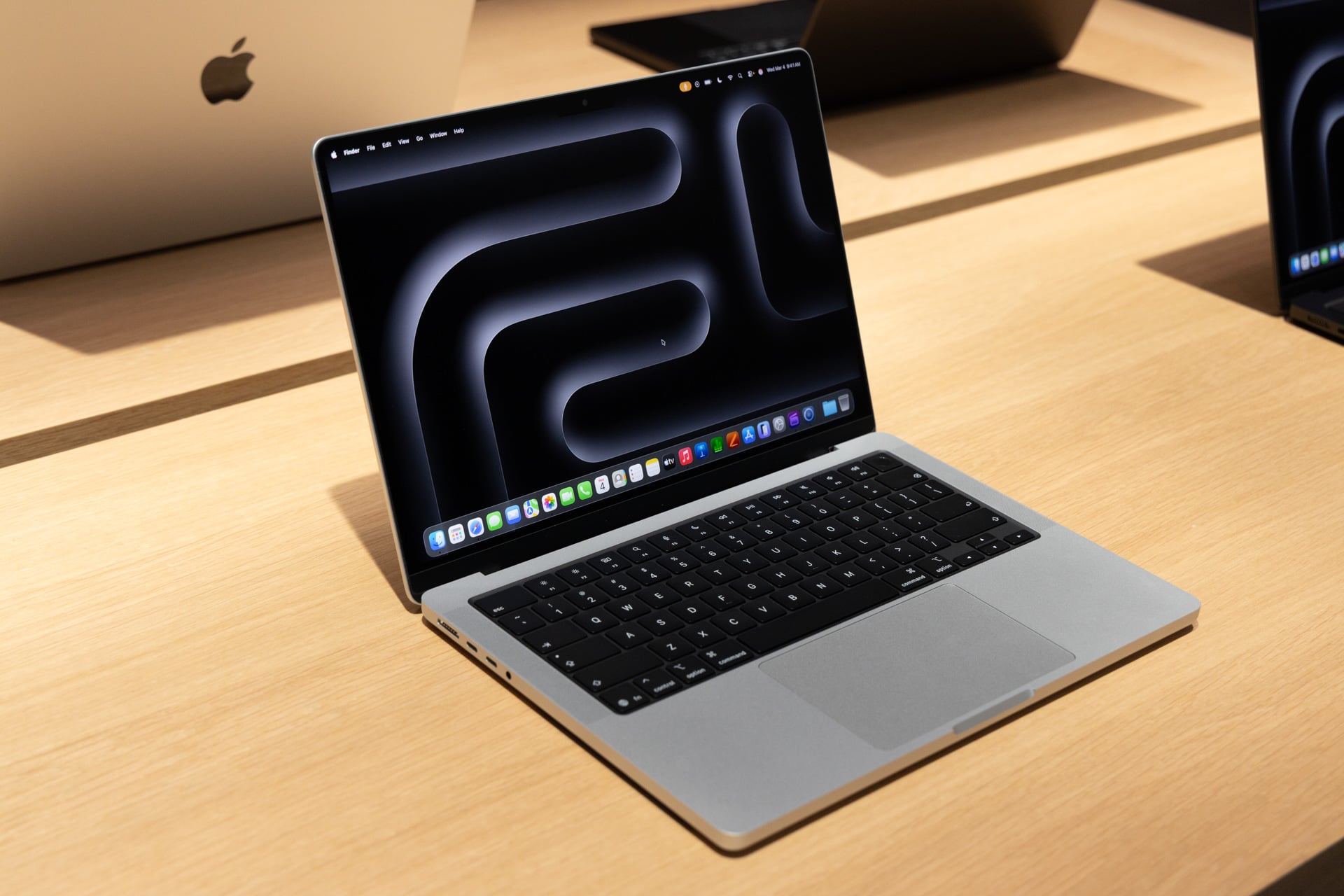
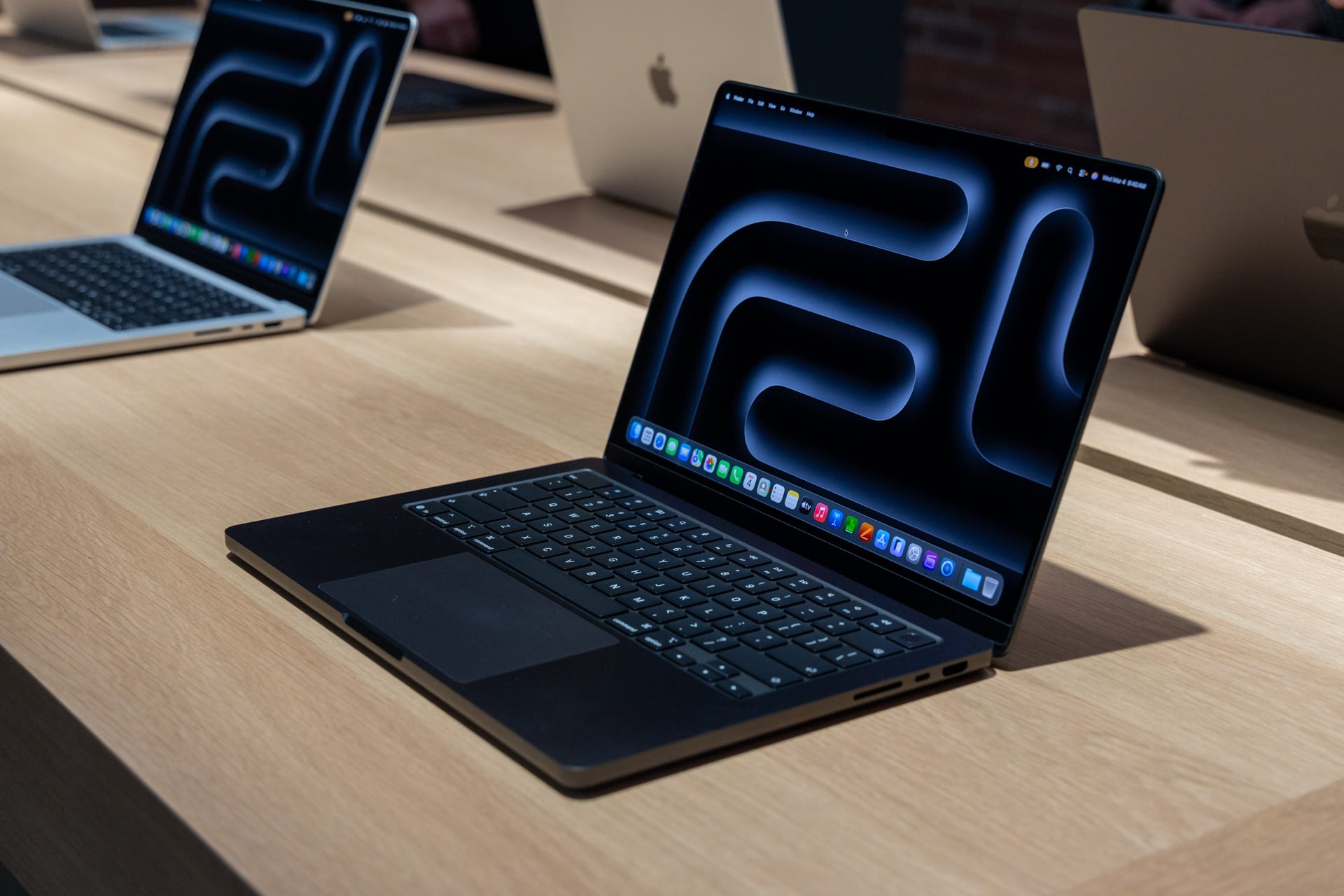
The M5 Pro and M5 Max MacBook Pros all sport three Thunderbolt 5 USB-C ports. That allows for higher data transfer speeds compared to the Thunderbolt 4 available on the base M5 MacBook Pro. That regular MacBook Pro can support up to two external displays running at a 6K resolution and 60Hz refresh rate or 4K and 144Hz. The M5 Pro models can support three displays with the same resolutions and refresh rates. The M5 Max MacBook Pro can handle a whopping four displays between its combined USB and HDMI ports. You could also daisy-chain monitors, like Apple’s new Studio Display XDR to save on space.
I plan to take the MacBook Pro’s M5 Max chip through our full benchmarking suite. I didn’t get to see any high-end 3D modeling apps running on-device. I’m desperate to learn how well an M5 Max MacBook Pro with 128GB of unified memory may be able to run games like Cyberpunk 2077 or Control.
The high cost of a maxxed-out MacBook
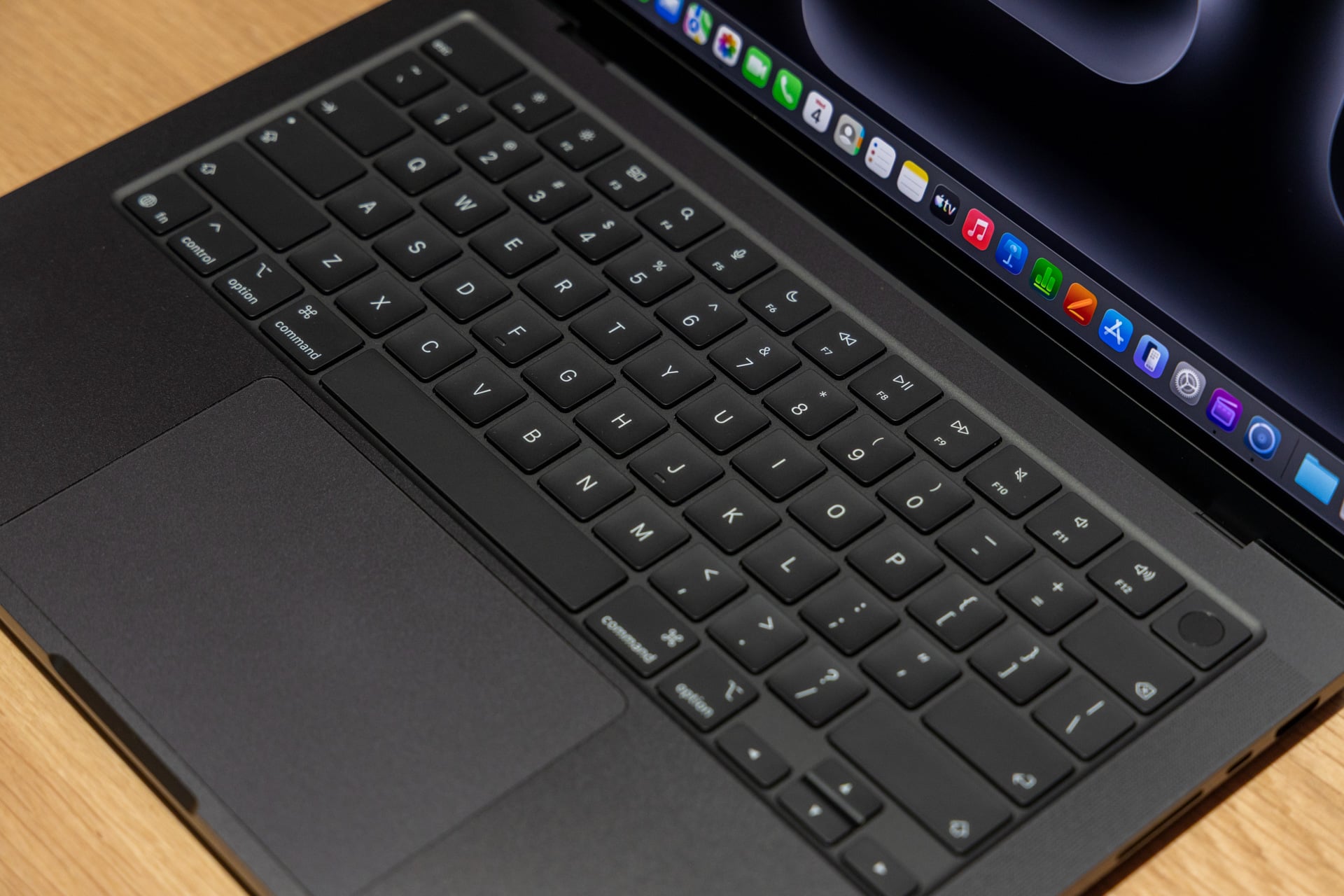
The 14-inch M5 Pro MacBook Pro starts at $2,200 with a 15-core CPU and 16-core GPU configuration. If you want an M5 Pro with the 18-core CPU and 20-core GPU, you need to spend $200 more. An M5 Max 14-inch MacBook Pro costs $3,600 with the minimum 18-core CPU and 32-core GPU. The 40-core GPU version will set you back at least $4,100.
If you think that’s expensive, buckle up. A 16-inch MacBook Pro with the maxxed-out M5 Max chip, 128GB of unified memory, and 8TB of SSD storage demands $6,900. At that price, you’re buying a laptop worth the price of a used car. Considering the spiking price of memory across the board, you may not be able to find any other device with comparable RAM and SSD specs for cheaper.
The lingering question is where this leaves the 14-inch M5 MacBook Pro. We’ll find out for ourselves if the M5 MacBook Air manages to match the performance of its larger cousin for less money. And if you were hoping for something truly different, you may have to wait until Apple finally offers us a MacBook Pro with an all-new screen. Maybe an OLED touchscreen will finally help make the rounded corners of macOS 26 Tahoe windows make sense.
Read the full article here