Since ChatGPT came onto the scene in late 2022, there has been a singular message from tech executives to the broader workforce regarding the new technology: it is coming for your job. They have insisted, sometimes in the language of a flowery, futuristic utopia and sometimes as a straight-up threat, that artificial intelligence will result in a complete upheaval in the economy, wipe out entire categories of jobs, and fundamentally change the human relationship with work.
But over the last few months, a switch has flipped. Suddenly, the messaging around AI has gone from “meet your replacement” to “meet your new coworker, who is definitely not here to watch you work and eventually push you out!” The language has changed from warning to what feels like pacification—and it comes at a seemingly strange moment. By most accounts, it seems like the AI companies won. The frontier model makers, including Anthropic and OpenAI, have filed to go public. Even xAI, Elon Musk’s also-ran of an AI firm best known for allegedly mass-generating child porn, got tucked into SpaceX and turned into the biggest IPO in history.
“I’m delighted to be wrong about this”
The mood has significantly shifted in the executive suite. Take Mustafa Suleyman, the CEO of Microsoft AI, brought in to help the company wean itself off the teat of the OpenAI cash cow before it goes dry. In 2024, while speaking to the billionaire crowd at Davos, he said AI models “are fundamentally labor-replacing tools.”
Earlier this year, he got more specific on what labor. “White-collar work, where you’re sitting down at a computer, either being a lawyer or an accountant or a project manager or a marketing person, most of those tasks will be fully automated by an AI within the next 12 to 18 months,” he said in an interview with the Financial Times.
But well before we reached the full automation timeline, Suleyman started walking back his position. “I said ‘tasks,’” Suleyman told The Verge earlier this month. “So that does not mean jobs… Jobs and roles are the broader category, and tasks are the components of that.” Instead, he now believes AI will make the tedium of work easier. “Sending an email, having a conversation with a colleague, putting together a PowerPoint — sub-tasks will increasingly become digitized, automated, and we can basically generate more and more of them. That does not necessarily mean that the role goes away at all,” he explained.
Now, let’s set aside the fact that in Suleyman’s dream future, workers will be having more meetings and letting their AI equivalent chat with their colleagues—a nightmare for people who are actually doing that work. The general thrust of the messaging is now “You’re not being replaced, you’re being augmented.”
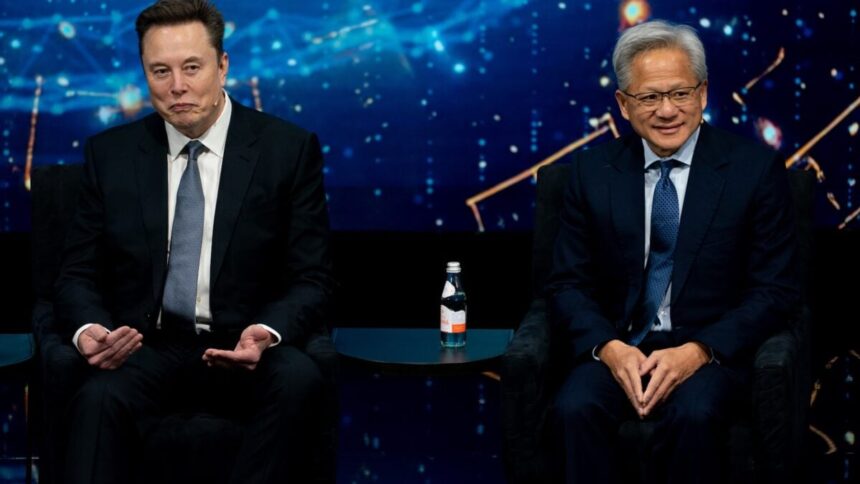
He’s far from the only one who has changed his tune in this way. Nvidia CEO Jensen Huang has also been shifting the narrative that he spins. In 2025, the head of the world’s biggest chipmaker said programming AI is basically like “programming a person,” which is definitely how people like to be talked about.
To that end, it seemed Huang saw the goal of AI to fundamentally replace an entire class of workers with AI models capable of doing what they do. At the time, Huang said, “It is our job to create computing technology such that nobody has to program. And that the programming language is human, everybody in the world is now a programmer. This is the miracle of artificial intelligence.”
Now, Huang is warning against anyone suggesting that a particular type of career will ever go away. “This is one of the concerns that I have about the doomers describing the end of work and killing of jobs. If we discourage people from being software engineers, we’re going to run out of software engineers,” he said during an appearance on the Dwarkesh Podcast. He even pointed to an example of where this type of thinking has done real damage: “The same prediction happened ten years ago. Some of the doomers were telling people, ‘Whatever you do, don’t be a radiologist.’ You might hear some of those videos still on the web saying radiology is going to be the first career to go and the world is not going to need any more radiologists. Guess what we’re short of? Radiologists.”
Huang almost certainly wouldn’t call himself a doomer, but what he was saying in 2025 doesn’t feel fundamentally different than what he’s warning against now. It seems, if nothing else, that Huang has caught onto a vibe that has been emanating out of those offices where workers are constantly being told their replacements are coming: fear.
He acknowledged that there’s a real risk of that resonating within the next generation, who are already not feeling great about their future prospects. “If we scare everybody out of radiology so nobody wants to be a radiologist because computer vision is completely free and no AI is going to do a worse job than a radiologist, we misunderstand the difference between a job and a task. The job of a radiologist is patient care. The task is to read a scan,” he said.
A similar shift has happened over in the c-suite at OpenAI. Back in 2025, Punchbowl News reported that Chris Lehane, OpenAI’s vice president of global affairs, said it was important to “really be straight up” about “cohorts that potentially get displaced.” Basically, Lehane was calling for transparency about whose careers were about to be in jeopardy due to the expansion of AI.
Lehane’s CEO, Sam Altman, has perhaps been among the most explicit in how he talked about the potential for job loss. Way, way back in 2015, when OpenAI was just a glint in his eye, Altman was telling people, “My job is to help people destroy jobs.” In 2023, he told The Atlantic, “Jobs are definitely going to go away, full stop.” When he said that, he even put it in the context that the more hopeful among his peers were lying to people: “A lot of people working on AI pretend that it’s only going to be good, it’s only going to be a supplement,” he said before dropping the “jobs will be lost” hammer.
Yet here we are in 2026, and the prognosis has changed. “I’m delighted to be wrong about this, I thought there would have been more impact on entry-level white-collar jobs being eliminated by now than has actually happened,” he told Reuters last month.
Lehane, meanwhile, is running a new message up the flagpole, chastizing the people who dared threaten the livelihoods of people in a very “we’re all trying to find the guy who did this” fashion.
“Some of the conversation out there is not necessarily responsible,” he told the San Francisco Standard. “And when you put some of those thoughts and ideas out there, they do have consequences. … This is really serious shit.” He even went on to say that, “Our job at OpenAI and in the AI space—and we need to do a much better job—is to explain to people why … this is going to be really good for them, for their families, and for society writ large.”
Losing popularity
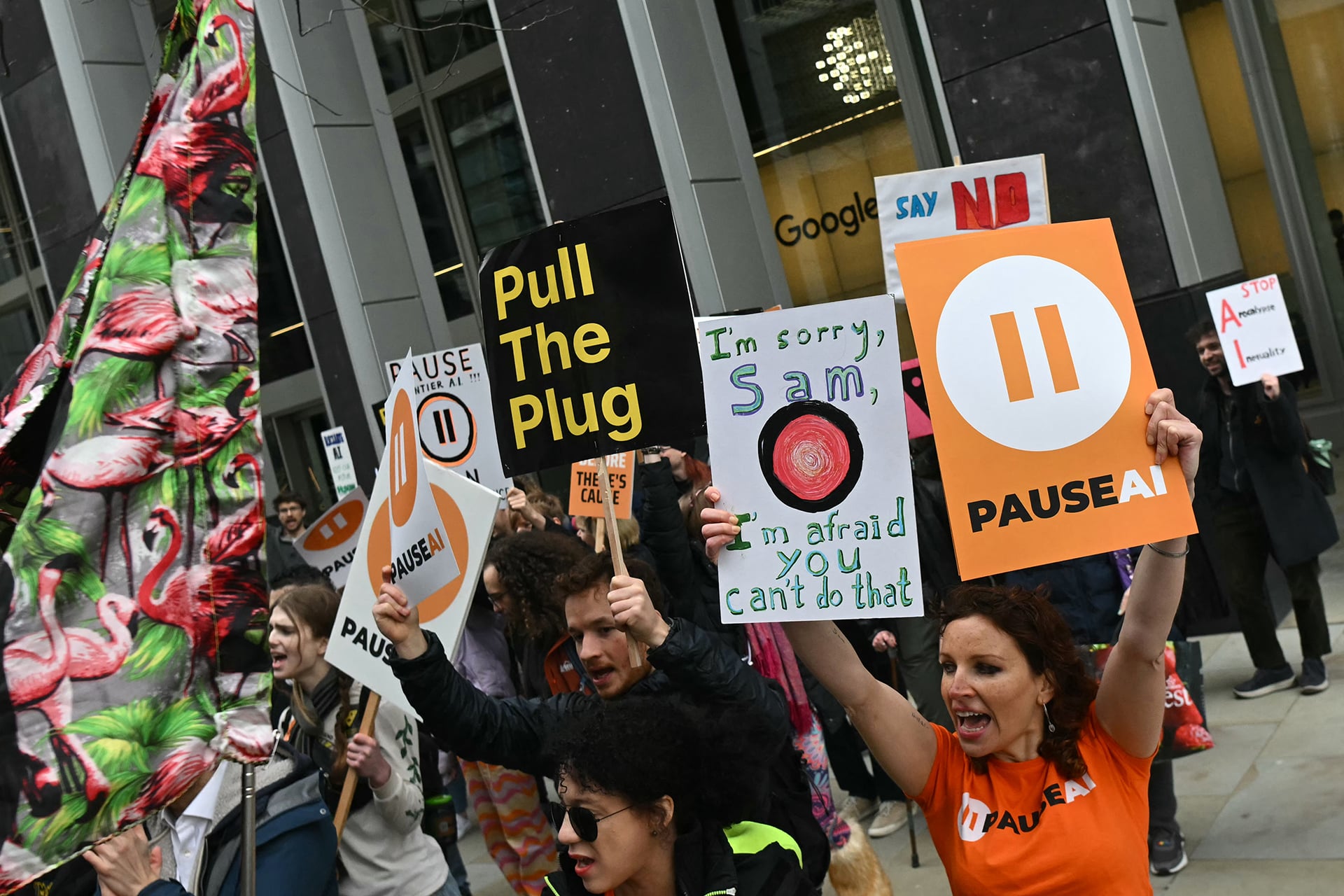
There seems to be a tell in that comment as to what is going on and why the message has changed so drastically. AI is not popular, and it is not popular because people are afraid that it will take their jobs. More than half of Americans are concerned AI will put someone in their household out of work, according to a recent poll conducted by Reuters and Ipsos. NBC found that just 26% of people view AI positively, with nearly double that holding a negative view of the technology.
Unpopularity is one thing, and not necessarily enough to actually stop corporations from plowing forward. Labor unions remain weak nationally, and there is little by way of worker protection to prevent such a push. But citizens have found surprising success in fighting against the construction of data centers across the country, which potentially hinders the buildout these companies need in order to keep the cash flowing. As long as they are still in the growth and investment stage, they can keep burning through cash to put up these facilities with the promise, however improbable it may be, that they’ll eventually create enough computing power to achieve artificial general intelligence. But the political roadblock of people pushing back against their big boxes of processors seems to be something of a signal that they are losing the PR war.
Just relax, and stop fighting
Hence, the shifting message is to stop fighting because this is going to be good for you. Amazon founder Jeff Bezos has tried his hand at this pitch in recent weeks, suggesting workers should “be so happy” about the introduction of AI because of how much easier it’ll make their lives, claiming the technology will “elevate all of these people.”
Brad Smith, President of Microsoft, has gotten in on the act, too. In a blog post meant to respond to the resounding number of graduate classes that have booed the very mention of AI during commencement speeches, Smith tried his hand at guiding the incoming members of the working class to a new view of the technology. “Constant change has taught you how to adapt quickly. As AI reshapes how we work, you don’t need to unlearn decades of habits the way some of us do. You are better equipped to move forward,” he wrote. “Technology will change, but you can stand firmly and speak loudly for values that are timeless. Agency. Ambition. Dignity. All fulfilled through work and technology that gives us purpose.”
Within Smith’s pitch is a bit of seemingly unintentional transparency into the thought process of corporate America. At one point, he writes in what certainly feels like a begrudging manner that the reaction from students makes it clear that “People will insist on having a say in deciding when and how AI is used.” Now, it seems, the goal of these executives has become convincing people that they have been heard, that they are valued, and that they are anything but replaceable cogs who will get removed the moment it becomes cheaper to hand the task over to an AI agent.
Meta’s approach to informing its workers about how it is using AI might be the most instructive for others across all industries, as they are increasingly told AI tools are just here to make their lives easier. Earlier this year, it was revealed that the company was logging its employees’ activity, recording how they do their work in order to train AI models on how to accomplish the same tasks. In a leaked audio, CEO Mark Zuckerberg reportedly said that Meta is using its employees for this because they are “really smart people.”
That’s a nice compliment to give people who will soon be shown the door.
Read the full article here