The AI boom is usually framed as a cutthroat competition between a small handful of powerful tech companies. That’s accurate, but it also overlooks a much subtler, stranger, and more alarming dynamic: Namely, that the very same companies that are competing to build and control the future of AI are at the same time bankrolling one another.
The enormous demand for compute and energy from frontier AI developers like OpenAI, Anthropic, and Google has been forcing those companies to buy and lease resources from their erstwhile competitors, creating a messy web of interdependency of von Bismarckian proportions. It’s also resulted in a complex network of circular moneymaking arrangements. The most common goes something like this: Company A buys AI chips from Company B, which then invests in Company A to help fuel its AI efforts, ratcheting up its data center expansion plans and fueling its demand for Company B’s chips. The carousel of capital spins on and on from there.
For the past couple of years, Nvidia has been at the epicentre of the ever-evolving web of circular dealmaking that’s come to enmesh the AI industry. The chipmaker’s graphics processing units (GPUs) have been—and continue to be—the most valuable building block in the AI boom. It’s also been investing heavily in AI startups like OpenAI and Elon Musk’s xAI, which was acquired by SpaceX in February. So while the AI labs buy AI chips from Nvidia, the latter returns the favor by funding the construction of the massive data centers that house the chips and ultimately power models like ChatGPT and Grok.
In November, it was announced that Anthropic would pay $30 billion for expanded access to Azure, Microsoft’s cloud computing arm, which is powered by graphics processing units (GPUs) made by Nvidia. Nvidia and Microsoft, in turn, said they would invest up to $10 billion and up to $5 billion in Anthropic, respectively. (See the circularity?) The extra compute helped Anthropic meet demand from businesses using its popular enterprise tools and from developers using its popular coding assistant, Claude Code. It usurped OpenAI last month as the highest valued AI startup in the world.
Bloomberg published a helpful graphic in January that visualizes the web of circular deals being woven across the AI industry. But the number of such agreements has continued to grow since that time. In March, for example, Amazon committed $50 billion to OpenAI as part of the ChatGPT-maker’s most recent funding round, while OpenAI said it would invest an additional $100 billion into its existing partnership with Amazon Web Services (AWS), Amazon’s cloud computing business. Behind the scenes, Nvidia is selling AI chips to both Amazon and OpenAI, entwining the fortunes of all three companies.
You get the idea.
Foundations of sand?
Tech leaders tend to argue that the burgeoning circularity extending across the industry is a virtuous circle that benefits everyone. But skeptics see a noose that’s tightening around the tech sector, and perhaps even around the throat of the U.S. economy itself.
Companies driving the AI boom, like OpenAI and Anthropic, have yet to become profitable, and the surge of investment across the industry in recent years has very much been a gamble that the technology will deliver on the financial growth that companies have been promising. The concern is that the more intertwined these companies become, channeling money back and forth for a technology that has yet to deliver real value for businesses, the chances of financial catastrophe grow.
If demand for AI fails to take off in the way that people like Sam Altman, Dario Amodei, and Elon Musk predict it will, many of those enormous data centers that have been built over the past few years will suddenly become useless. The AI labs will suddenly be unable to pay their bills to the companies providing them with chips and compute; and since those same companies were the major backers of the rest of the industry, the whole edifice could crumble—skeptics warn—into the foundation of sand upon which it was built.
The economic impact of such a collapse could have consequences far beyond Silicon Valley itself. The ballooning investments in the tech companies driving the AI race in recent years have become an important financial driver for the U.S. economy itself, helping to bolster the country’s GDP at a time when it’s fighting through the twin headwinds posed by inflation and tariffs. Millions of Americans’ financial security is also tied directly to the fortunes of the tech industry through common financial vehicles like 401(k) plans.
The SpaceX IPO rocket
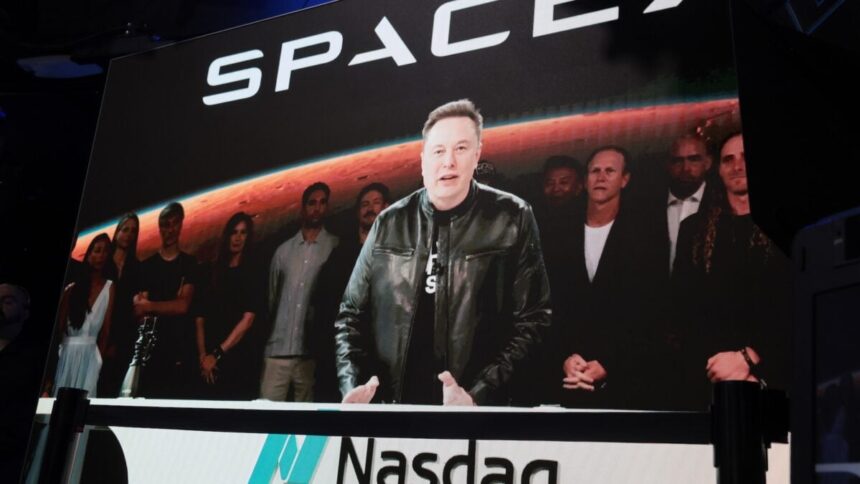
On Thursday, SpaceX—officially called Space Exploration Technologies Corp.—announced the finalization of its long-awaited initial public offering (IPO) price of $135 per share. It’s by far the biggest IPO in history and has officially minted Musk, its founder and CEO, as the world’s first trillionaire.
SpaceX is probably best-known as a manufacturer of rockets and satellites (Starlink is a subsidiary), but it’s also become a major force in the AI industry through its data center infrastructure. It’s been selling the compute created by these data centers to some of the very companies that are supposed to be competing with xAI.
For example, Anthropic announced last month it had agreed to pay $1.25 billion per month to access SpaceX’s Colossus 1 data center, located in Memphis, Tennessee, billed by SpaceX as “the world’s biggest AI supercomputer.” Through the deal, Anthropic said it would gain access to 300 megawatts of electricity powered by 220,000 Nvidia GPUs. And last week, SpaceX said it had inked a multiyear agreement with Google, through which Google will pay $920 million per month for compute to power its AI efforts. (The collaboration is expected to kick off in October and extend through July of 2029.)
Meanwhile, Anthropic and Google have been deepening their own financial ties: In April, Google said it would invest up to $40 billion in Anthropic, which had recently teased Mythos, a model that was supposedly too powerful to release publicly. And according to a report published Thursday by The Information, Anthropic is also moving ahead with plans to lease data centers from a number of U.S. companies, with Google potentially stepping in as a guarantor.
Nvidia, Amazon, Google, and the other tech giants that are providing new AI startups with computing power are often referred to as “picks and shovels” companies of the AI boom, referring to the industry that profited from miners’ dreams of riches during the California Gold Rush. The vast majority of miners didn’t strike gold, but the ones providing the picks and shovels profited from the broader frenzy of speculation and greed. By investing in its data center infrastructure and making lucrative deals with Google and Anthropic, SpaceX is clearly trying to become a dominant picks and shovels company in the AI race.
Much of the early excitement from investors in the SpaceX IPO has been driven by Musk’s promise of building data centers in space, powered by an unlimited supply of solar energy. It’s the sort of futuristic-sounding vision—along with Musk’s goal of colonizing Mars—that appeals to many investors who (not unreasonably) believe in his ability to deliver on impossible-sounding promises. But it also remains to be seen if data centers in space are technically achievable. Coupled with the uncertainty of the future of the AI industry to which SpaceX has hitched its fortunes, its stock start to look like a riskier investment than its initial market surge would suggest.
Yes, the rocket that is SpaceX’s valuation has the twin engines of Google and Anthropic—two of the MVPs of the AI boom—powering it. But the circularity of the relationship between these companies makes all of their situations more precarious than they may initially appear. If the rocket comes crashing back down to Earth, it could bring much more than Google and Anthropic down with it.
Read the full article here