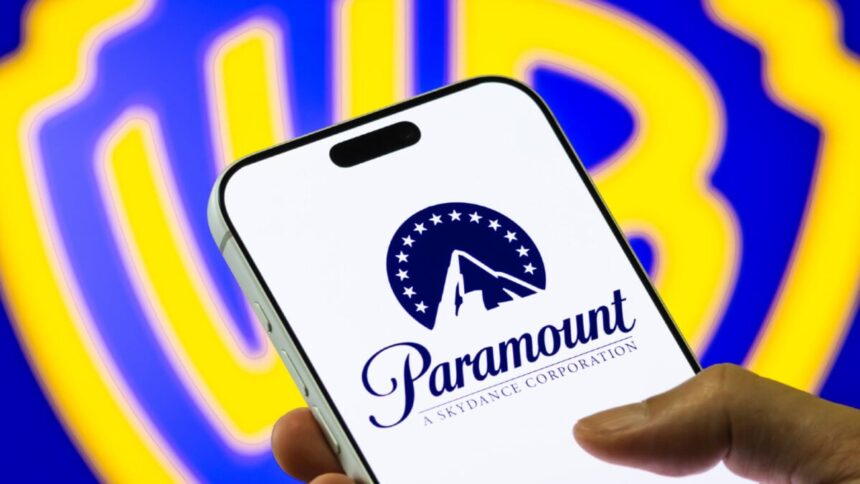
Donald Trump’s war on Iran may have some unexpected collateral, starting with Paramount’s pending deal to purchase Warner Bros. Discovery. The proposed $111 billion takeover agreement included a significant amount of money coming from Middle Eastern sovereign wealth funds, much to the chagrin of national security experts—but now that the Gulf countries have been engulfed in an unwanted war, they may start reconsidering some of their investments, according to the Financial Times.
Per the report, three of the four largest Gulf countries—which include Saudi Arabia, the United Arab Emirates, Kuwait, and Qatar—have started discussions regarding how the war is hurting their pockets already, and are “reviewing current and future investment commitments in order to alleviate some of the anticipated economic strain from the current war.”
That seems like bad news for David Ellison and his $31 per share offer to absorb Warner Bros. Discovery into his growing Trump administration-compliant media empire. That bid, which was so big it made Netflix and its infinite funds willingly back out of consideration, currently counts on at least $24 billion in funding from Saudi Arabia’s Public Investment Fund (PIF), the Qatar Investment Authority (QIA), and the Abu Dhabi Investment Authority (ADIA).
That chunk of the deal had already raised red flags from Trump critics, including Democratic Senators Elizabeth Warren and Richard Blumenthal, who both called out the Trump administration’s failure to perform a national security review of the Paramount deal, according to Variety. The senators called for the Committee on Foreign Investment in the United States (CFIUS) to conduct a review for any potential security risks, though Axios has reported that no federal regulatory check would likely stop the deal, given that Paramount and Ellison were Trump’s preferred purchasers.
It turns out, Trump creating a serious national security risk for those Gulf countries might upend the deal. While none of the countries backing Paramount’s WB takeover have pulled out yet, Bloomberg reported that Chinese tech giant Tencent was recently brought into a new round of funding to help Paramount make its purchase. The company was previously pushed out of participating due to concerns that Tencent’s involvement could result in national security challenges. The fact that it’s being brought back into the fold might suggest that other funding sources are less of a sure thing than previously thought.
The Paramount deal likely won’t be the last big spend that’ll hit speed bumps related to Trump’s war and the strain it’s putting on Gulf nations. Between oil refineries and natural gas plants getting struck in attacks and the Strait of Hormuz closing, there is real economic pressure mounting in the region. That could have a trickle-down effect on American firms that increasingly count on funding from the region for major expenditures. The Wall Street Journal reported that Gulf nations pledged to pump trillions of dollars into the US in the coming years. That includes hundreds of billions meant to back the construction and operation of AI data centers.
Thus far, rising gas prices and the loss of American lives haven’t been enough to dissuade Trump from continuing the onslaught against Iran. Maybe the big tech firms that spent millions helping to get him elected will be able to convince him to back down before he completely fumbles the bag for them. Regardless, it seems increasingly likely we will look back at this moment as the official start of the fall of US hegemony.
Read the full article here