Netflix, the big daddy of streaming, wants to proliferate cloud gaming to every single TV with even a moderate internet connection. Its new game, Unhinged, uses a control scheme that anyone with a smartphone can play. The only thing Netflix is missing from its new gaming push is a Japanese businessman coming to your door spouting “Wii would like to play.”
The streaming giant invited me to play the entire game, launching on June 30, inside a dim Manhattan hotel room, apparently imagining it would heighten the fear factor. To join the title, you scan a QR code that shows up on your TV, and you’re good to go—no download or third-party Bluetooth controller required. Unhinged is a short taste of what most gamers recognize as a point-and-click horror game—little more than a choose-your-own-adventure with a definitive conclusion and essentially no branching paths. At the same time, it’s an evocative and surprisingly intense home invasion story that doesn’t overstay its welcome.
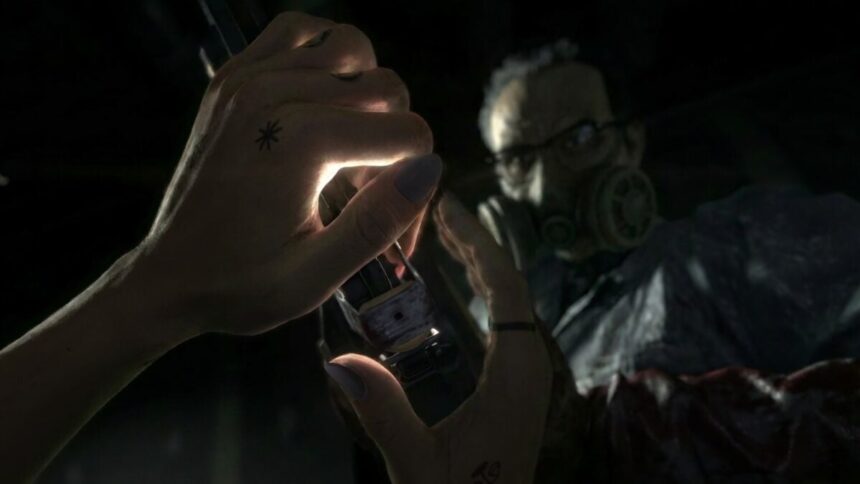
The snippet of cloud gaming feels more engrossing because your phone is not just your controller for playing the game. It acts as a connection to the characters in the game world. Your POV character, apartment renter Ava (portrayed by Zoë Kravitz), takes calls from her friend Claire (Sadie Sink) as you try to avoid a serial killer (voiced by gaming veteran Troy Baker) trying to… well, kill you.
After I was done—the entire session lasting barely 40 minutes—Sean Krankel, Netflix’s head of narrative games, turned to me and chatted my ear off about old tech. He compared the game’s controls to Nintendo Wii first-person shooter Red Steel from 2006. You may not recall, but in one of the game’s multiplayer modes, called Killer, players needed to hold their Wii Remote up to their ear to hear the name of their next contract they were supposed to hunt down.
Why the hell is Netflix talking about near-20-year-old Nintendo hardware and games? Back in the day, Nintendo thought it could make a console for everyone, even all the grandmas and tech Neanderthals who had never picked up a controller. Netflix wants to take the same route to success, though Unhinged’s developers at Night School Studio have to answer questions Nintendo never had to. A Wii Remote is only as accurate as the Wii’s IR sensors. A phone’s gyroscope data relayed to Netflix’s cloud servers will not give you anywhere near the kind of accuracy for certain types of games.
“Because it is being played on the cloud, we wanted something that is latency tolerant,” Krankel said. That means players can wave their phones in vague arcs, though the pointer often magnetizes to various points of interest or items you can pick up and use. This is especially important in timed sections that are supposed to up the tension. You’re essentially pixel hunting with your phone for the right item on screen to pick up or the right hallway to run down. It would be far more annoying if a bad internet connection or bout of lag gets you stabbed.
Sam Warner, game director at Night School Studio, said they first tried offering players more choices. In early versions of the game, players could walk around. More often than not, the layperson or non-gamer type would just walk into corners or get caught up with items you could not interact with. The game originally featured branching dialogue, though the director said that made the game “slow and weird and boring.”
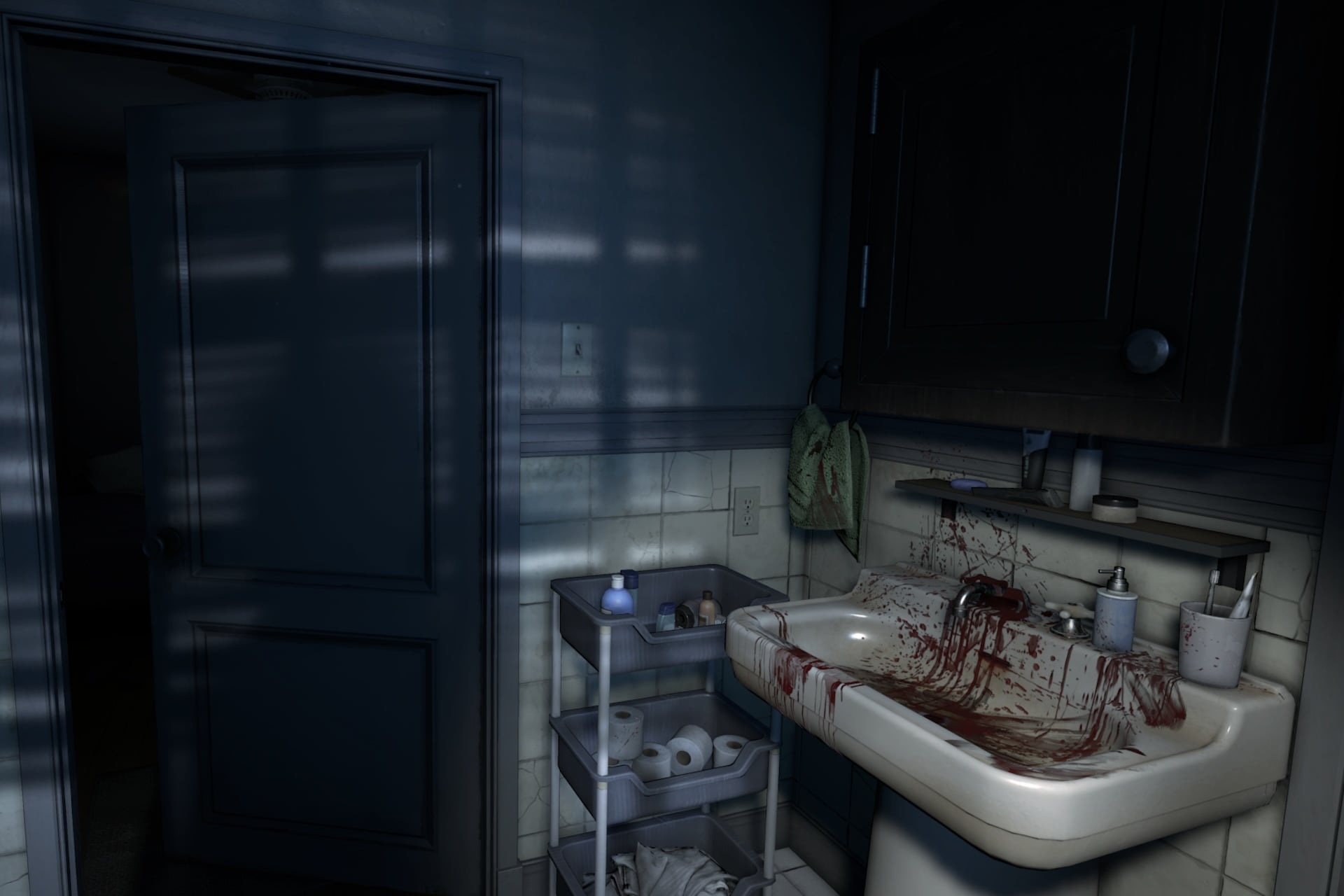
“It made more sense to pull things away than pile things on,” Warner said. That design by subtraction (a term popularized by Ico director Ueda Fumito) resulted in a more tightly defined horror title that takes as much time to play as your average episode of Stranger Things. That’s the other point. The game was designed to feel episodic, not something that will demand dozens of hours over multiple sessions.
Unhinged is a taste of Netflix’s larger ambitions. Night School Studio (Netflix gobbled up the studio in 2021) is the developer behind other point-and-click games, Oxenfree and Oxenfree II Lost Signals. The team built Unhinged, its first big 3D title, on the Unity engine. It looked fine from where I was sitting, though it employed old tricks like grain filters to cover up any graphical artifacts you can find when game streaming. While Xbox Cloud Gaming or GeForce Now tells users they need a specific internet speed to run the service at specific resolutions, Netflix isn’t saying exactly what TVs or networks work best. The game needs to stream to many types of TVs, but the limiting factor will inevitably be network speeds. I ran into one issue during my playthrough where the hotel Wi-Fi briefly flagged and made the game uncontrollable. It required a restart and a prayer to the connectivity gods for stable internet.
You can’t expect every Netflix subscriber to have the best internet speeds. Still, this idea of point-and-click Netflix adventures sounds more appealing the more I consider the possibilities. What if Netflix opts for more episodic adventures? Telltale-type games are already making a comeback with the recent superhero office comedy Dispatch and the long-awaited sequel to the cult classic Wolf Among Us. Netflix may have an opportunity to make cloud gaming work for the layperson or at least make us suddenly nostalgic for a 20-year-old, barely-remembered Wii first-person shooter.
Read the full article here