By using this site, you agree to the Privacy Policy and Terms of Use.
Accept
Tech Consumer JournalTech Consumer JournalTech Consumer Journal
  • News
  • Phones
  • Tablets
  • Wearable
  • Home Tech
  • Streaming
  • More Articles
Reading: NASA’s New $4 Billion Space Telescope Just Saw Starlight for the First Time. Here’s What It Saw
Share
Sign In
Notification Show More
Font ResizerAa
Tech Consumer JournalTech Consumer Journal
Font ResizerAa
  • News
  • Phones
  • Tablets
  • Wearable
  • Home Tech
  • Streaming
  • More Articles
Search
  • News
  • Phones
  • Tablets
  • Wearable
  • Home Tech
  • Streaming
  • More Articles
Have an existing account? Sign In
Follow US
  • Contact
  • Blog
  • Complaint
  • Advertise
© 2022 Foxiz News Network. Ruby Design Company. All Rights Reserved.
Tech Consumer Journal > News > NASA’s New $4 Billion Space Telescope Just Saw Starlight for the First Time. Here’s What It Saw
News

NASA’s New $4 Billion Space Telescope Just Saw Starlight for the First Time. Here’s What It Saw

News Room
Last updated: September 18, 2026 7:28 am
News Room
Share
SHARE

The road to launch was long and arduous, but NASA’s Nancy Grace Roman Telescope finally got to space in late August. While Roman is still on its way to its final destination, it reached a major milestone on Thursday: first light.

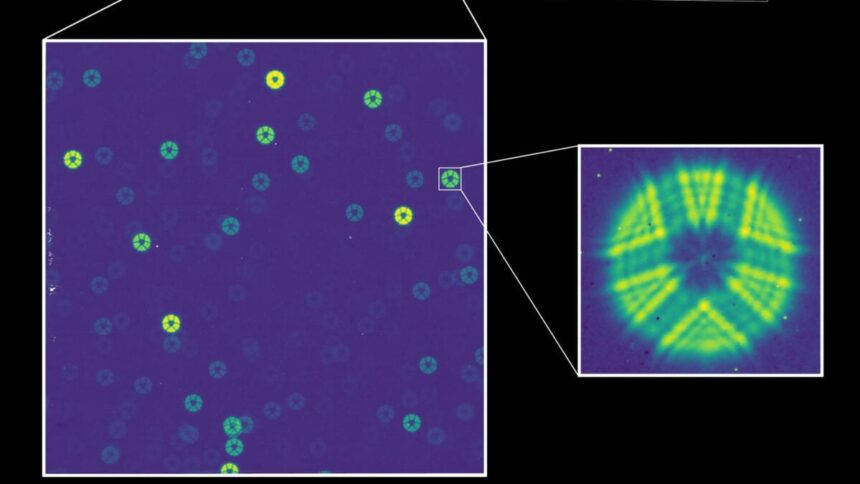
In a blog post, NASA reported that Roman’s technical team successfully activated the telescope’s Wide Field Instrument, the 300-megapixel infrared camera slated to take wide, high-res images of the deep cosmos. As a treat to the public, the team shared the first several test images taken by the camera, which show the first photons of starlight to reach Roman’s extremely sensitive sensor.

In addition, the team was able to confirm that the telescope’s thermal control was operating as expected. The researchers will continue to monitor Roman’s condition for the next 30 days, but the message is clear. Roman is operational!

Images of the first starlight to reach Roman’s Wide Field Instrument, taken as an initial performance assessment with the detector array still stowed as it was for launch, far from best focus. The team will soon activate the instrument’s fine-guidance system, which will mean Roman can lock onto targets. Credit: NASA-GSFC/Tyler Desjardins (STScI)

The initial photos show a field of blurry green, yellow, and blue stars against a blue backdrop, with individual stars looking more like halos or donuts than points of light. Not to worry though, the camera is still cooling down in its housing and hasn’t been properly focused or calibrated yet, so once it is fully deployed, those cute little donuts are going to shine.

“After years of effort to build and test the instrument on the ground, we now have confirmation that it is operational in space,” Josh Schlieder, an instrument scientist with NASA’s Goddard Space Flight Center, said. “There is much to do, but we are on our way to groundbreaking science.”

Flying over rough patches

Those following spaceflight news may know of the budgetary storm Roman had to endure, even as late as 2025. Thankfully, the telescope—which some experts say brings the power of “200 Hubbles”—wasn’t canceled, and in fact took off earlier than its initial launch plan for 2027. As of now, Roman is making it’s million mile journey (1.5 million kilometers) to the second Sun-Earth Lagrange point, or L2.
Nancy Grace Roman Telescope Launch
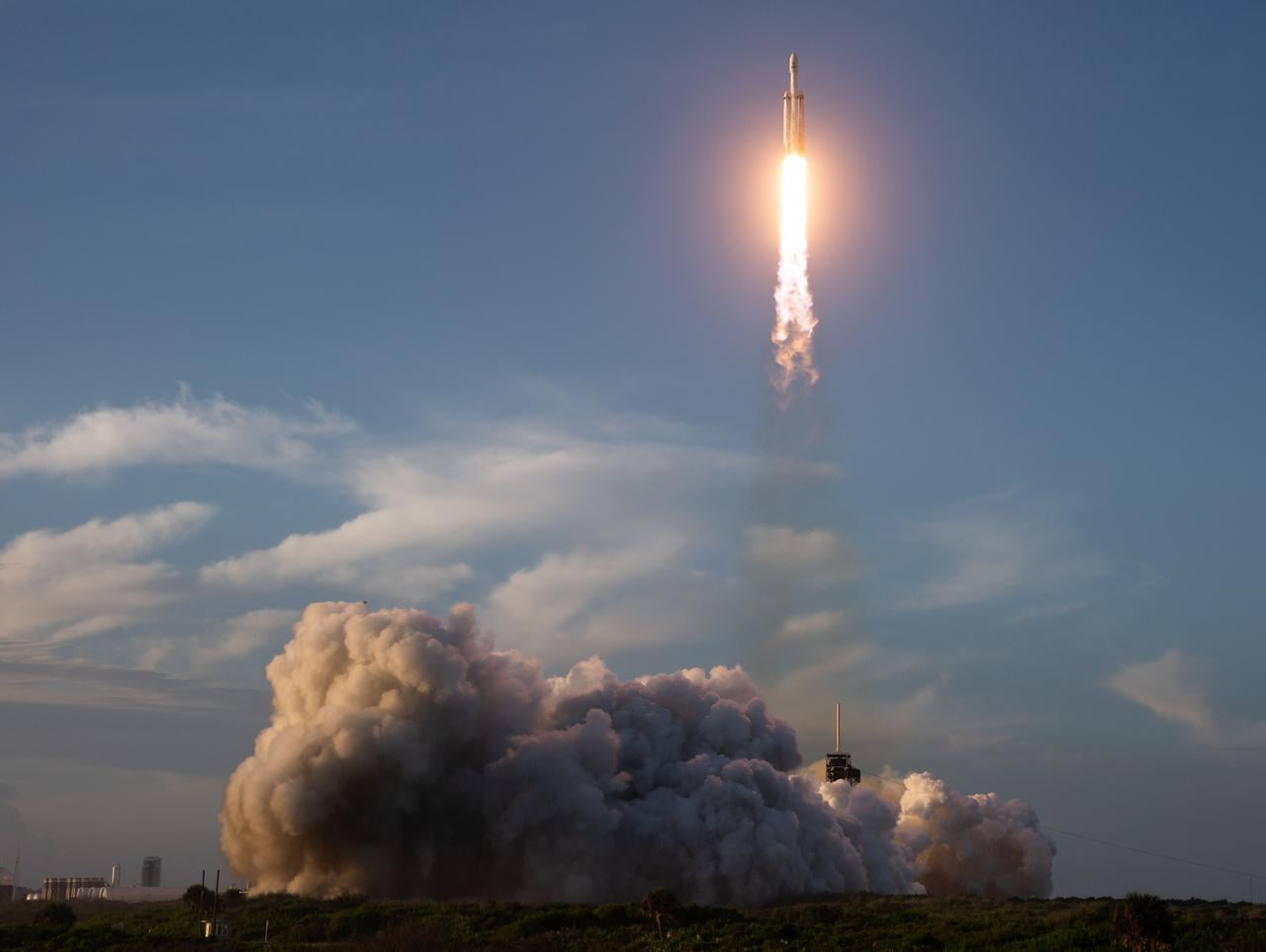
A SpaceX Falcon Heavy rocket launches with NASA’S Nancy Grace Roman Space Telescope onboard from Launch Complex 39A, Sunday, Aug. 30, 2026, at NASA’s Kennedy Space Center in Florida. Credit: NASA/Joel Kowsky

Like the James Webb Space Telescope, Roman studies the universe by looking for infrared light, and will have an observation range that’s roughly 100 times larger than the Hubble Space Telescope. Given the immense contributions to astronomy we’ve seen from Webb and Hubble, it goes without saying that Roman will further advance our understanding of the universe and how we got to where we are today.

First light, and beyond

The $4 billion space telescope is obviously designed to withstand the uninviting conditions of deep space, but scientists keep their eyes peeled to check, double-check, and triple-check that every part of the telescope is in order. To put this into perspective, before activating the Wide Field Instrument, the team had to let it dry out and cool down for 10 days to a specific temperature, as not to overwork Roman’s laptop-sized infrared detectors. This was one of many preliminary tests conducted in the past couple of weeks, according to NASA.
Roman Telescope Under Maintenance
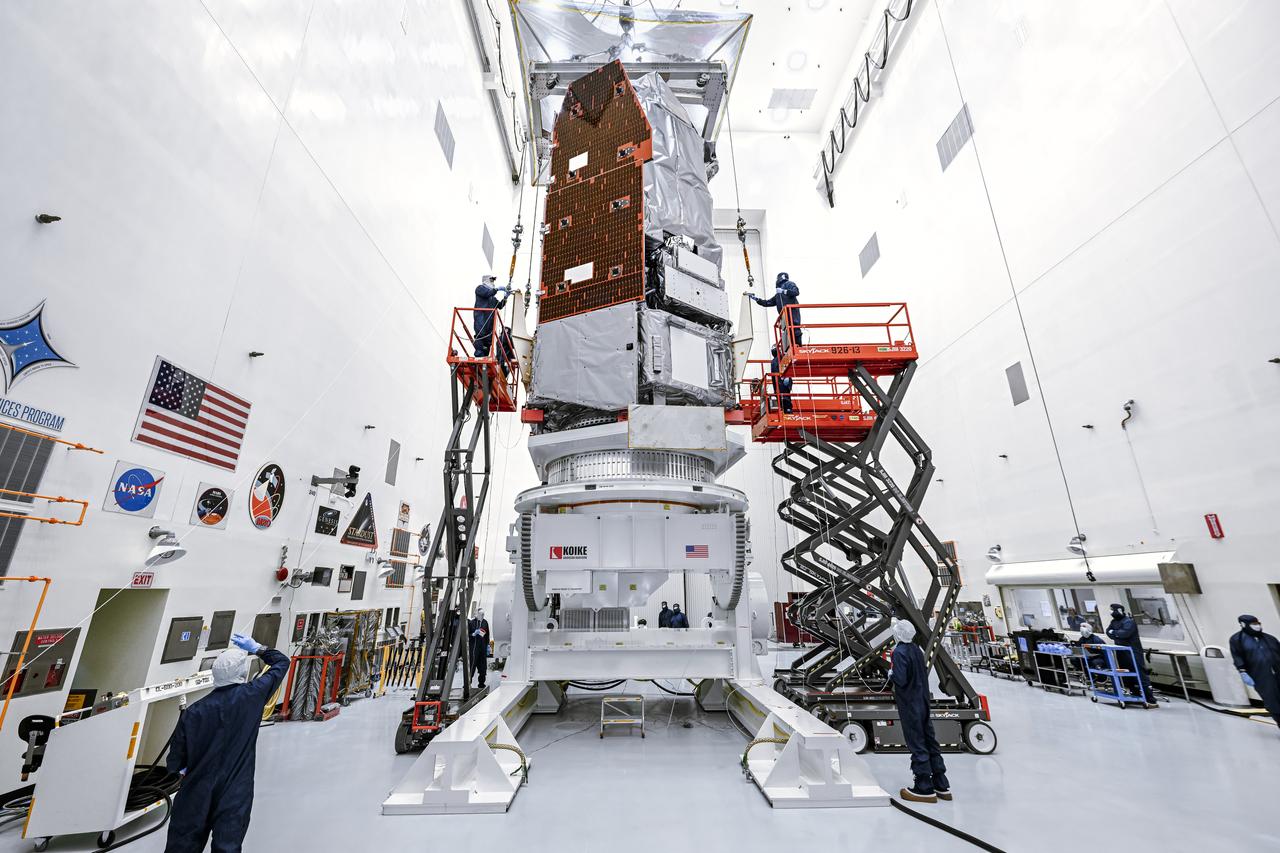
Technicians and engineers use a crane to lift the agency’s Nancy Grace Roman Space Telescope to a specialized work stand Friday, June 26, 2026. Credit: NASA/Sydney Rohde (Rocz)

Once Roman formally begins its mission (which was extended from 10 to 22 years thanks to a better-than-expected launch), it will observe the universe for three major objectives: dark matter, the universe’s expansion, and planets outside our solar system. All three are very consequential, convoluted, and challenging to tackle in different ways—basically, they’re the questions that give astronomers the worst headaches. So, as the old physics wisdom goes: to answer big questions, build big machines.

Read the full article here

You Might Also Like

Universal Reportedly Looking to Shelve the Elon Musk Documentary

Demystifying the iPhone 18 Pro’s Variable Aperture

Cyberattack Takes Down Organization That’s Literally Just Trying to Track Meteors

North Korea’s Underground Nuclear Tests Are Reactivating Dormant Earthquake Fault Lines

Pessimism Reigns Over AI and Jobs, Pew Poll Finds

Share This Article
Facebook Twitter Copy Link Print
Previous Article Demystifying the iPhone 18 Pro’s Variable Aperture
Next Article Universal Reportedly Looking to Shelve the Elon Musk Documentary
Leave a comment

Leave a Reply Cancel reply

Your email address will not be published. Required fields are marked *

Stay Connected

248.1kLike
69.1kFollow
134kPin
54.3kFollow

Latest News

Viral Horny Pumpkin Song Not That Horny, Insists Horny Guy Who Wrote It
News
Pangram Can Now Check Your Gmail for AI Slop
News
OpenAI Reportedly Trying to Solve Hodge Conjecture Amid Feud With Math Community
News
Elon Musk Reportedly Seeking Customer Data From Dead Startups to Train AI
News
3-Year-Old Boy’s Cancer Disappears After He Gets Experimental Immunotherapy
News
‘House’ Is a Timelessly Whimsical Horror Fever Dream
News
‘Street Fighter’ Has Maybe the Dumbest/Best Popcorn Bucket Ever
News
Mastercard Is Giving AI Agents Virtual Cards to Handle Your Shopping
News

You Might also Like

News

Palantir CEO Says AI Apocalypse Hype Is Mostly About Dodging Liability

News Room News Room 7 Min Read
News

Nuclear Experts Offer China and US Solutions for AI Risks

News Room News Room 6 Min Read
News

Tim Apple Rides Again

News Room News Room 4 Min Read
Tech Consumer JournalTech Consumer Journal
Follow US
2024 © Prices.com LLC. All Rights Reserved.
  • Privacy Policy
  • Terms of use
  • For Advertisers
  • Contact
Welcome Back!

Sign in to your account

Username or Email Address
Password

Lost your password?