Conceptually, a camera is a pretty simple device. It originates in the discovery of the camera obscura—literally “dark room”—and the fact that if you let light through a small hole, or aperture, into a darkened room, you get a projection of the world outside on the wall opposite. (Why this is the case is beyond the remit of this piece, but there’s a good explanation here.) In the 19th century, people began to experiment with capturing that image on a light-sensitive medium (which, for the sake of convenience, we’ll refer to as a “sensor” form here on in, but it can also refer to film, daguerreotypes, and a million other things.)
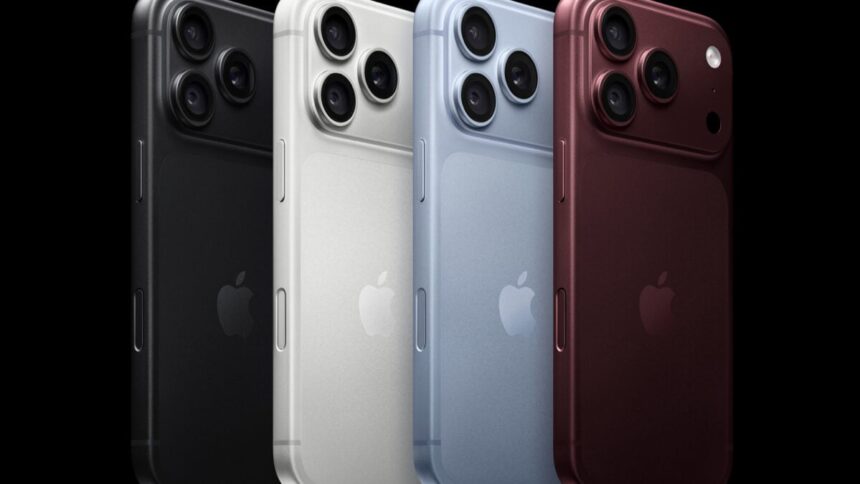
Today’s cameras still work on the same principle, but they’re also marvels of modern technology packed full of clever engineering. So with the new iPhone 18 Pro and its fancy camera now available for pre-order, let’s look at how and why cameras work the way they do—starting with the holy trinity of…
Focus, aperture, and shutter speed
Early photographers learned to use a lens to focus the incoming light, and then to use lenses with different lengths to capture in-focus images at different distances from the camera. They also learned that two other, intimately linked factors determine an exposure’s properties: the size of the aperture and how long the sensor is exposed to light.
While the lens determines which part of an image is in focus, the aperture size determines how much of the image is in focus, a property known as depth of field. It also determines how much light reaches the sensor: a smaller hole means less light, and a bigger one means more light. This, in turn, affects how long you keep the aperture open. As sensors improved, exposure times grew shorter, creating the need for a way to expose an image for a precise amount of time.
The whole video is worth watching, but perhaps the most interesting part is the last eight minutes or so, wherein he discusses the cameras that most of us use—our phone cameras—and the fact that, on the whole, these cameras lack both physical shutters and variable apertures.
This has obvious advantages, primarily saving space and weight due to the lack of moving parts. However, as we see from the video, many shutter systems only uncover fractions of the sensor at any given time. Phone cameras have tiny sensors that generally want as much light as possible, so being able to turn the entire sensor on for the exposure time means it receives as much light as possible while active.
Apple’s variable-aperture phone camera
These two factors—a tiny sensor and a desire to minimize the number of moving parts—also explain why phone cameras have generally had fixed apertures, usually f1.8. (If you’re wondering what that number means, wonder no more.) Last week, however, Apple’s new iPhone 18 Pro arrived with much fanfare, and one of its headline features is its variable aperture: it allows for four sizes, from f1.4 to f4.0.
In theory, this brings phone cameras another step closer to feature parity with full-size SLRs, offering greater artistic control over depth of field and improved low-light performance. But because phones use tiny sensors, they naturally produce a wide depth of field even at relatively large apertures—so much so that they rely on software to simulate a shallow one.
Smaller apertures won’t help on this front—so what’s the variable aperture for? YouTuber Fstoppers published a video earlier this week, along with a follow-up yesterday, with his theories on this.
Plenty of people have argued that the smaller apertures are better for shooting video footage, for reasons that Fstoppers breaks down in his video. Videographers lack the luxury of working at a variety of shutter speeds, given that they generally want their footage to be shot at an industry-standard frame rate, usually 24 frames per second, which requires a shutter speed of 1/48th of a second. (Why not 1/24th? See here for the answer.) With a full-size camera, this exposure length usually involves shooting at a relatively narrow aperture, especially in well-lit areas—an ability previously denied to people shooting with phone cameras.
Video enthusiasts have thus theorized that the narrower apertures on the iPhone 18 Pro exist to help videographers shoot at 24 fps on their phones. Fstoppers disagrees, and in his second video, he demonstrates why: Even at the narrowest aperture on the new iPhone, video shot outside on a cloudy day is overexposed at 1/50th of a second (the closest shutter speed available to 1/48th of a second).
So if that’s not what the variable aperture is for, then… what is it for? A clue can be found in Apple’s marketing material, which promises “Improved low-light photos and video.” This suggests that the phone will default to the narrower apertures, only opening up to the wider ones in low-light environments to allow more light onto the sensor. This means that the phone will be able to shoot sharper images in well-lit areas, while also delivering the promised “improved low-light photos and video” in darker environments.
Will this make a noticeable difference to your party photos? No, probably not. Will fiddling with the phone’s aperture allow you to compose lovely portraits with real depth of field? No, probably not that either. Most likely, improved photo quality will have more to do with whatever software voodoo Apple has cooked up. Whatever the case, it’ll definitely take better photos than my iPhone SE.
Read the full article here