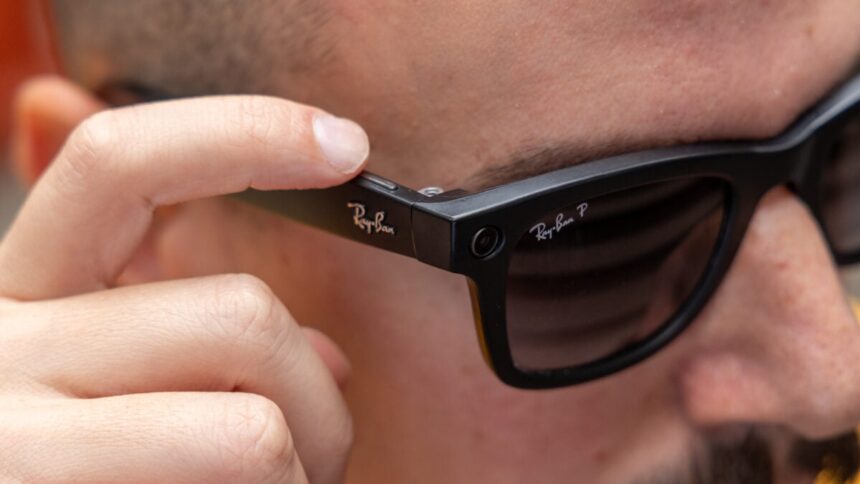
Last week, Wired reported that Meta quietly pushed code for a yet-to-be-released face-recognition system supposedly designed for the company’s smart glasses. Now the publication reports that Meta has quietly removed that system from its codebase. The only part that hasn’t been quiet is Meta’s very public tantrum about the whole thing.
A quick recap on the situation: On June 4, Wired published its report about a feature hidden in the Meta AI app’s code called “NameTag.” The system, which was not active or available for anyone to use, was reportedly designed to use AI to identify anyone seen through the lens of the company’s line of Ray-Ban smartglasses. If the system recognized the face, it would alert the wearer to that person’s identity. Wired noted the code for that hidden facial recognition system was available in an app that has been downloaded onto more than 50 million devices.
On June 5, Meta reportedly removed the code from the most recent version of the app made available for download. So anyone who has updated their Meta AI app over the weekend presumably now has an app that is free from the code libraries for the face recognition.
That’s a pretty straightforward timeline of events to read into: Meta quietly pushed code for a controversial feature it didn’t want to make public yet, Wired spotted it and reported it, Meta got rid of it because, among other reasons, it’s creepy and weird and not going to be particularly well received.
But while Meta scrapped the code once it was spotted, higher-ups at the company threw a little fit about how it’s not even that big of a deal. In a post on X, Meta’s Vice President of Communications Andy Stone complained that Wired waited until the fourth paragraph to note the facial recognition feature was “not enabled,” and doesn’t note until the 16th paragraph that the feature is exploratory. “This is more than shoddy reporting, it’s intellectually dishonest,” Stone said, in a very AI-written sentence format. “Pure advocacy-driven click bait.”
The fact that the feature isn’t active isn’t really the point, though. Exploring a feature that feels like a major violation of privacy is the story, whether they go forward with it or not. And it’s not like Meta doesn’t want to push this feature. Dating back to 2021, the company has been flirting with facial recognition in its smart glasses. At the time, Meta’s Head of Hardware, Andy Bosworth, said the company was “looking at” such a feature. The New York Times reported earlier this year that a Meta internal memo showed the company was planning to add the feature. It seems as though it’s a bit more than just something they’re playing around with.
Speaking of Bosworth, he also objected to Wired’s reporting. In a post on X responding to Stone, the now chief technology officer at Meta said, “Incredibly misleading from Wired, sadly we are coming to expect that from them more and more. Absolutely dishonest.” Notably, he did not offer any details on what was misleading or dishonest about it.
Even Stone’s criticisms just amount to Meta not liking the framing of what otherwise appears to be factually accurate reporting.
One thing Stone and Bosworth could consider is that if you don’t want any speculation about possible facial recognition features in your products, you could just not repeatedly say that you want to add facial recognition to your products and push code that would enable that to happen.
Meta didn’t immediately respond to Gizmodo’s request for comment on Monday. In response to Wired’s questions, Stone said: “No final decision has been made on what to do here, if anything.”
Read the full article here