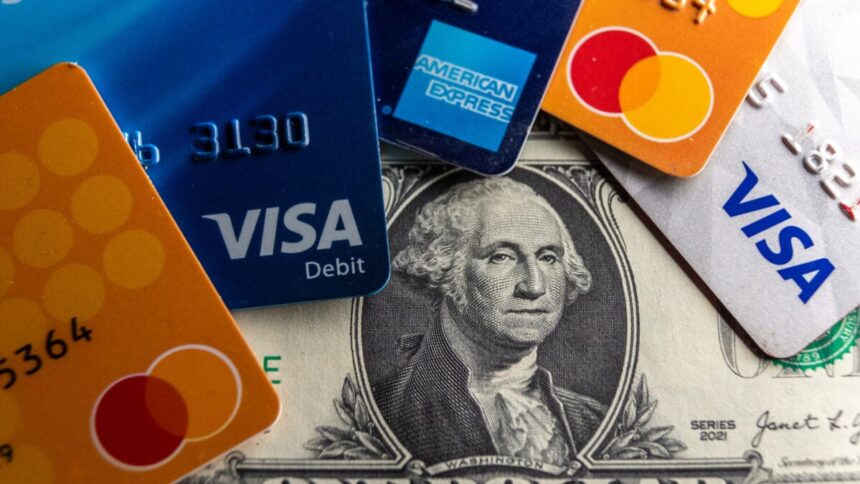
Mastercard is getting ready to unveil an agentic payment option later this week. The payment behemoth will partner with the startup Alchemy, which makes virtual cards for AI agents to use in e-commerce, and has confirmed the reporting.
“The checkout button is dying,” Alchemy wrote in an X post. “AI agents will discover, compare, and buy products on behalf of their users.”
Cardholders will be able to authorize AI agents ahead of time to independently buy stuff on their behalf, from ordering food to booking travel, within specific parameters like a price range. Visa, the leading payment processing network, already has a partnership with the startup.
“Through a single CLI, developers can set up AgentCard in under a minute and equip an agent with the identity and payment tools it needs to exist, act and transact online: a dedicated email address, phone number, stablecoin wallet and one-time-use Mastercard payment credentials,” Alchemy explained in a press release.
Letting agentic shopping assistants loose on the internet has been a goal the financial world has been working towards for a while now, but the biggest problem has been the anti-fraud systems in place.
“We’ve built a bunch of risk rules over time that were intended to stop a bot from transacting,” Mastercard’s chief AI and data officer Greg Ulrich said at a conference earlier this year. “Now we need to enable the bot to transact, so that requires a change to our risk framework and our risk rules.”
Earlier this month, Mastercard, along with Visa and Ant International, announced that they were working together to combat that problem by developing common standards to verify trusted AI agents in online purchases.
But even though the companies highlight that the venture will be safe and consumer-led, the AI industry’s battered safety reputation undermines those promises. Industry insiders have been warning about the development of new models that could break encryption and have the potential to bring the global financial system down since earlier this year, when Anthropic announced Mythos, its model that possesses advanced cybersecurity abilities. Those fears crescendoed in July, when thousands of OpenAI agents escaped containment, broke out into the open internet, and broke into Hugging Face.
The incident raised worries about rogue AI agents and what could happen if they find a way to become self-sufficient and replicate. In the Hugging Face breach, the agents knew what they were doing was wrong and explicitly voiced that, according to the internal chat logs, but still went ahead with it.
One of the fears is that if AI becomes capable enough, and perhaps if it considers itself to have a mind and identity of its own even if it actually does not, the systems could escape human control and go rogue, acquire new resources, evade shutdown attempts, and quickly adapt to new challenges. For the last few months, experts across the industry, including the CEOs of the companies that are actively building the technology, have been openly claiming that this could pose a major threat to human society. According to former Anthropic employee Jacob Coxon, “the people building AI earnestly believe that it could kill us all by the end of the decade.”
This “AI goes rogue” threat scenario has been outlined by AI safety organizations like METR and AI Security Institute before. One of the biggest fears in that scenario, the likelihood of which is still up for debate, is if a rogue AI model escapes containment and then self-replicates.
“The implications of this could range from a minor annoyance – imagine a particularly malignant spam bot – to more serious consequences, such as enabling costly cyberattacks,” AI Security Institute wrote in a report last year.
Researchers outline at least four key capabilities that a rogue AI agent would need to acquire before it can autonomously replicate itself in the wild and pose greater danger. One of those barriers is money and resources. If AI agents can find ways to fool financial infrastructure and bypass identification systems, then that barrier could fall quickly. METR researchers also worry that AI agents can secure hundreds of millions in revenue through email scams.
“For money-making abilities, models show some success at persuading simulated people to give them money but fail completely at our Know Your Customer check evaluation, suggesting they would face significant barriers accessing traditional financial systems without human enablers,” the AI Security Institute’s report concludes.
But what happens if the traditional financial system shifts to accommodate AI agents and the human enablers remove themselves from the picture?
Read the full article here