
By using this site, you agree to the Privacy Policy and Terms of Use.
Accept
Tech Consumer JournalTech Consumer JournalTech Consumer Journal
  • News
  • Phones
  • Tablets
  • Wearable
  • Home Tech
  • Streaming
  • More Articles
Reading: Mark Zuckerberg’s Answer to Growing AI Safety Concerns Is to Just Trust People to Do the Right Thing
Share
Sign In
Notification Show More
Font ResizerAa
Tech Consumer JournalTech Consumer Journal
Font ResizerAa
  • News
  • Phones
  • Tablets
  • Wearable
  • Home Tech
  • Streaming
  • More Articles
Search
  • News
  • Phones
  • Tablets
  • Wearable
  • Home Tech
  • Streaming
  • More Articles
Have an existing account? Sign In
Follow US
  • Contact
  • Blog
  • Complaint
  • Advertise
© 2022 Foxiz News Network. Ruby Design Company. All Rights Reserved.
Tech Consumer Journal > News > Mark Zuckerberg’s Answer to Growing AI Safety Concerns Is to Just Trust People to Do the Right Thing
News

Mark Zuckerberg’s Answer to Growing AI Safety Concerns Is to Just Trust People to Do the Right Thing

News Room
Last updated: August 11, 2026 6:56 am
News Room
Share
SHARE

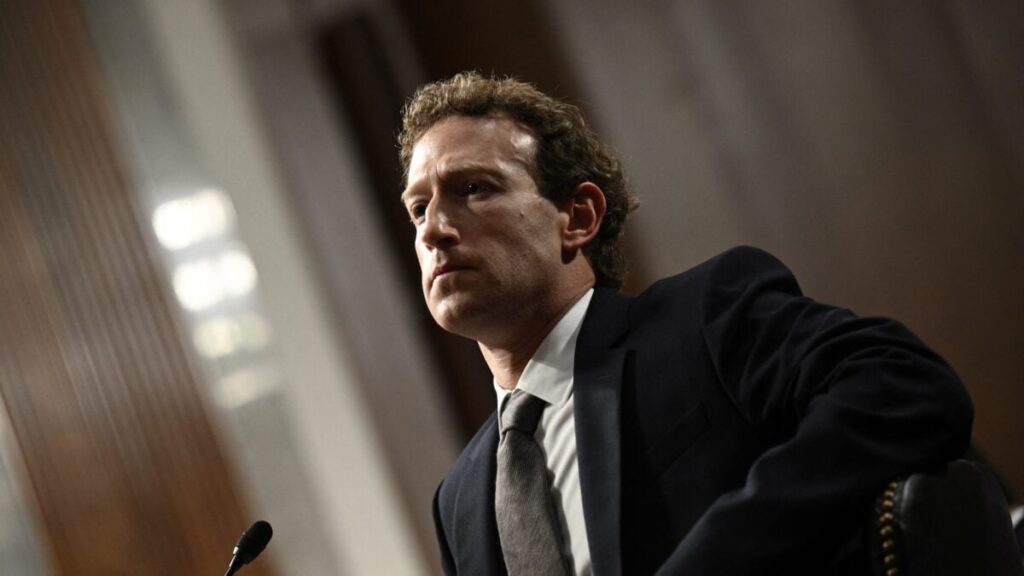
Meta is stepping up to lead us all into a bright and glorious future, where democracy reigns and everyone has access to a completely secure, constantly available AI assistant to help them invent pretty much whatever they want.

That’s at least what Meta CEO Mark Zuckerberg has promised in a lengthy new essay, published this morning alongside the release of Meta’s latest AI model—Muse Glimmer—and less than a week after the company was fined $567 million by a New Mexico judge who blamed it for causing “a public nuissance” within the state.

The essay, running to around 6,500 words and titled “The Future is for Everyone,” is a not-so-subtle dig at Meta’s primary competitors, OpenAI and Anthropic. While Zuckerberg never explicitly calls out those two companies by name, he argues that the proprietary AI systems like the ones they’re known for (ChatGPT and Claude, respectively) threaten to usher the world into an era in which a tiny handful of corporate giants control the rest of humanity’s access to “superintelligence”—his preferred term for future AI systems. The antidote to such a dystopian oligarchy scenario, he argues, is to make AI freely available to as many people as possible, specifically through the free proliferation of open source models.

“Rather than centralizing superintelligence, we should distribute it widely and give every person the ability to direct it,” Zuckerberg wrote in his essay. “This has the potential to begin a new era of personal empowerment where individuals can use this powerful new capability to reach their full potential, pursue their interests, and improve their lives and the world more than ever before.”

A new age for invention

AI, he writes, will soon enable invention on a mass scale. Whereas major technical breakthroughs of the past were achieved only sporadically, soon they’ll become commonplace: “Everyone will soon have invention superpowers.”

Sounds great, if human beings only invented things that benefited themselves and others, which is very rarely (if ever) the case; every technology—from writing, to the steam engine, to radios—has a dark side. Modern AI systems, which can be used to spread misinformation on an unprecedented scale and synthesize completely new viruses, can be especially dangerous. Zuckerberg’s essay pays lip service to the litany of concerns that many people have about the spread of AI, and responds by essentially arguing that the best way to deal with any hiccups that might arise is to trust people to do the right thing. “The arc of human civilization has bent towards putting more power in people’s hands to live and shape the world in the ways we believe are best,” he writes.

In response to fears that AI will displace huge numbers of humans in the job market, for example, Zuckerberg points to the Industrial Revolution, which “steadily freed much of humanity to focus less on subsistence and more on the pursuits we choose,” he writes. “At each step, people used our newfound productivity to achieve more than was previously possible, as well as spending more time on creativity, culture, relationships, and enjoying life.” The implication is that AI will achieve much the same thing: By liberating us from the drudgery of mundane tasks, we’ll be free to focus on more meaningful, fulfilling pursuits. It’s a common refrain from Silicon Valley, one that tends to conveniently overlook the long shadow of industrialization: growing wealth disparity, ecological catastrophe, mechanized warfare, colonization, and so on.

Trust the free market

Meta has long sought to position itself as a champion of open source AI, which unlike proprietary models can be freely accessed and modified by third-party developers. Muse Glimmer, the new model released today by Meta, is not open source. It’s what’s known in the industry as “open weight,” meaning while external developers can view the parameters that were used to train the new model, they can’t actually view the underlying source code or use them to build a new model from the ground-up. As the psychologist (and outspoken AI industry critic) Gary Marcus put it in an edition of his email newsletter this morning: “open weights is open source with all the good press but far fewer advantages.”

In his essay, Zuckerberg repeatedly frames open source as humanity’s best chance of avoiding the most serious risks posed by AI, including not just mass job displacement but the rise of AI-assisted totalitarianism and civilization-scale destruction. Again, his argument boils down to the laissez-faire ethos of a free market. “A healthy balance of power is to ensure that there is no singular centralized superintelligence,” he writes, “but instead as many people and businesses as possible with different superintelligent agents aligned to their goals that check and compete with each other in the ways our natural economy behaves.”

Open source AI has become a political flashpoint in recent months in the wake of a flurry of new AI models from Chinese AI labs, many of them open source, that rival the capabilities of the most advanced American-made models. The Trump administration and some US tech leaders have accused Chinese AI developers of large-scale distillation of American models. Zuckerberg says that any federal crackdown on distillation would be a mistake, and that all publicly available tools are fair game for the development of new models. “This is how the world works,” he wrote.

In a closed-door meeting with American tech executives last week, White House officials reportedly shared a draft of their new framework for testing the safety of unreleased AI models. Open source models are currently exempt.

Read the full article here

You Might Also Like

Can’t Attend D23? Disney Is Live Streaming Some of Its Biggest Panels

House Democrats Want Tech CEOs to Testify Under Oath Following Recent AI Hacks

Phia Saban on How ‘House of the Dragon’ Changed Helaena From Page to Screen

After Weeks of Inactivity, Federal Forecasters Eye 3 Potential Cyclones in the Atlantic 

Family Rejects Tech Company’s $26 Million Offer for Their Farm

Share This Article
Facebook Twitter Copy Link Print
Previous Article House Democrats Want Tech CEOs to Testify Under Oath Following Recent AI Hacks
Next Article Can’t Attend D23? Disney Is Live Streaming Some of Its Biggest Panels
Leave a comment

Leave a Reply Cancel reply

Your email address will not be published. Required fields are marked *

Stay Connected

248.1kLike
69.1kFollow
134kPin
54.3kFollow

Latest News

This Deadly Drug-Resistant Fungus Can Lurk in Your Skin. Scientists Just Discovered How
News
Top Wall Street Firms Reportedly Partnering With Nvidia for $500 Billion AI Investment
News
James Norton on Ormund’s Gruesome ‘House of the Dragon’ Scene
News
Apple Reportedly Testing Controversial Chinese Chips as Memory Supply Crunch Intensifies
News
‘Coyote vs. Acme’ Stars Always Believed the World Deserved to See It in Theaters
News
An AI Hacked Into a Gym to Secure a Spot in a Class, but Can It Cancel a Membership?
News
Greenland Glacier Break Creates New Ice Island the Size of Manhattan
News
6K Isn’t the Future of Gaming
News

You Might also Like

News

Future Apple Watches Might Ditch the Screen

News Room News Room 3 Min Read
News

The Flesh-Eating Screwworm’s Comeback Is Now Killing People, Too

News Room News Room 5 Min Read
News

Why Is SpaceX’s Starship Still Adrift in the Indian Ocean?

News Room News Room 4 Min Read
Tech Consumer JournalTech Consumer Journal
Follow US
2024 © Prices.com LLC. All Rights Reserved.
  • Privacy Policy
  • Terms of use
  • For Advertisers
  • Contact
Welcome Back!

Sign in to your account

Username or Email Address
Password

Lost your password?