For months, the world has been watching El Niño develop at breakneck speed. Now, sea surface temperatures in the central equatorial Pacific have surpassed levels observed during any previous event, officially making this El Niño the strongest on record.
We’re still months away from the expected peak. According to the latest model projections, sea surface temperatures will reach their warmest point in December at roughly 7 degrees Fahrenheit (4 degrees Celsius) above average. As with any El Niño, that extra heat will rise from the ocean into the atmosphere, supercharging global temperatures and shifting weather patterns around the world. But this El Niño will pack a bigger punch than any seen before.
According to one recent report, this unprecedented event could lead to an estimated 450,000 heat-related deaths in the next six months. Climate scientists have warned that global temperatures in 2027 could resemble levels the planet might not otherwise reach until around 2040, temporarily fast-forwarding the current human-driven warming trend by more than a decade. And speaking of climate change, experts worry it will interact with El Niño to produce unusual extreme weather events that are difficult to predict and prepare for.
For this Giz Asks, we asked experts whether the United States is ready to handle the impacts of this “super” El Niño. They highlighted concerning gaps in preparedness at local, state, and federal levels.
Jeffery Schlegelmilch
An associate professor for professional practice in climate and faculty director of the National Center for Disaster Preparedness at the Columbia Climate School. Schlegelmilch’s areas of expertise include public health preparedness, community resilience, and the integration of private and public sector capabilities.
The honest answer is no. We do some things well, especially in responding after a single acute disaster. But we are weaker at the kind of preparedness that the El Niño forecasts are providing us with an opportunity for: preparing for high but non-specific threats months in advance.
El Niño is not a single disaster. It increases the odds for many disasters at once. This includes the potential for disasters occurring across the country and the world stretched over months. As these occur, the competition for attention and resources that rests on mutual aid will be harder to manage, especially if the partner you are depending on is dealing with their own disaster, or is already deployed somewhere else.
The other challenge is that we are built more for responding to the damage. Disaster dollars are built around reimbursement arriving after losses are documented. So, the cheapest period to act—the preparedness stage—is when we are least equipped to release funding unless there are forecasts with more certainty, such as an imminent hurricane that allows for pre-landfall emergency declarations. And even then, the system is designed for hours or days of advanced warning, not months.
At the same time, we are dealing with reduced capacity of federal agencies responsible for disaster management and recovery, along with increased pressure on state budgets and an exodus of seasoned leaders along with their years of experience. This makes a hard problem even harder.
We don’t know exactly what will happen, but we do know that the odds of compounding disasters are greater, and our capacity is diminished. But with months of warning, there is time to act, as well as to look towards future El Niños and how we can be better prepared for a warming world.
Bethany Tietjen
A postdoctoral researcher at The Fletcher School’s Climate Policy Lab at Tufts University. Tietjen’s research examines climate adaptation and disaster preparedness policies in the U.S. and globally, with a focus on policy gaps, post-disaster change, and systemic vulnerabilities.
The impacts of this year’s El Niño will manifest in different ways around the country, which means that cities and states will require different preparedness efforts.
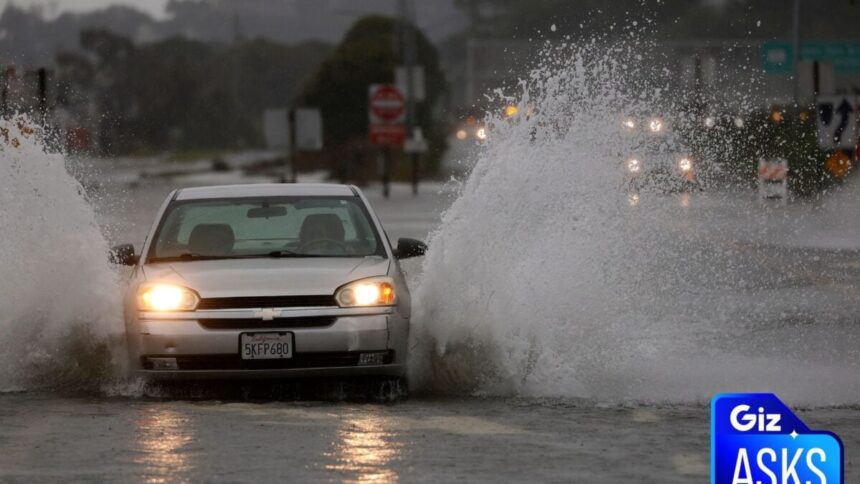
We’re seeing reports of El Niño planning from communities around California, where impacts are expected to be the strongest and come in the form of increased precipitation that may coincide with king tides, leading to increased flood risk. Local governments in California are carrying out scenario exercises to identify and address gaps in their preparedness efforts as well as investing in infrastructure fortification ahead of the impacts.
In other parts of the country, officials are communicating potential risks to community members, but evidence of El Niño planning outside of the Western United States appears limited. So, while there are some significant preparedness efforts underway, they appear to be uneven across the country.
While many local governments develop policies and plans to respond to and prepare for climate hazards like flooding or heatwaves, these policies often focus on physical infrastructure but very few address issues of social vulnerability. Social vulnerability includes factors like poverty, inequality, or disability that shape how a person is impacted by a climate event.
For example, people experiencing homelessness or older adults may have particular difficulties finding safe shelter during a hurricane or evacuating during a wildfire. While these vulnerabilities can be difficult to address, they are important to include in disaster planning processes.
On a national level, policy changes and funding and staffing cuts have strained our federal disaster response and climate resilience capacity, which could impact El Niño preparedness around the country. Major investments in local resilience through programs like FEMA’s Building Resilient Infrastructure and Communities (BRIC) program were cancelled and then recently reinstated, interrupting planning efforts that could have helped communities increase their preparedness for the impacts of El Niño.
Local preparedness depends in part on this federal capacity, particularly when communities need resources to make longer-term investments in resilience. While some bright spots exist in local efforts to prepare for this year’s El Niño, the country as a whole is underprepared for the increasing intensity and severity of climate impacts, and greater federal support is a necessity.
John Nielsen-Gammon
Texas state climatologist and a regents professor of atmospheric sciences at Texas A&M University, where he also serves as director of the Southern Regional Climate Center. Nielsen-Gammon’s research interests include applied climatology, extreme rainfall, drought monitoring, and local circulations.
Anytime you have something unusual happening in the climate system, you run the risk of extreme weather that’s outside the bounds of recent or even historical experience. This year’s super-strong El Niño is no exception, but I have my fingers crossed. This El Niño might on the whole be beneficial for the southern United States.
The first impact of El Niño on extreme weather is already happening: suppression of Atlantic hurricane activity. We’ve made it past the peak of hurricane season without a single hurricane. I doubt we’ll go the entire season without one, but it would at least be reasonable to hope that we might avoid a hurricane landfall in the United States.
El Niño probably contributed some to the overall heat and drought the southern United States has experienced over the past few months, but relief is coming. From Texas to the Carolinas, El Niño typically leads to wetter and cooler conditions during the cooler parts of the year, say October through April. Rainfall would be valuable in alleviating the drought and maybe getting next year’s growing season off to a good start.
With a wet pattern, the worry would be excessive rainfall and flooding. That’s a possibility this time too, but most of the dangerous flooding in the southern United States takes place during late spring, summer, and early fall when sea surface temperatures are high and rainfall can be very intense. During the cooler time of year, flash flooding is less likely.
With cooler temperatures during the wintertime, another concern would be snow and ice. Snow and ice seem to be more likely in parts of the South during an El Niño, but conversely, we don’t tend to get the extreme cold events like the one during February 2021. El Niño winters tend to be cool and dreary rather than catastrophically cold. A wet winter would also make spring wildfires less likely in Texas and Florida.
So, rather than fearing this El Niño, there might be reason for the parts of the southern United States to actually look forward to it!
Daniel Cayan
A climate researcher at the University of California, San Diego’s Scripps Institution of Oceanography. Cayan’s research interests include seasonal-interdecadal climate variations, climate change, and climate impacts on water, wildfire, health, and agriculture in California and western North America.
Observational evidence and modeling results indicate that a very strong El Niño tilts the odds towards heightened weather and seasonal climate impacts in California this year. The compounding process of extremely high sea levels, big waves, and wetting rainfall happens rarely, so some communities and residents are likely unprepared.
Among the most predictable El Niño effects are anomalously high sea levels, heightened waves, and swell. Coastal impacts are amplified if a large winter storm coincides with high tides, owing to elevated sea levels and heightened wave action. This winter, California’s coastal residents must be particularly cautious of winter storms during the king tides that will occur in November, December, and January.
Some coastal residents will remember similar impacts in 1982 and 1983, when winter storms landed on top of relatively high tides and battered the California coast, damaging coastal properties, destroying several ocean piers, and severely eroding California beaches. In the 42 winters since then, California has largely avoided these effects, but eventually such events will happen again. Very strong El Niños, and possibly this developing case, are more likely to feature storms like this. Impacts could be even stronger given the ongoing rise of global and regional sea level.
Given the more-often-than-not dryness in recent years, a lot of Californians are not well acquainted with prolonged, recurrent wet spells. San Diego’s Lindbergh Field sees 41 wet days in an average year, but during the very strong El Niño of 1982 and 1983, it registered 70 days of rain.
Anyone who lives in a community that implements local floodplain management rules can purchase insurance from the National Flood Insurance Program, but floods are rare enough and other needs are keen enough that less than 2% of California households have policies. Other impacts of recurrent rainfall are legendary—note the traffic crashes and vexing prolonged transit times on California roadways during rain days.
Southern California is arid enough that it must import a good share of its water supply. The region draws more than 20% of its water from the Colorado River basin, but chronic dryness for more than two decades has created unprecedented shortages. Although the likelihood of a wetter core southwestern U.S. this winter is a likely outcome of this very strong El Niño, the fate of the upper Colorado basin, which generates most of the Colorado River supply, is highly uncertain. So, again, California and the Colorado basin states must prepare for shortfalls from the Colorado system.
All is not bleak. California has become better at managing its water. Recurrent dryness during the 2000s spurred increased conservation and declining use, especially in its urban water sector. And, with Forecast Informed Reservoir Operations (FIRO), some management units are learning how to retain more water in reservoir storage.
Reinforcing this, weather and hydrologic forecasts continue to improve so agencies can make better decisions in the critical days ahead of heavy precipitation and high flow events. The massive media coverage of this developing El Niño is leading to better-informed emergency responders, agency leaders, and members of the general public. In alignment, California’s governor has declared a state of emergency to mobilize state resources ahead of potential winter storms to help local partners prepare.
Giz Asks is a recurring Gizmodo series in which experts answer big questions in their own words, offering a range of perspectives on the ideas, discoveries, and debates that affect our lives and shape our understanding of the world.
Read the full article here