

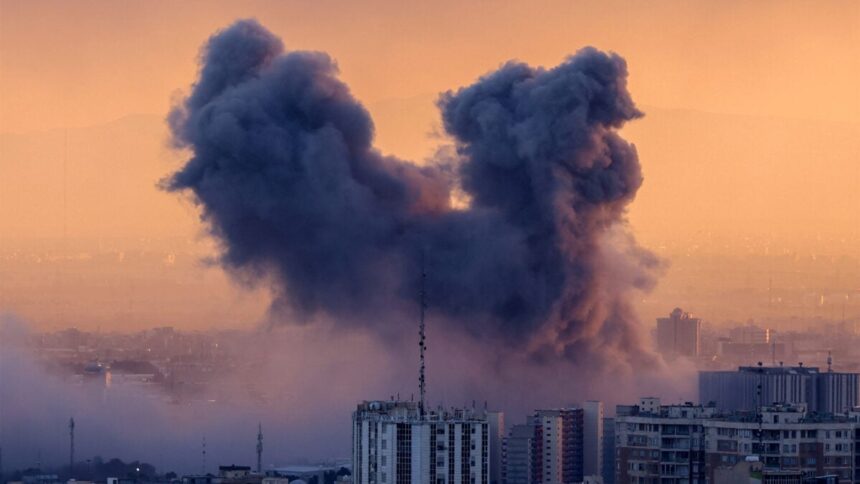
Many analysts had written off bitcoin’s “digital gold” narrative after its poor performance when compared to real, physical gold over the past year or so, but the crypto asset has held up amid the recently launched war in Iran. Those who believe in the long-term promise of bitcoin think it can develop as a neutral, apolitical store of value alongside physical gold due to its unwavering monetary policy, which was “set in stone” when the crypto network first launched back in 2009. In times of geopolitical turmoil, such as what’s going on in the Middle East right now, crypto advocates view bitcoin as a potential uncorrelated, safe-haven asset that holds its value.
So far, bitcoin has held up better than many expected as the conflict with Iran unfolded. The crypto asset initially fell to $63,000 when the bombing began over the weekend, but the price eventually recovered above $71,000 this morning. In other words, it’s 9% above levels seen just before the conflict started.
Notably, bitcoin has outperformed gold directly, with a single bitcoin now being worth more than an extra ounce of gold. This does not necessarily signal that central banks (outside of the Czech National Bank) will start holding the asset as a core reserve anytime soon, but it does suggest that talk of the digital gold narrative’s collapse was premature.
The ability for anyone to take self-custody of their bitcoin is another aspect of its digital gold comparison, as seen by the massive spike in bitcoin withdrawals from Iranian crypto exchanges during the protests and unrest in the country in January. After all, the theoretical ability for bitcoin to operate as a neutral store of value amidst an increasingly devalued Iranian rial wouldn’t matter much if it could be seized or frozen by a third-party custodian. And now, blockchain analytics firms have reported another sharp rise in activity on crypto exchanges based in Iran.
Chainalysis tracked $10.3 million in outflows from major Iranian platforms between February 28 and March 2. The data shows hourly volumes jumping sharply, approaching $2 million in the hours right after the strikes. Sorting out what those flows actually represent remains difficult. They could come from citizens pulling funds into self-custody wallets for protection, state actors using the exchanges for laundering or sanctions evasion, or they could simply reflect the exchanges shifting liquidity between their own wallets to obscure internal balances.
Elliptic also recorded a 700% surge in outflows from Nobitex, Iran’s largest exchange with at least 11 million users, starting within minutes of the initial attacks. From Elliptic’s assessment, funds moved primarily to overseas platforms. Despite the initial activity spike, a report from TRM Labs showed that overall transaction volumes across Iranian crypto activity also fell by about 80% after the regime cut internet connectivity by 99%. According to TRM Labs’s data, inflows and outflows stayed within normal ranges overall, including routine cold storage transfers of $35 million to $40 million. Multiple exchanges also responded by suspending or batching withdrawals and pausing trading pairs, such as USDT-toman, at the direction of the central bank. A toman is a specific denomination of Iran’s local currency, equal to 10,000 rials.
Crypto has become a notable part of the Iranian economy in recent years for both the regime and ordinary citizens. On top of the aforementioned report regarding increased bitcoin withdrawals to self-custody wallets, a report from Elliptic showed the Central Bank of Iran acquired at least $507 million in Tether’s USDT stablecoin to support the rial and settle international trade. These combined dynamics illustrate how the United States’s embrace of stablecoins through the GENIUS Act works in two directions. It strengthens dollar dominance but also gives sanctioned entities new tools to sidestep restrictions.
This sort of stablecoin use by sanctioned nation states sat at the center of 2025’s record illicit crypto activity, which Chainalysis estimated at $154 billion. On top of Iran’s use, the Maduro regime in Venezuela also reportedly leaned heavily on USDT in recent years. That said, stablecoins like Tether are far more controllable than crypto-native, decentralized systems like Bitcoin. After all, they are issued by centralized entities that can blacklist addresses and freeze funds.
Bitcoin has performed much better during the current turmoil in the Middle East than it did amid the tensions around Greenland. This should offer encouragement to those who view it as a potential global, apolitical, and uncorrelated reserve asset. Still, the roughly 50% drop from its all-time high in October shows bitcoin is still very much in its early stages of development, despite it now being in its 17th year of operation.
Read the full article here