By using this site, you agree to the Privacy Policy and Terms of Use.
Accept
Tech Consumer JournalTech Consumer JournalTech Consumer Journal
  • News
  • Phones
  • Tablets
  • Wearable
  • Home Tech
  • Streaming
  • More Articles
Reading: Bigfoot-Like Ancient Apes Might Have Been Closer to Humans Than We Realize
Share
Sign In
Notification Show More
Font ResizerAa
Tech Consumer JournalTech Consumer Journal
Font ResizerAa
  • News
  • Phones
  • Tablets
  • Wearable
  • Home Tech
  • Streaming
  • More Articles
Search
  • News
  • Phones
  • Tablets
  • Wearable
  • Home Tech
  • Streaming
  • More Articles
Have an existing account? Sign In
Follow US
  • Contact
  • Blog
  • Complaint
  • Advertise
© 2022 Foxiz News Network. Ruby Design Company. All Rights Reserved.
Tech Consumer Journal > News > Bigfoot-Like Ancient Apes Might Have Been Closer to Humans Than We Realize
News

Bigfoot-Like Ancient Apes Might Have Been Closer to Humans Than We Realize

News Room
Last updated: August 20, 2026 9:21 pm
News Room
Share
SHARE

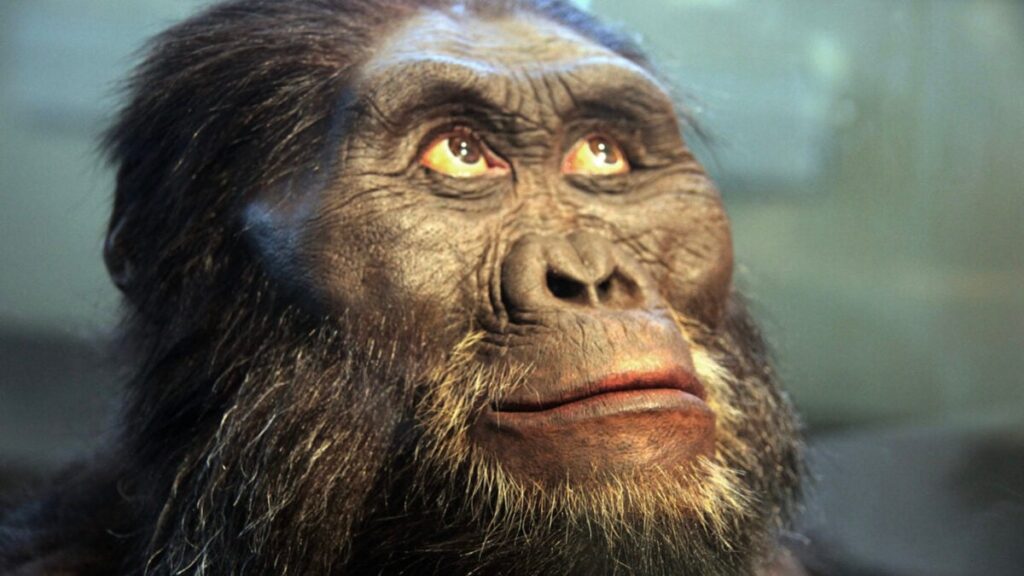
Decades of paleontological work across southern China exploded into a wave of serious interest in famous cryptids, like Yeti and Bigfoot, after zoologist Wladimir Tschernezky first published his analysis of a mysterious footprint in the journal Nature in 1960. Tschernezky’s paper floated the idea that this footprint, alongside local Yeti reports from the surrounding Himalayas, pointed to the continued existence of a “very huge, heavily built bipedal primate” likely similar to the ancient Gigantopithecus fossils then emerging from those China dig sites.

To the ongoing consternation of joyless scolds, Tschernezky’s hypothesis has forever linked his study’s “Abominable Snowman” and America’s legendary Sasquatch to Gigantopithecus—the quite literally gigantic genus of great ape that made Asia its home from about 2 million to 200,000 years ago. In the intervening 76 years since Tschernezky’s paper, anthropologists, paleontologists, and experts in primate anatomy and genetics have since learned a lot more about Gigantopithecus and related prehistoric primates, like Paranthropus and Australopithecus.

Now, a new study published Tuesday in the American Journal of Biological Anthropology argues that several of these groups ought to be recategorized into the genus Homo, alongside Homo Sapiens like us.

“These groups do not necessarily represent distinct evolutionary branches, or ‘clades,’ and differences in behaviour and ecology once used to distinguish them have also become increasingly difficult to maintain,” Ian Towle, a research fellow at the Monash Biomedicine Discovery Institute and author of the study, explained in a statement.

The fossil record on several genera of extinct ape, he writes in the paper, have shown these primates to display smaller and more human-like canine teeth, among other dental similarities; and those cases included specimens from the genera Indopithecus, Ouranopithecus, and (Bigfoot suspects themselves) Gigantopithecus.

‘Wastebasket’ taxonomy

“The more we learn about our ancestors and close fossil relatives, the more we realise how complex and non-linear our family tree is,” according to Towle, whose early work focused on dental evidence from fossil hominins, a broad category that includes humans and chimpanzees.

To make his case, Towle focused particularly on the increasingly arbitrary and messy distinctions now used to maintain the boundary between Homo and Australopithecus as distinct genera over recent decades.

Originally, for example, the genus Homo was defined in part by its larger brain size, until a variety of ancient primate fossils beginning with Homo habilis in 1964 were formally folded into the group. Still more modern additions, including Homo floresiensis and Homo naledi, have brain sizes roughly equivalent to those of Australopithecus, the researcher noted.

Another key trait once limited to humanity’s closest relations, the use of tools, is now widely acknowledged as a much more common skill across primate species than people once assumed. The genus Paranthropus, Towle noted, had previously been presumed to lack the aptitude for tool use—until around 2023, when their 2.6-million-year-old fossils started popping up alongside ancient tools at dig sites in Kenya and Ethiopia.

“It has become increasingly clear that ‘wastebasket’ taxa defined by one or a few traits, such as brain size, locomotion, or tool use, do not map neatly, or even plausibly, onto phylogenetic reconstructions of homininans,” Towle wrote in the new study.

Homo prospectus

While Towle stops short of suggesting that some of these primates, like Gigantopithecus and Ouranopithecus, should actually be folded into genus Homo, he does advise that something like this should occur for Paranthropus and Australopithecus. (Nevermind, for the moment, that some scholars have recorded close similarities between Gigantopithecus and Australopithecus.)

“The central argument of this paper is not that the specific taxonomic solution proposed here is necessarily the best one,” Towle admitted, “but rather that the current treatment of homininan genera is increasingly difficult to justify.”

In other words, a fairly obvious conversation needs to be had to resolve over 150 years of species categorization that has not exactly modernized alongside all the scientific methods used to study these living and once living things.

“Modern taxonomy, the science of naming and classifying organisms, increasingly aims to reflect genuine evolutionary relationships, grouping species according to their shared ancestry,” Towle noted. “But when it comes to our own evolutionary history, scientists have been slower to make the transition.”

Read the full article here

You Might Also Like

Dave Bautista Is Kratos in ‘God of War’

Netflix’s Anime NYC Line Up Is Ridiculously Stacked

There’s Life Before Watching ‘Bone Tomahawk,’ and Then There’s Life After Watching ‘Bone Tomahawk’

Bruce Campbell Has Been Retired as Ash for a While, Actually

These Transistors Engineered With Bacteria Are Literally Alive, if a Little Slow

Share This Article
Facebook Twitter Copy Link Print
Previous Article These Transistors Engineered With Bacteria Are Literally Alive, if a Little Slow
Next Article Bruce Campbell Has Been Retired as Ash for a While, Actually
Leave a comment

Leave a Reply Cancel reply

Your email address will not be published. Required fields are marked *

Stay Connected

248.1kLike
69.1kFollow
134kPin
54.3kFollow

Latest News

The Best Tech and Gear for Back to School 2026
News
The Creepy ‘Never After Dark’ Trailer Might Keep You Up at Night
News
Darth Vader Speaks at City Council Meeting
News
DOJ Throws Support Behind xAI’s Fight Against Minnesota AI Nudification Ban
News
NASA’s Swift Is Doomed to a Fiery Death After Rescue Mission Fails
News
This Robot Vacuum Has a Brush and Mop Pad That Can Reach Places Others Can’t
News
SpaceX Finally Recovers Starship After 24 Days of Tugging It Through Rough Waters
News
‘The Odyssey’ Is Now the Highest-Grossing R-Rated Film of All Time
News

You Might also Like

News

This Electric Shock Glove Was Invented for Police in the 1930s to ‘Incite Fear’

News Room News Room 6 Min Read
News

OpenAI’s CFO Reportedly Downplays Importance of IPO to Staff

News Room News Room 3 Min Read
News

Mars’ Potato-Shaped Moon May Have Gotten Its Youthful Look From a Single Impact

News Room News Room 5 Min Read
Tech Consumer JournalTech Consumer Journal
Follow US
2024 © Prices.com LLC. All Rights Reserved.
  • Privacy Policy
  • Terms of use
  • For Advertisers
  • Contact
Welcome Back!

Sign in to your account

Username or Email Address
Password

Lost your password?