
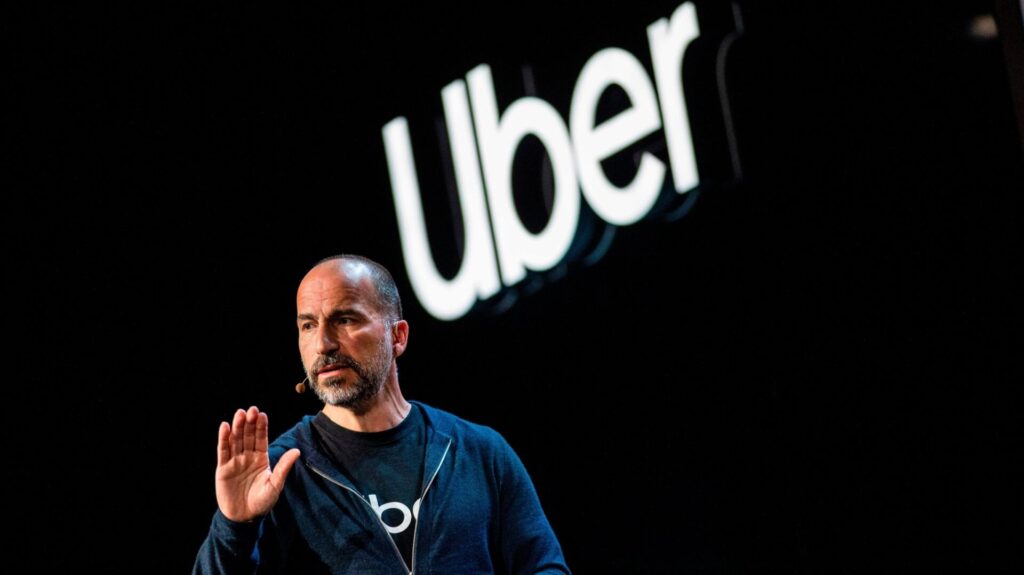
Uber is the latest Silicon Valley company to blame too much bureaucracy for job cuts.
CEO Dara Khosrowshahi sent a memo to staff Wednesday announcing that the ride-hailing company was cutting about 10% of its workforce as part of a major reorganization.
The company confirmed reports that roughly 3,300 employees, primarily middle managers, were being let go.
“We are removing layers, simplifying team structures, refining our global location strategy, and focusing our people and investments against the biggest opportunities ahead of us,” Khosrowshahi wrote in the memo.
The layoffs come just weeks after Uber reported $14.2 billion in quarterly revenue and $2.4 billion in net income, both significantly higher than a year earlier.
Despite healthy finances, Khosrowshahi wrote that the company’s “growth has also brought complexity,” including more layers, coordination, and fragmented ownership that no longer serve the company.
As part of the overhaul, Uber is reducing the number of employees who sit seven or more layers below the CEO by about 20%. It is also cutting the number of “micro-teams,” teams with just one or two direct reports, by nearly 50%.
Khosrowshahi’s memo echoes comments from other tech executives at companies like Amazon and Meta, who have cut jobs while arguing their companies have become too unwieldy to move and innovate quickly.
AI could also be part of that equation, even though Khosrowshahi’s memo doesn’t mention it at all
Bloomberg reported in June that Uber had put spending caps on some AI tools after blowing through its annual AI budget in just a few months. Meanwhile, Khosrowshahi said earlier this year that about 10% of Uber’s code was being built by AI agents, while employees in other departments like legal and marketing were also increasingly using AI.
At the time, the company said it would slow down hiring because of the growing benefits of AI, according to Bloomberg.
Uber isn’t the first tech company to link AI to a push for smaller, faster teams. When Block cut more than 4,000 jobs earlier this year, CEO Jack Dorsey wrote in a company memo that its intelligence tools were making it possible to operate with “smaller and flatter teams.”
Uber’s cuts also come as Waymo’s growing robotaxi business has begun to pose a threat to traditional ride-hailing.
Alphabet’s Waymo is now providing fully autonomous rides in 14 U.S. cities and is quickly expanding into more. In Atlanta, where Waymo rides are booked through Uber, some Uber and Lyft drivers told Axios that they have seen lower earnings, fewer ride requests, and longer waits between rides since Waymo launched in the city last year.
Uber, meanwhile, is investing billions into its own robotaxi efforts. The company has struck partnerships with several companies including Lucid, Nuro, and Rivian to build its robotaxi fleet and has said it plans to invest more than $10 billion to “bring AVs to market at scale.”
In Wednesday’s memo, Khosrowshahi wrote that the cuts would give Uber more capacity to invest in drivers, couriers and merchants, as well as to “build the autonomous future.”
Read the full article here