Scientists uncovered a vast field of tektites in Brazil—a rare type of natural glass forged in the aftermath of meteorite impacts.
The field stretches across 560 miles (900 kilometers) and dates back to a massive impact that took place around 6.3 million years ago. An international team of researchers collected around 500 of the newly discovered specimens, which were named geraisites after the state of Minas Gerais, where they were first found. Prior to this discovery, there were only a handful of known tektite fields on Earth.
The findings are detailed in a study published in Geology and help fill in the gaps of South America’s ancient impact history. The researchers, however, are still searching for the crater.
Extraterrestrial debris
There are nearly 200 known impact craters on Earth, and yet only five tektite fields had been discovered prior to the one in Brazil. That’s because a more complex process is required for melted glass to form.
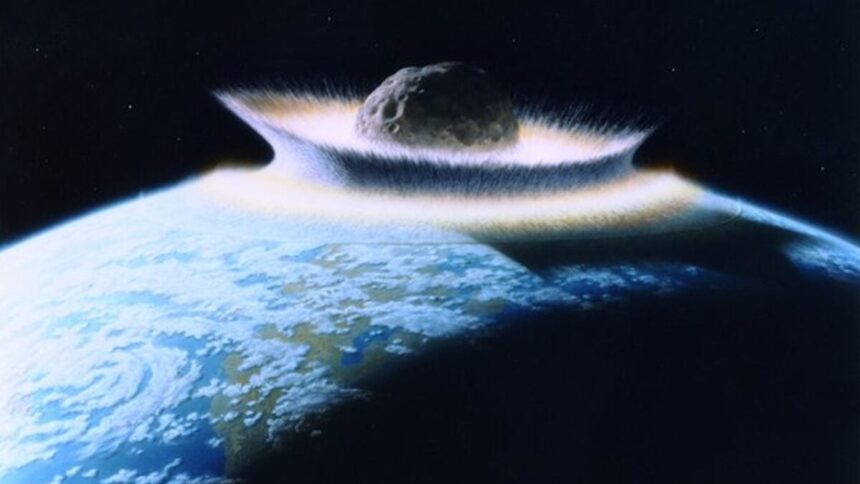
Tektites form when large meteorites strike Earth, melting terrestrial rocks and ejecting them into the atmosphere. As they fly through the atmosphere, the molten blobs take on varying shapes, such as spheres, droplets, or dumbbells. The tektites then reenter through the atmosphere, cool down, and plop back on Earth in distinct fields.
The largest known field on Earth is known as the Australasian, while others are found in Central Europe, the Ivory Coast, North America, and Belize.
Finding geraisites
The researchers behind the recent discovery in Brazil first began finding tektites in three municipalities in northern Minas Gerais, Taiobeiras, Curral de Dentro, and São João do Paraíso, across an area about 55 miles long (90 kilometers).
After the initial study was submitted, additional reports came in of tektites found in Bahia and Piauí, expanding the size of the field to 560 miles (900 kilometers). “This growth in the area of occurrence is entirely consistent with what is observed in other tektite fields around the world,” Álvaro Crósta, a geologist and senior professor at the Institute of Geosciences at the State University of Campinas and lead author of the study, said in a statement. “The size of the field depends directly on the energy of the impact, among other factors.”
The collected fragments range in size from less than 0.04 to 3 ounces (1 to 85.4 grams) and can measure up to about 2 inches (5 centimeters). Although they appear black at first, they have a distinct grayish-green color and become translucent under intense light.
Each type of tektite is given its own name based on where it was found. As such, the newly discovered specimens were named geraisites.
The geraisites are mostly made up of silica, along with high concentrations of sodium and potassium oxides that are slightly higher than other types of tektites. The researchers also measured lechatelierite, a high-temperature glassy silica that forms during extreme heating.
“One of the decisive criteria for classifying the material as a tektite was its very low water content as measured by infrared spectroscopy: between 71 and 107 [parts per million],” Crósta said. “For comparison, volcanic glasses, such as obsidian, usually contain from 700 ppm to 2% water, whereas tektites are notoriously much drier.”
The researchers dated the tektites to an impact that occurred 6.3 million years ago, near the end of the Miocene epoch. This period extends from about 23 to 5 million years ago and marks the divergence of early hominins from chimpanzees.
While evidence points to the glassy fragments originating from a meteorite striking Earth, researchers haven’t found the impact crater yet. That’s not unusual, however, as only three of the known tektite fields are linked to a confirmed crater.
The researchers believe the geraisites’ crater may lie in the São Francisco Craton, a region in the eastern part of South America’s continental crust. Future surveys are needed in order to detect underground structures that may be the site of the ancient meteorite impact.
Read the full article here