


Ever wonder what spider silk looks like up close? Like, really up close? The winner of this year’s Royal Society Publishing Photography Competition will surely sate your curiosity.
The image above, aptly named “Mesmerizing Spider Threads,” showcases the intricate, looping fibers of Australian net-caster spider (Asianopis subrufa) silk in exquisite detail. Unlike typical web-building arachnids, net-casters hold a specialized, sticky net between their four front legs, then throw it over their insect prey. Their silk has evolved to be very strong and stretchy to support this maneuver.
“Just from observing the behavior, we knew something spectacular was going to be there,” photographer Martín Ramírez, a research scientist for CONICET (National Scientific and Technical Research Council—Argentina) at the Argentinian Museum of Natural Sciences, said in a Royal Society release. “The web is incredibly stretchy; no normal silk can extend in that way to then return to its original form.” The silk sample was obtained by Jonas Wolff, a zoology researcher at the University of Greifswald in Germany.
As jaw-dropping as this photo is, it faced some tough competition. Each year, the Royal Society asks scientists from around the world to submit their best images representing the fields of astronomy, behavior, earth science, and microimaging. Read on to see the incredible category winners from this year’s contest.
Astronomy winner: Dancing on the Edge of Fire
Imran Sultan, an astrophotographer and graduate researcher at Northwestern University’s Center for Interdisciplinary Exploration and Research in Astrophysics (CIERA), captured the intricate detail of the solar surface in this stunning photo. He observed the Sun in July 2024, near the peak of its 11-year solar cycle.
“I observed the Sun in Hydrogen-alpha light, revealing the dynamic solar chromosphere and intricate prominences dancing along the limb,” Sultan explained in a release. “In order to see the rich details of the chromosphere, imaging in a narrow band of red hydrogen-alpha light (0.3-0.5 angstroms) while rejecting all other sunlight is crucial.”
Behavior winner: Prairie Chicken Jump Off
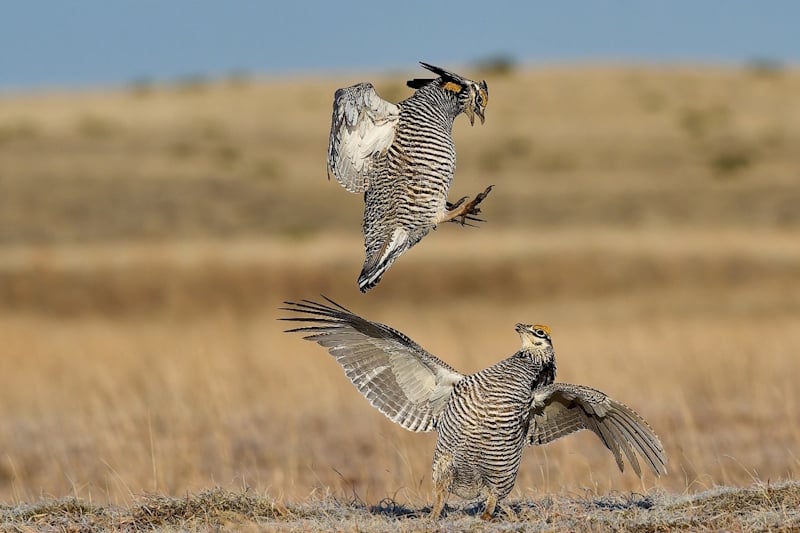
Check out this action shot of two greater prairie-chickens (Tympanuchus cupido) squaring off in northern Colorado. Peter Hudson, an endowed professor of biology at Penn State University, captured the characteristic aerial combat between males competing for mates.
During these ritualistic battles, one male launches into the air and attempts to strike his opponent before landing and triggering a reciprocal jump attack, according to Hudson. Biologists previously interpreted this as straight male-male competition resembling medieval tournaments, where the winner claims the female, but further studies revealed that the females actually select their mates based on multiple behavioral and morphological traits.
Earth science and climatology winner: Scanning Glaciers in the Antarctic Winter
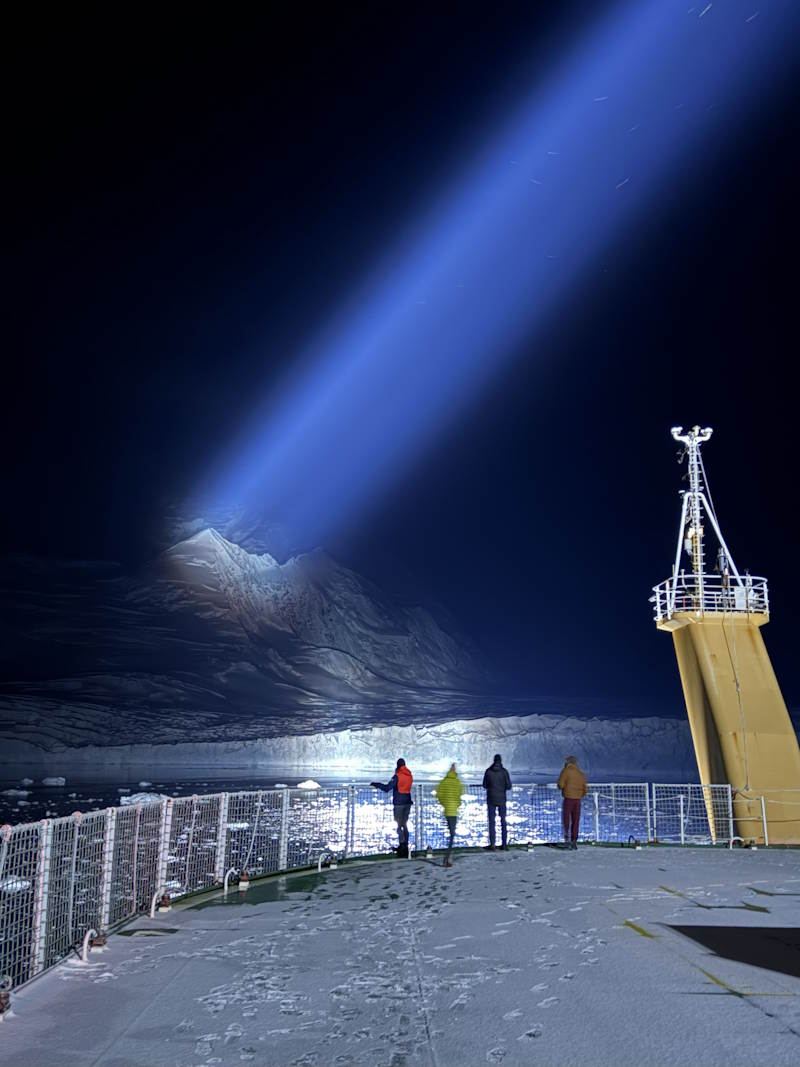
The glaciers of Börgen Bay on the Antarctic Peninsula are retreating rapidly as the global temperature rises. Michael Meredith, joint director of the UK National Climate Science Partnership (UKNCSP) and science leader at the British Antarctic Survey, took this photo during a winter research campaign in this volatile region.
“The image was captured in the polar night, while we were surveying ocean conditions in front of glaciers on the Antarctic Peninsula, to understand better how they are affected by climate change,” Meredith wrote in a LinkedIn post. He and his colleagues maneuvered a ship close to the William Glacier, using its spotlight and oceanographic images to gather data on its characteristics. Later that same evening, a significant chunk of the glacier tumbled into the sea.
Ecology and Environmental Science winner: Amphibian Galaxy
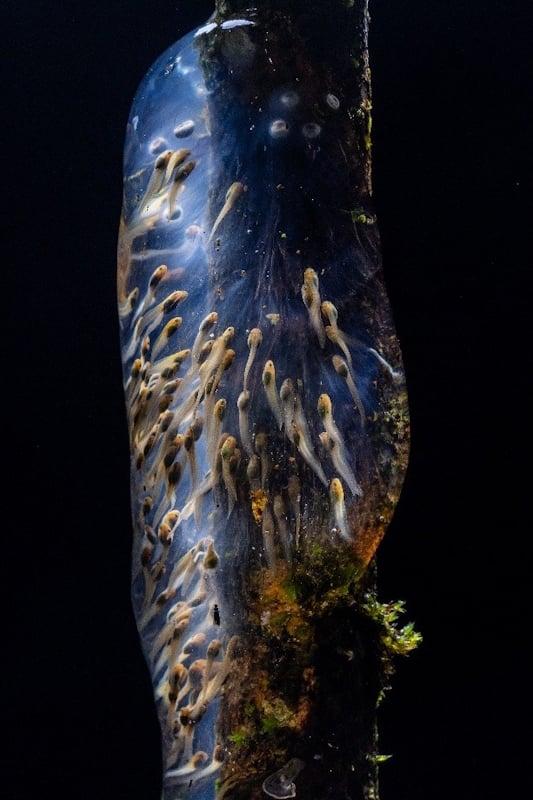
(Guibemantis liber) © Filippo Carugati, courtesy of the Royal Society
Filippo Carugati is a wildlife photographer and biology PhD candidate at the University of Turin in Italy. He spent six months in the Maromizaha rainforest of Madagascar, exploring its rivers and wetlands at night to collect data for his thesis.
During one of these expeditions, he stumbled upon a large egg clatch, probably laid by a free Madagascar frog (Guibemantis liber), hanging onto a small trunk next to a little pond. Tadpoles were swimming through the gelatinous substance, and Carugati photographed them by lighting the egg clatch from behind, producing a cosmic appearance.
Read the full article here