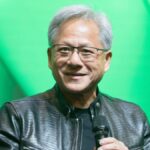
A Meta spokesperson confirmed to Bloomberg Wednesday that AI legend Yann LeCun is exiting Zuckland and striking out on his own. According to a Memo from LeCun himself that Bloomberg claims to have read, LeCun’s new endeavor is meant to “bring about the next big revolution in AI: systems that understand the physical world, have persistent memory, can reason, and can plan complex action sequences.”
Sources apparently told Bloomberg that LeCun “clashed with others internally.” Meta had recently constructed a fully separate AI research department focused on generative AI, and in its latest story, Bloomberg now claims that Meta had begun to hide LeCun from view in favor of high-profile recent hires. Recent hires have invluded ChatGPT co-creator Shengjia Zhao.
As previously discussed here at Gizmodo, LeCun is fascinated by an area of AI called “world models.” He has spent more than a year saying he thinks LLM research, the backbone of systems like ChatGPT, is no longer a worthy area of pursuit—at least as far as hypothetical advanced AI functions with terms like “AGI” and “superintelligence” are concerned.
LeCun, who was born and raised in France, is among the handful of researchers often referred to as the “godfathers of AI,” or more specifically the godfathers of deep learning, and shared a Turing Award in 2019 with fellow godfathers Geoffrey Hinton and Yoshua Bengio. The influential cognitive scientist and AI researcher Gary Marcus is a longtime critic of LeCun, and their public disagreements go back years.
LeCun joined Meta in 2013, when it was still called Facebook, as the head of what at the time was a research operation with a location in New York that LeCun could walk to from his office at NYU, where he works as a professor. At the time, it wasn’t totally clear what a company like Facebook even wanted from a scientist who worked with deep neural networks. Another major AI researcher, Andrew Ng, explained Facebook’s hiring decision to Wired in terms that now seem sort of quaint and social media-centric:
“Machine learning is already used in hundreds of places throughout Facebook, ranging from photo tagging to ranking articles to your news feed. Better machine learning will be able to help improve all of these features, as well as help Facebook create new applications that none of us have dreamed of yet.”
After the 2022 release of ChatGPT led to AI’s rise to domination of all priorities in the tech world, LeCun became notable for his skepticism about the need for AI safety. He told the Wall Street Journal last year that the idea that AI poses a threat to humanity is “complete B.S.”
But LLMs aren’t LeCun’s cup of tea anyway. He clarified last month that he had almost no involvement with Meta’s Llama models, and that such generative AI-related work happened way off in another department at Meta. LeCun worked, he explained, in Meta’s Fundamental AI Research (FAIR) department, and was attempting to go “beyond LLMs.”
LeCun believes AI models are needed that can comprehensively understand the physical world through sensory inputs like vision, and how to reason its way through interactions with, and changes to, that world. He thinks the current crop of AI systems can’t do anything even close to this, and that they are in fact dumber than cats.
You can already see the start of LeCun’s world model research under the aegis of Meta in V-JEPA-2. That model is trained not on text, but on videos of the physical world, and designed not simply to replicate all that video, like Sora, but to model the causes and effects of actions in the world when things move around and interact. That’s the theory anyway.
Bloomberg writes that Meta “plans to partner with LeCun on his startup, though details are still being finalized.” In LeCun’s memo, he wrote that his former company “will be a partner of the new company and will have access to its innovations.”
It’s not at all clear yet how the partnership between LeCun’s new company and Meta will be structured, but tech companies are famous for being near inextricable from one another where AI is concerned. Microsoft owns about 27% of OpenAI, and has special rights to use its technology. Google similarly owns 14% of Anthropic. The way interdependent investments in the AI world lead to higher valuations has been compared to “circular dealmaking.“
LeCun’s memo says his new technology “will have far-ranging applications in many sectors of the economy, some of which overlap with Meta’s commercial interests, but many of which do not.”
LeCun famously favors the term Advanced Machine Intelligence (AMI) in place of something like AGI (nota bene: “ami” is French for “friend”). In his memo, he reportedly wrote that “Pursuing the goal of AMI in an independent entity is a way to maximize its broad impact.” It’s an appropriately ambiguous turn of phrase. Presumably the “independent entity” is the new, non-Meta company, not an intelligent entity. Though he may mean that too.
Read the full article here