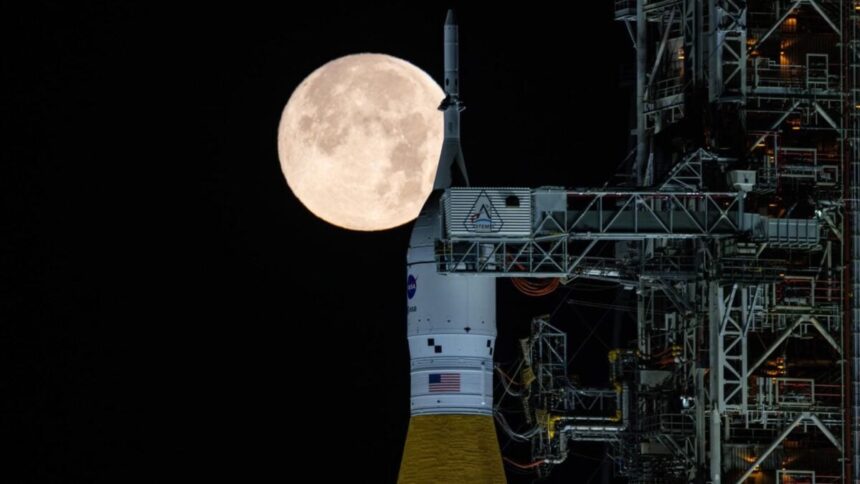
During the lead-up to NASA’s Artemis 1 mission back in 2022, recurring hydrogen leaks led to significant delays and a cancelled launch attempt. The agency had three years to address the underlying issues with the Space Launch System (SLS) rocket’s hardware, and yet, the Artemis 2 wet dress rehearsal felt all too familiar.
NASA engineers detected a hydrogen leak in one of the tail service mast umbilicals on the mobile launcher during the fueling test, prompting them to terminate at the T-5:15 minute mark. These 35-foot-tall (11-meter-tall) structures provide cryogenic propellant lines and electrical cable connections to the SLS core stage. One of them was also the source of hydrogen leaks that beleaguered Artemis 1.
In a Sunday update, the agency said technicians had replaced two seals inside the tail service masts to address what they believe was the source of the leak, but the real question is, why is this still happening? NASA had three years to fix this issue, and yet, here it is again.
Still working out the kinks
In NASA’s defense, liquid hydrogen is a notoriously tricky fuel to work with. As the smallest molecule—consisting of two bonded hydrogen atoms—it can escape through minuscule gaps in seals and joints. The extremely cold temperature of the fuel, which is -423 degrees Fahrenheit (-253 degrees Celsius), can also cause these hardware elements to become brittle and crack.
At the same time, liquid hydrogen offers unmatched energy-to-weight efficiency, which means it produces more thrust per pound than any other fuel. NASA has relied on it since the Space Shuttle era, and it’s been dealing with leaks since then too.
SLS is modeled after the Shuttle, so it’s no big surprise that this rocket experiences the same problem. It’s also important to note that Artemis 1 was its first and only launch so far. Fewer launches means fewer opportunities to work out the kinks, so even though NASA had three years to address the issues that came up during Artemis 1, the SLS program is still in its infancy.
From that standpoint, the Artemis 2 wet dress rehearsal was a great success. It certainly went much smoother than the first Artemis 1 fueling test, which was scrubbed before tanking even began due to a mobile launcher pressurization issue. This time, engineers managed to fully load both the rocket’s upper and core stages on the first try.
“We really did learn a lot from the Artemis 1 mission, and we implemented a lot of the lessons learned yesterday through wet dress,” Lori Glaze, NASA’s Exploration Systems Development Mission Directorate acting associate administrator, said during a post-wet dress rehearsal press conference on February 3.
A smoother path forward for Artemis 2?
After NASA scrubbed the first wet dress rehearsal for Artemis 1, it took another four attempts—followed by three launch attempts—to get the mission off the ground. The agency is currently doing everything it can to avoid a similarly drawn-out timeline for Artemis 2.
In Sunday’s statement, NASA said engineers were analyzing the removed seals to identify the root cause of the leak while also reconnecting the interfaces—the plates and quick-disconnect connections between the rocket and the mobile launcher that carry fuel lines and electrical cables. Teams will run tests to evaluate their repair work prior to the next wet dress rehearsal.
If NASA can get a handle on the hydrogen leaks, Artemis 2 could launch as soon as March 6. As the rocket’s first crewed flight, this mission is a critical test for the agency’s SLS program. We will soon find out if the lessons learned from Artemis 1 have truly taken hold.
Read the full article here