There are few things more joyful, if occasionally nerve-wracking, than having a pet in your home. And plenty of people agree. According to the American Pet Products Association, around 94 million households in the U.S. had at least one pet in 2024, up from 82 million in 2023—that amounts to 70% of homes.
While most of these pets are your classic dog or cat, there are many who own more exotic animals like fish, birds, or scaly reptiles. And as much as people online might love a Doug the Pug or Larry the Downing Street Cat, the internet is also chock full of viral stories showcasing select wild animals (usually rescues) that appear to have blissfully settled into a domestic life. We’re talking about beavers, capybaras, and possums, to name a few.
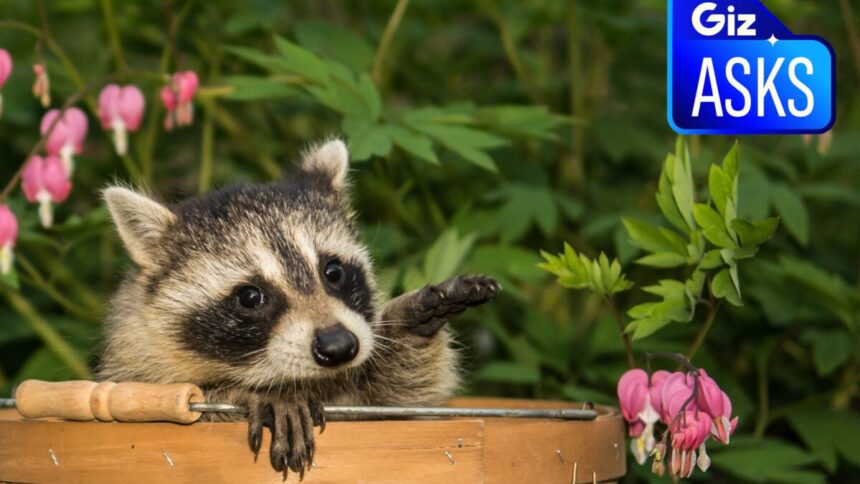
Animal domestication is often a human-driven process, one carried out intentionally. But at least a few species seem to have first adapted to humans largely on their own, such as the domestic cat. And some research has suggested that certain animals in the wild today could one day evolve in a similar fashion, too. A study last October, for instance, argued that urban-dwelling raccoons might be taking their first steps toward early domestication, based on their changing facial features (namely, their shorter snouts).
For this edition of Giz Asks, we reached out to scientists who have explored the complex genetic and evolutionary history of animal domestication. We picked their brains about which wild animals, if any, could someday make the leap to petdom. Their responses may have been lightly edited for clarity and grammar.
Martin Johnsson
A researcher at the Swedish University of Agricultural Sciences specializing in the quantitative and population genetics of domestic and livestock animals, such as pigs, chickens, and cattle.
If I were to speculate, I would say that it’s entirely possible that a next great pet species could be domesticated purposefully, if people wanted to. I would expect it to be take a long time, though.
Domestication of the great companion animal species has been a long process of evolutionary adaptation, where both animal and human have gradually changed over generations to become attuned to each other. For a wild animal to become a buddy that you want to keep in your home—like a dog, cat or a goat if you’re adventurous—takes changes to many traits, particularly to behavior.
On the other hand, it’s surely possible to domesticate new species if you really want to, especially those that already are social to each other. Look at fancy rodents that were domesticated, at least to some extent, relatively recently. They might not be as popular as dogs, but some people swear by rats as companions.
Selection experiments like Belyaev’s famous farm foxes—captive foxes that were selected only for tameness and showed quick evolution of tame behavior towards humans—show that you can change behavior quickly. There is genetic variation for fear of humans within wild species, and by selecting the animals who fear humans the least to be parents of the next generation, you will get animals that are less fearful of humans. But it seems to me that actual domestication is richer than that.
So if I would guess what the next domesticated pet would be, I’d expect an animal species that has well-developed social behavior (not necessarily throughout its whole life, but at least towards its young) and that is currently living close to humans, so that in a sense, it has already started a pre-domestication process. Why not the raccoon?
Robert Spengler
Director of the Paleoethnobotany Laboratories at the Max Planck Institute for the Science of Human History, located in Germany.
While this question may seem straightforward to many, it is bundled up in a nested set of semantic debates and contradictory ideas about how domestication has unfolded through time. Starting with the question of what is domestication? In a recent article, titled “Seeking consensus on the domestication concept,” my colleagues and I sought to bring scientists together under a more comprehensive definition, which would include the raccoon case study.
Restrictive definitions tend to bias the way people think about how domestication unfolded in the past. Notably, when we use the word in an active sense, e.g. they domesticated raccoons, it leads people to believe that humans actively and intentionally did it. In reality, the raccoons in this study evolved domestication traits through a relationship of commensalism [i.e., a long-term interaction between two distinct species, in which one animal benefits but not at the expense of the other] with humans. Humans did not intend to cause the changes in behavior and muzzle length; in fact, they likely opposed it, viewing the raccoons as pests. This case study, directly parallels a growing number of studies showing how animals are evolving in response to humans, most appropriately the case of urban foxes in cities across Western Europe—paralleling the evolution of urban raccoons in North America. I argued, in my recent book, titled Nature’s Greatest Success, that the urban foxes were evolving to fit into a niche opened up as dog and cat extermination and sterilization programs became more prolific. I even went so far in the book as to predict that North American raccoons are on a track towards commensal domestication in the same way; hence, I am delighted to see Apostolov and his colleagues’ study.
The study shows how humans have unintentionally caused the evolution of domestication traits in plants and animals for millennia, and further supports arguments that intentional breeding only began during the European Enlightenment. Commensalism is one of the easiest ways to envision how humans are causing unintentional evolution, and we can think about this process leading to the evolution of cats, dogs, mice, and rats. Sometimes, scholars misleadingly claim that cats self-domesticated, but in reality, they evolved to better fit the human constructed niche, notably consuming human waste and excrement, as well as the mice that were simultaneously evolving commensal domestication traits. The cats that harbored less fear towards animals were more fit for survival in this specific anthropogenic ecosystem, and therefore, more of the docility traits passed to the next generation.
It is likely that many species will evolve domestication traits due to anthropogenic environments in the future, and, as humans continue to dramatically alter all ecosystems on the planet (notably through climate change), plants and animals will be forced to either adapt or go extinct. In this way, life is on a rapid trajectory towards domestication, and in the not-too-distant future, all living organisms may be domesticated (given the inclusive definition of domestication).
All this said, intentional breeding of an organism for domestication traits can lead to similar outcomes as commensalism, but occurs through a very different process. If the goal of a breeder is to produce novel pets for a commercial market, then they would likely do so by selecting the less aggressive individuals in each generation over many generations. Active breeding in this way can cause immense phenotypic changes in a plant or animal in a relatively short number of generations, on the decadal scale. Some scholars have argued that certain animals are undomesticatable, notably Jared Diamond in an article in 2002, titled “Evolution, consequences and future of plant and animal domestication”—a topic he revisited in his popular book, Guns, Germs and Steel.
However, I see no reason to believe that directed breeding programs could not result in the domestication of any organism. In fact, some conservation biologists have gone so far as to proposed domesticating wild organisms intentionally to make them more adapted to the rapidly changing environments of the modern world. Further, as genetic modification technology rapidly advances, especially with CRISPR gene editing, the potential changes that could be made in an organism in the future are hard to fully comprehend.
Humans will, unintentionally cause the domestication of all life on the planet in the future, and, the organisms that do not evolve domestication traits quickly enough, will go extinct. Additionally, if breeders choose to, they could intentionally domesticate nearly any living organism, and the pets that breeders and geneticists choose to create for the commercial market of the future can only be guessed at.
Claudio Ottoni and Marco De Martino
Ottoni is a paleogeneticist based at the University of Rome Tor Vergata; De Martino is a postdoctoral researcher at the University of Rome Tor Vergata. Both recently co-authored a study re-examining the early history of cat domestication.
The recent study on the reduction in snout length in North American raccoons is very interesting, as it provides evidence of how the initial steps of domestication may determine phenotypic changes in commensal animals. Yet, I think this does not mean that raccoons may be the pet of the future. They could be, but several factors may derail the domestication pathway and in some instances the human-animal relationship may simply stabilize at an equilibrium point where both species (humans and the target animal) receive mutual benefits.
All in all I think it may be hard to have a “Next Great Pet,” at least to the extent of popularity and global distribution that we observe today in cats and dogs. This may not necessarily be due to the target animal species and its biological and ecological features. It is more about the circumstances (past and present) that led to the domestication, and the fact that dogs first, and cats later, have already in a way filled the anthropogenic niche and taken advantage of it.
We may think of several animal species that started their relationship with humans thousands of years ago. Ferrets, for example, were a popular pet in the Roman era; the leopard cat was also a close commensal of humans for millennia in Neolithic China. Yet both these species were replaced by cats as soon as they started their dispersal about 2,000 years ago. Therefore, for a species to become the next great pet, it would have to compete with the dogs and cats, which is no easy task.
However, urban contexts are a great trigger of close human-animal relationships through commensalism, and at a more local scale animal species may end up becoming pets. In this regard. yes, probably raccoons but also, for example, opossums and foxes are on the good track for that.
Read the full article here